
Search Results
35 Results Found for “autoimmune encephalitis”

Prof. Amanda Piquet discusses the KYSA-8 miv-cel trial in refractory stiff-person syndrome, including efficacy findings, safety outcomes and the future role of CD19 CAR T-cell therapy in autoimmune neurologic disease. At the American Academy of Neurology Annual Meeting 2026, Prof. Amanda ...

Why this topic matters Autoimmune psychosis (AP) is conceptualized as a psychosis-dominant form of autoimmune encephalitis (AE). In contrast to ‘typical’ AE, in which seizures, impaired consciousness and focal deficits rapidly declare a neurological syndrome, patients with AP can initially ...

The late-breaking science sessions at AAN Annual Meeting 2026, Chicago, IL, USA brought together a wide range of pivotal and practice-shaping data spanning rare disease, neuroimmunology, headache, epilepsy, neurodegeneration and neuromuscular medicine. Several presentations reported positive phase III findings, while others ...

Over the past two decades, the understanding and management of multiple sclerosis (MS) have advanced dramatically, reshaping long-held views of the disease. MS is now increasingly seen as a continuous spectrum rather than a condition with distinct phases, with evidence showing it can begin silently, even before clinical symptoms emerge. Technological and diagnostic innovations have enabled the detection of early brain changes and biomarkers, opening doors to earlier diagnosis and intervention. New diagnostic criteria allow MS to be identified without a clinical event, and studies on disease-modifying therapies (DMTs) support the benefits of early treatment. A major shift in treatment strategy is also underway, emphasizing early, aggressive approaches and therapies that target progression rather than just relapses, which are no longer seen as the main driver of long-term disability. A pivotal development in MS research is the confirmation of Epstein–Barr virus (EBV) as a fundamental trigger of the disease, with new evidence pointing to specific viral protein regions as higher-risk factors. Despite these strides, MS research remains a dynamic and evolving field, with much still to be uncovered beneath the surface.

Neuromyelitis optica spectrum disorders (NMOSD) are a group of relapsing autoimmune diseases of the central nervous system. The clinical hallmarks of NMOSD are myelitis and optic neuritis; however, a wider clinical spectrum has been recognized.1 The majority of patients with ...
Case study Patient information A 42-year-old woman presented in the emergency department with acute onset whole-body myoclonic jerks for 1 day. On enquiry, the patient’s parents advised that she had a history of depression over the past 15 years. Intermittently, family ...

The 17th World Congress on Controversies in Neurology (CONy) took place March 23-25 2023 in Dubrovnik, Croatia. Prof. Amos D. Korczyn, CONy President (University of Tel-Aviv, Tel-Aviv, Israel) joined touchNEUROLOGY to discuss the main aims and focus of the recent CONy ...

Dr Michael Levy (Massachusetts General Hospital, Harvard Medical School, Boston, MA, USA) provides his highlights from the 75th AAN Annual Meeting, 2023, in particular that this was the first year to have a myelin oligodendrocyte glycoprotein (MOG) antibody disease focus, with ...

Acute disseminated encephalomyelitis (ADEM), first characterized in 1931,1 is a non-specific clinical syndrome of polyfocal central nervous system (CNS) inflammatory demyelination; it is characterized by encephalopathy and large, poorly demarcated cerebral white matter lesions.2,3 Myelin oligodendrocyte glycoprotein (MOG) antibody-associated disease (MOGAD), ...

The coronavirus disease 2019 (COVID-19) pandemic has led to unprecedented illness and death among the global population. Severe acute respiratory syndrome coronavirus 2 (SARS-CoV-2) infection can range from mild upper respiratory symptoms that subside with no lasting effects to multiorgan system failure ...

Infection of the central nervous system (CNS) due to cytomegalovirus (CMV) is rare, as it typically occurrs in immunocompromised patients and rarely affects those who are immunocompetent.1 Brain infection – manifested by meningoencephalitis – is much more common than infection of the ...
The clinical use of cancer immunotherapy with immune checkpoint inhibitors (ICI) has transformed cancer management and added another effective treatment option for different types of malignancies.1–3 In 2018, the Nobel Prize for medicine and physiology was awarded for the discovery of ...

Parkinson’s disease (PD) is a progressive, neurodegenerative movement disorder and the second most common neurodegenerative disorder in the United States.1 In 2020, approximately 930,000 people in the United States aged 45 years and older developed the disease, and this number is expected ...
Studying cerebrospinal fluid (CSF) is essential for diagnosing many central nervous system (CNS) diseases, including infection, inflammation and malignancy. Lumbar puncture is a relatively safe and routinely performed procedure for extracting CSF.1 In this review, we summarize the essential CSF ...
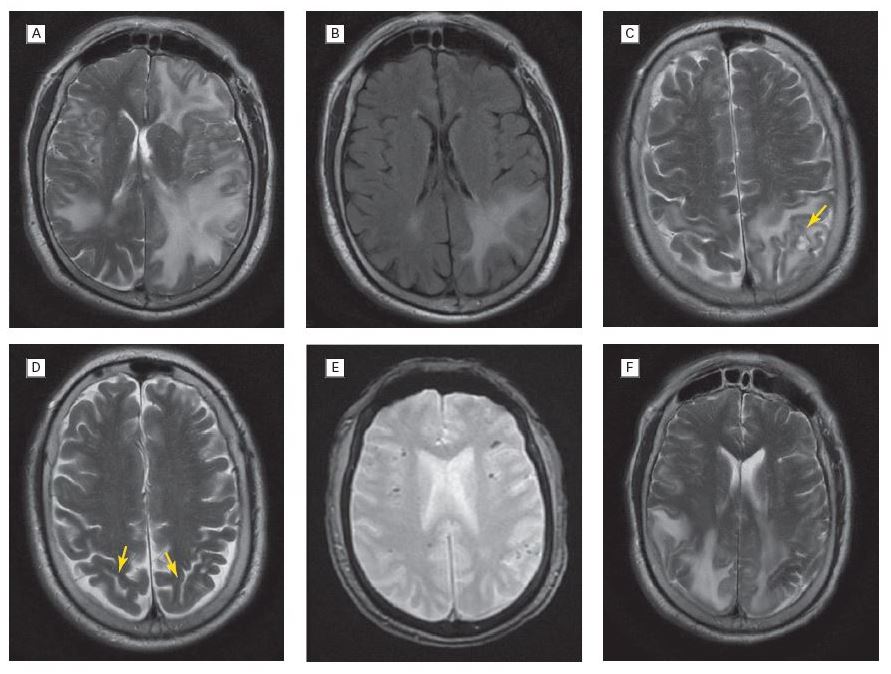
Cerebral amyloid angiopathy (CAA), also known as congophilic angiopathy, is a recognized cause of lobar intracerebral haemorrhage in patients above the age of 50 years.1 It is known to be due to deposition of a variant of amyloid (beta-amyloid plaque) in ...

Siponimod—A Selective Sphingosine-1-phosphate Modulator for Secondary Progressive Multiple Sclerosis
Multiple sclerosis (MS) is a chronic neuro-inflammatory condition estimated to affect over two million people worldwide. Several subtypes of MS have been described, and they are defined by their clinical phenotypes.1 The majority of patients initially exhibit relapsing remitting MS (...

Sean Pittock (Mayo Clinic College of Medicine, Rochester, MN, USA) shared with us his expert insights from the phase 3 PREVENT study, a randomized controlled trial of eculizumab in AQP4 antibody-positive participants with neuromyelitis optica (ClinicalTrials.gov Identifier: NCT01892345), including a ...
Herpes zoster, also known as shingles, is one of the many manifestations of neurologic disorders and occurs with a cumulative life-time incidence of 10–20% in the general population.1 The annual incidence of this disease differs worldwide; in the UK, herpes zoster ...
Log into your Touch Account
Keep track of your clinical interests and newsletter subscriptions.
Sign up with an Email
Or use a .
Register now for FREE access
Already registered? Login below.
