
Search Results
13 Results Found for “autoimmune psychosis”

Why this topic matters Autoimmune psychosis (AP) is conceptualized as a psychosis-dominant form of autoimmune encephalitis (AE). In contrast to ‘typical’ AE, in which seizures, impaired consciousness and focal deficits rapidly declare a neurological syndrome, patients with AP can initially ...
Case study Patient information A 42-year-old woman presented in the emergency department with acute onset whole-body myoclonic jerks for 1 day. On enquiry, the patient’s parents advised that she had a history of depression over the past 15 years. Intermittently, family ...

Parkinson’s disease (PD) is a progressive, neurodegenerative movement disorder and the second most common neurodegenerative disorder in the United States.1 In 2020, approximately 930,000 people in the United States aged 45 years and older developed the disease, and this number is expected ...

The World Congress on Controversies in Neurology (CONy) provides a platform for international experts to discuss and compare experiences. Its debate-style structure bridges the gap between the latest scientific advances and their dissemination and use. The congress has become a ...
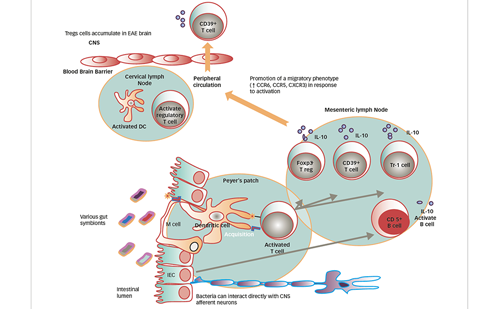
Multiple sclerosis (MS) involves inflammation, demyelination and neurodegeneration of the central nervous system (CNS) and is characterized by variable degrees of axonal loss and gliosis.1 Lesions occur in both the white and grey matter. Generally, the overall incidence of MS ...

In March 2017, a mini-symposium at the 11th Congress of Controversies in Neurology (CONy), Athens, Greece, was dedicated to neuro-Behçet’s disease (NBD). An introduction into the key clinical features of Behçet’s disease (BD) was followed by a ...

The term rapidly progressive dementia (RPD) is used to describe cases with a progression course which usually ranges between weeks and months.1–4 The subacute nature of RPD excludes other conditions with fulminant progression such as infectious or metabolic acute encephalopathies, ...
Dementia is a syndrome that can have multiple causes and is characterised by deterioration in different domains of cognition, especially memory, language, praxis, visual perception and executive function.1 It is estimated that the number of people with dementia will increase ...
The term ‘dementia’ is used to describe a decline in intelligence, memory and judgement as a result of brain disorders. The following cognitive deficits are common in dementia: impaired judgement (decline in intellectual performance and critical thinking), deficits in logical ...
Alzheimer’s disease (AD) is the most common cause of dementia in the elderly, with a prevalence of 5% after 65 years of age. The disease was originally described by Alois Alzheimer and Gaetano Perusini in 1906, and it is clinically characterised by ...
While recognizing that the factors that enter into a decision to treat are complex and best analyzed by the individual patient’s neurologist, the National Clinical Advisory Board of the National Multiple Sclerosis Society has adopted the following recommendations to ...
Humans afflicted with narcolepsy suffer a variety of symptoms due to the dysregulation of the REM cycles.3-5 These irregularities cause EDS, leading to uncontrollable urges to sleep known as sleep attacks even in active daily events. This sudden onset ...
PrevalenceThe prevalence of narcolepsy with cataplexy occurs with high variability, depending on the study population, and is thought to affect approximately 0.02–0.18% of the general population in Western nations.1,5 The true prevalence of narcolepsy without cataplexy is unknown and has ...
Log into your Touch Account
Keep track of your clinical interests and newsletter subscriptions.
Sign up with an Email
Or use a .
Register now for FREE access
Already registered? Login below.
