
Search Results
37 Results Found for “electroencephalogram (EEG), ”
Why this topic matters Autoimmune psychosis (AP) is conceptualized as a psychosis-dominant form of autoimmune encephalitis (AE). In contrast to ‘typical’ AE, in which seizures, impaired consciousness and focal deficits rapidly declare a neurological syndrome, patients with AP can initially ...

Seizures are one of the most frequent neurological disorders in neonates − the incidence of seizures in infants born at term is 1–3 per 1,000 live births, and is even higher in both preterm and very-low-birth-weight infants at 1–13 per 1,000 live births.1 Seizures may ...

Article highlights Multiple screening tests are available to screen patients for cognitive impairment, and the Confusion Assessment Method is a helpful test to screen for delirium in the immediate postoperative period. Medicine reconciliation and identification and removal of potentially inappropriate ...

I’m an old clinician; I graduated in Medicine in 1963 at the University of Padova, Italy, and I’m proud to be on the editorial board of touchNEUROLOGY. With this in mind, I would like to express my opinions on ...
Case study Patient information A 42-year-old woman presented in the emergency department with acute onset whole-body myoclonic jerks for 1 day. On enquiry, the patient’s parents advised that she had a history of depression over the past 15 years. Intermittently, family ...
Photophobia is a complex disorder that can involve aversion not simply to bright light but to spatial patterns, colour and flicker.1 It is common in neurological diseases that involve the visual system,2 of which migraine is the most prevalent. Tinted ...
Myoclonus is defined as a sudden, brief, lightning-like muscle contraction.1 It was first described by Friedreich in 1881 when he detailed sharp jerks involving the bulk of a full muscle without marked limb or joint movement and called it paramyoclonus multiplex.2 ...
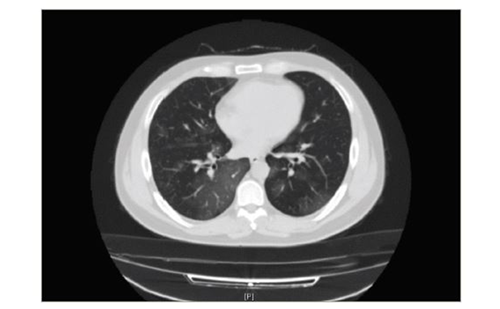
Healthcare workers are currently facing the coronavirus disease 2019 (COVID-19) pandemic and its complications, caused by severe acute respiratory syndrome coronavirus 2 (SARS-CoV-2). Patients usually suffer from respiratory problems and non-specific neurological symptoms, such as headache, dizziness and ataxia, as well as ...
The International League Against Epilepsy (ILAE) revised its definition of epilepsy in 2014 in order to maximize early identification and treatment of patients with epilepsy.1 The ILAE’s conceptual definition of epilepsy, first formulated in 2005, is “a disorder of the brain ...

Parkinson’s disease (PD) is a multifaceted neurodegenerative disease that progressively affects individuals’ mobility. In addition to the cumulative motor disability, a plethora of non-motor symptoms (NMS-PD) can be encountered at different stages of the disease. Some of these NMS-PD ...
Proceedings of a symposium presented at the 13th European Congress of Epileptology, Vienna, 26th August 2018, sponsored by LivaNova. The management of patients with drug-resistant epilepsy (DRE) or treatment-resistant depression (TRD) remain serious challenges. Both conditions are common; epilepsy is believed ...
The American Epilepsy Society Annual Meeting is the largest gathering on epilepsy in the world. The 2018 meeting, which was held in New Orleans, Louisiana, from November 30–December 4, 2018, featured symposia, workshops, and lectures aimed at healthcare practitioners involved in all aspects ...
Levetiracetam (LEV) is an anti-epileptic drug (AED) indicated for treatment of a broad range of seizure types, of both focal and generalised onset.1 It has many advantages that make it one of most commonly used AEDs. Among the principle ones ...
Sudden unexpected death in epilepsy (SUDEP) is defined as a sudden, unexpected, witnessed or unwitnessed, non-traumatic and non-drowning death in a patient with epilepsy, with or without evidence of a seizure, excluding documented status epilepticus, in which post-mortem examination ...
Neuroprotective Strategies in Traumatic Brain Injury Peter JD Andrews Western General Hospital NHS Trust and University of Edinburgh, UK Any severe trauma to the brain results in the activation of a cascade of biochemical pathways and release of chemical mediators. ...

As its mission states, the American Epilepsy Society (AES) is working to eradicate epilepsy and its consequences. While this lofty goal may not yet be visible on the horizon, researchers and physicians who treat patients with epilepsy are making progress, ...
Epilepsy is a general term used to describe a collection of common, chronic conditions of recurrent and unpredictable seizures. While seizures in newly diagnosed patients are often controlled with a single antiepileptic drug (AED),1 the estimated 30–40 % of patients who are ...
Drug-resistant epilepsy accounts for more than 30 % of epileptic patients.1 Alternative treatment options are resective neurosurgery, deep brain stimulation and invasive vagus nerve stimulation (VNS).2 Invasive stimulation of the cervical branch of the vagus nerve has been shown to be highly ...
Log into your Touch Account
Keep track of your clinical interests and newsletter subscriptions.
Sign up with an Email
Or use a .
Register now for FREE access
Already registered? Login below.
