
Search Results
Showing Results for European Stroke Organisation (ESO)
As a touchNEUROLOGY Future Leader 2025, Dr Antonio Ciacciarelli shares what drew him to neurology, the lasting impact of mentorship, and why recent advances in stroke care are redefining outcomes. He reflects on the privilege of inspiring others, and the promise of neuroprotection as the next frontier in vascular neurology.
Despite advances in targeted therapies, migraine remains a significant clinical burden. In this Q&A, you will learn:
Prof. Simona Sacco outlines the European Stroke Organisation’s (ESO) strategic priorities to reduce disparities in stroke care across Europe. She discusses the transformative impact of the ESO East programme and the Stroke Action Plan for Europe (SAP-E), and also reflects on the increasing role of artificial intelligence (AI) in stroke diagnostics and treatment pathways.
What is the Stroke Action Plan for Europe? Stroke is one of the most enormous burdens to healthcare services.1 Despite our combined efforts, it affects more than one million people annually in Europe. Although we have abundant knowledge regarding stroke ...

The European Stroke Organisation Conference (ESOC) 2023 will take place 24-26 May 2023 in Munich, Germany. The conference will include sessions, plenary lectures, and symposia, covering a wide range of topics related to stroke, including acute management, rehabilitation, imaging, epidemiology, and public ...

The Stroke Alliance for Europe (SAFE) is a non-profit-making organisation that represents a range of patient groups from across Europe. Their mutual goal is to drive stroke prevention up the European political agenda and prevent the incidence of stroke through ...

Brain-age biomarkers can be used to predict post-stroke recovery. Dr Martin Bretzner (Lille Neuroscience & Cognition Research Centre, Lille University Hospital, Lille, France) discusses the results of a study using radiomics, an emerging image-quantifying technology to assess 'brain-age' biomarkers. The ...
The composition of the gut microbiome is a modifiable factor associated with the risk of ischaemic stroke and post-stroke neurological outcome. Dr Miquel Lledós (Stroke Pharmacogenomics and Genetics Laboratory, Sant Pau Research Institute, Barcelona, Spain) discusses the outcome of ...
On behalf of the European Stroke Organisation (ESO) and Stroke Alliance for Europe (SAFE), touchNEUROLOGY are pleased to share the progress made toward reaching the 4 overarching targets of the Stroke Action Plan for Europe (SAP-E). Led by ESO and SAFE, ...
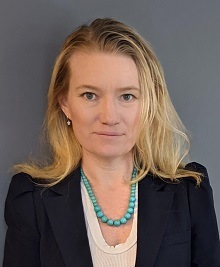
Dr Else Charlotte Sandset, ESO Secretary General and Consultant Neurologist at the Stroke Unit, Department of Neurology, Oslo University Hospital, Norway, provides an overview of some of the high-quality research and scientific advances the stroke community can look forward to at the 8th European Stroke Organisation Conference (ESOC 2022) in Lyon, France and online from 4–6 May 2022.
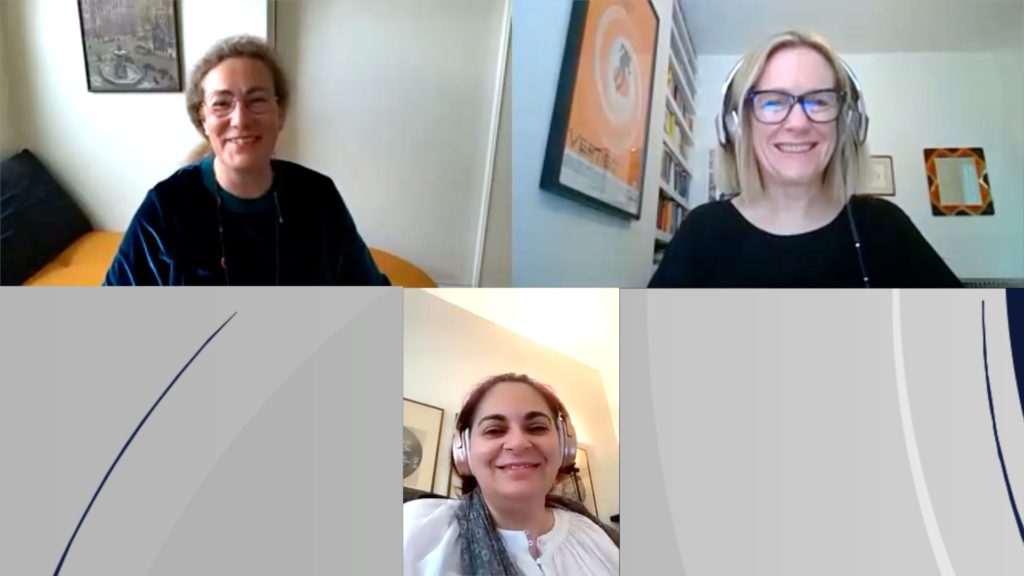
In conjunction with the European Stroke Organisation (ESO), we had the pleasure of meeting with Prof. Hanne Christensen (Chair, Stroke Action Plan for Europe), Arlene Wilkie (Co-Chair, Stroke Action Plan for Europe), and Dr Francesca Romana Pezzella (Co-Chair, Stroke Action ...
In conjunction with the European Stroke Organisation (ESO), we had the pleasure of meeting with Prof. Hanne Christensen (Chair, Stroke Action Plan for Europe), Arlene Wilkie (Co-Chair, Stroke Action Plan for Europe), and Dr Francesca Romana Pezzella (Co-Chair, Stroke Action ...
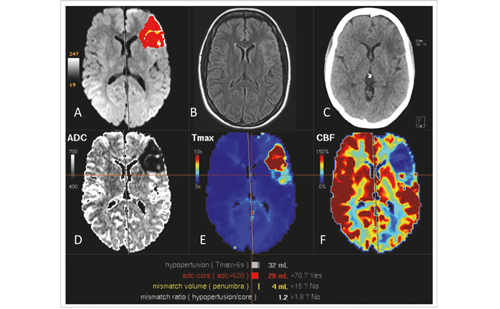
In 2018, two randomised controlled trials, DAWN (the Clinical Mismatch in the Triage of Wake up and Late Presenting Strokes Undergoing Neurointervention with Trevo Thrombectomy Procedure) and DEFUSE 3 (Endovascular Therapy Following Imaging Evaluation for Ischaemic Stroke 3), implemented computed tomography (CT) and ...
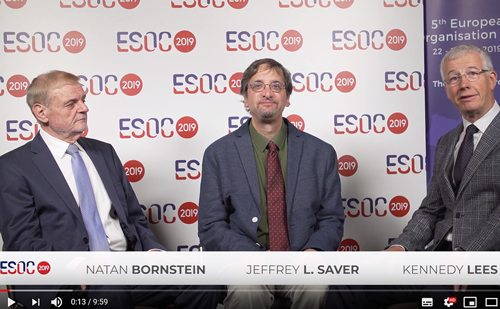
Trial investigators Jeffrey L Saver and Natan Bornstein share results and insights from the Implant for Augmentation of Cerebral Blood Flow Trial, Effectiveness and Safety in a 24 Hour Window (ImpACT-24B; NCT00826059). The aim of this international, randomised, double-blind, sham-controlled, ...
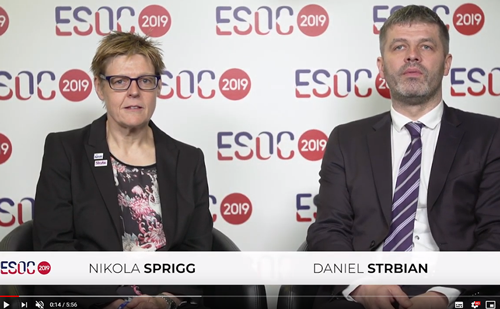
Nikola Sprigg, Principal Investigator of the Tranexamic acid for IntraCerebral Haemorrhage 2 (TICH-2) trial (ISRCTN93732214), which previously reported that tranexamic acid does not improve outcome in adults with stroke due to intracerebral haemorrhage despite reducing haematoma expansion, shares results and insights ...
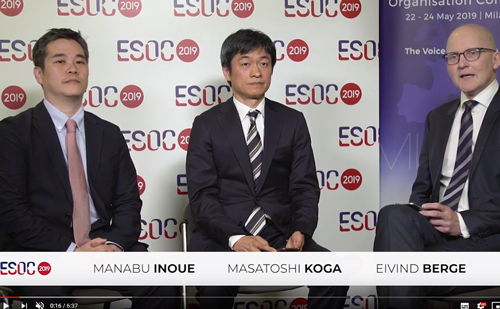
Trial investigators Masatoshi Koga and Manabu Inoue discuss results from THAWS (NCT02002325), an investigator-initiated Japanese multicentre randomised controlled clinical trial designed to clarify the efficacy and safety of MRI-based intravenous thrombolysis with alteplase for patients with acute wake-up ischaemic stroke ...
Tom Moullaali discusses results of pooled individual patient data analyses of the INTERACT2 (NCT00716079) and ATACH-II (NCT01176565) trials, the two largest studies of blood pressure control in acute intracerebral haemorrhage. The aim of the meta-analysis was to ascertain whether systolic ...
Vivian Fu, Principal Investigator of the Taking Charge After Stroke (TaCAS) study (ACTRN12615001163594), shares results and insights from her multicentre, randomised controlled trial comparing the effect of a single Take Charge session, two Take Charge sessions and control intervention on ...
Log into your Touch Account
Earn and track your CME credits on the go, save articles for later, and follow the latest congress coverage.
Sign up with an Email
Or use a .
This Functionality is for
Members Only
Explore the latest in medical education and stay current in your field. Create a free account to track your learning.