
Neuropathic Pain
An Introduction to Neuropathic Pain
Neuropathic pain is the result of an injury or illness that impacts the somatosensory system, responsible for the perception of touch, pain, pressure etc. arising from inside and the surface of the body. Common causes include amputation, chemotherapy, diabetes, multiple sclerosis and shingles. The multifactorial nature of the condition makes neuropathic pain challenging to diagnose and treat. Combination therapy is commonplace. Despite this, a high proportion of still patients fail to achieve adequate pain relief with manageable side effects. Multidisciplinary care is essential and includes nonopioid pharmacological management, interventional therapies, neurostimulation, low-dose opioid treatment and targeted drug-delivery therapy.
Expert video highlights and insights from the conference hub and comprehensive peer-reviewed articles from our journal portfolio provide updates on the ever-changing landscape.
Our supporting partners do not constitute an endorsement of the content on this page.


Highlights from the European Academy of Neurology (EAN) 2026 Congress included new phase 3 data in ocular myasthenia gravis, emerging migraine treatments, longer-term results in multiple sclerosis, and advances in deep brain stimulation for Parkinson’s disease. The 12th Congress of the ...
Meet the future leaders transforming neurology The touchNEUROLOGY Future Leaders 2026 programme recognizes outstanding early- and mid-career clinicians, researchers and scientists who are shaping the future of neurology. Nominated by peers across the global neurology community, these innovators are leading advances ...

We are delighted to announce Dr Sarah Haigh as a touchNEUROLOGY Future Leader 2026, selected by peers as one of the neurologists changing the future of research in sensory symptoms in neurological disorders. We spoke with Dr Sarah Haigh (Department of ...

Leading experts share their perspectives on the most important therapeutic and treatment updates at AAN 2026 and discuss how these findings may shape the future of neurologic care At American Academy of Neurology (AAN) Annual Meeting, Chicago, IL, USA, April 18–22, 2026, major ...

Emerging data from AAN 2026 across neuroimmunology, epilepsy, neuromuscular disease, movement disorders and neuroinfectious disease highlighted the continued evolution of neurology toward more precise, personalized and mechanism-driven care. The American Academy of Neurology (AAN) Annual Meeting, Chicago, IL, USA, from April 18–22, 2026, ...

The late-breaking science sessions at AAN Annual Meeting 2026, Chicago, IL, USA brought together a wide range of pivotal and practice-shaping data spanning rare disease, neuroimmunology, headache, epilepsy, neurodegeneration and neuromuscular medicine. Several presentations reported positive phase III findings, while others ...
In our inaugural touchNEUROLOGY Future Leaders 2025 campaign, we celebrate the next generation of neurologists, rising stars shaping the future of clinical practice, research, and education across neurological specialties.

As touchNEUROLOGY approaches 20 years of providing education for busy neurologists, we are looking to the future—and it certainly looks bright!

Physician burnout is at a critical point. In this episode, Nicky speaks with Dr Alfred Atanda about why so many physicians are burning out and what can be done to change the trend. From personal experience to system-wide solutions, Dr Atanda shares valuable insights on improving physician well-being and building a more effective healthcare culture.

What if your medical degree could launch more than a clinical career? In this candid and compelling read, Dr Jon Edelson shares his lessons for early-career clinicians ready to think beyond the bedside and explore the business of medicine.

In this episode, we explore the future of continuing medical education (CME) with the team behind touchIME. Hannah Fisher and Matthew Goodwin share insights into global and US trends, the importance of patient inclusivity and how educational outcomes are evolving to better measure the direct impact of learning on clinical practice and patient care.

In this episode, we’re joined by Bradley Love, Professor of Cognitive and Decision Sciences at UCL, ELLIS fellow, and creator of BrainGPT. We discuss how this large language model is poised to assist researchers in advancing their work.

Prof. Elon Eisenberg (Tachnion - Israel Institute of Technology, Haifa, Israel) summarizes our current knowledge on using cannabis in pain medicine, and the unmet needs in this field. He then provides some practical advice on using cannabis in clinical practice ...
Opioid therapy has become a mainstay for the treatment of chronic pain, despite evidence that these medications may be ineffective and even unsafe in this patient population.1,2 In patients with chronic back pain, the use of first-line medications (non-steroidal anti-inflammatory ...

Prof. Marc A. Russo President, International Neuromodulation Society Director of Hunter Pain Specialists, Hamilton Day Surgery Centre, Genesis Research Services, Broadmeadow, Australia Co-Director, Innervate Pain Management Program, Newcastle, Australia Chronic pain is a heterogenous, complex condition that is associated ...

It was a pleasure to meet with José A. López García (University of Alcalá, Alcalá de Henares, Spain) to discuss the clinical development of SAN711, a selective GABAA α3 receptor positive allosteric modulator for the potential treatment of neuropathic ...
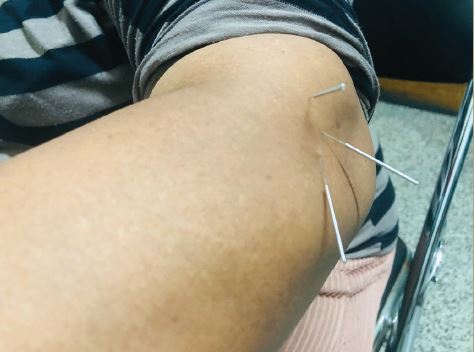
Lateral epicondylitis, or tennis elbow, is pain in the lateral elbow as a result of repetitive forearm pronation and supination in elbow extension.1 It is a frequent cause of elbow pain, and affects 1–3% of the adult population every year, resulting ...
Neuropathic pain arises from injury to or disease in the somatosensory nervous system.1 Normal sensation and pain sensation are both impaired and patients may present with peculiar painful characteristics such as allodynia and hyperalgesia.2 Central neuropathic pain includes pain from ...
Log into your Touch Account
Keep track of your clinical interests and newsletter subscriptions.
Sign up with an Email
Or use a .
Register now for FREE access
Already registered? Login below.