
Search Results
Showing Results for neuroinflammation

Emerging data at EAN 2025 reveals key innovations across multiple neurological disease areas. In this article, you will learn:

In this episode of Visionary Voices, Dr Anthony Caggiano, Chief Medical Officer at Cognition Therapeutics, joins us to explore how biomarkers are transforming our understanding of Alzheimer’s disease, from diagnosis and disease progression to drug development and the future of clinical care.

n this interview, we speak with Dr Anthony Caggiano, Chief Medical Officer and Head of R&D at Cognition Therapeutics, and Lisa Ricciardi, the company’s Chief Executive Officer. They discuss the design and findings of the phase II SHINE trial evaluating zervimesine (CT-1812) in mild to moderate Alzheimer’s disease, including important biomarker and clinical insights presented at recent international conferences. They also reflect on promising data from a study in dementia with Lewy bodies (DLB) and how these results are shaping the company’s next steps.

Amyotrophic lateral sclerosis (ALS) is characterized by the degeneration of both upper and lower motor neurons, which ultimately leads to muscle weakness, atrophy, spasticity and contractures.1 ALS typically manifests in the 50–60 years age range, although familial cases may present in ...

The FDA has approved tenecteplase (TNKase) for the treatment of acute ischemic stroke (AIS) in adults, marking the first new stroke-specific thrombolytic approval in nearly three decades. Administered as a single five-second intravenous bolus, tenecteplase allows for faster administration compared to the current standard of care alteplase, which is administered as a bolus-plus-infusion regimen.


Sanofi at ECTRIMS 2024. Join MS experts as they examine disability accumulation through the lens of personalised care, biomarkers, and clinical trial design. Hear their perspectives on the complexities of balancing improved relapse management with the ongoing challenge of disability accumulation.




Sanofi at AAN 2023. Explore perspectives on MS disability accumulation in the time of highly effective therapies, the smoldering neuroinflammatory pathway, and CNS biomarkers of the future in this Industry Therapeutic Update.
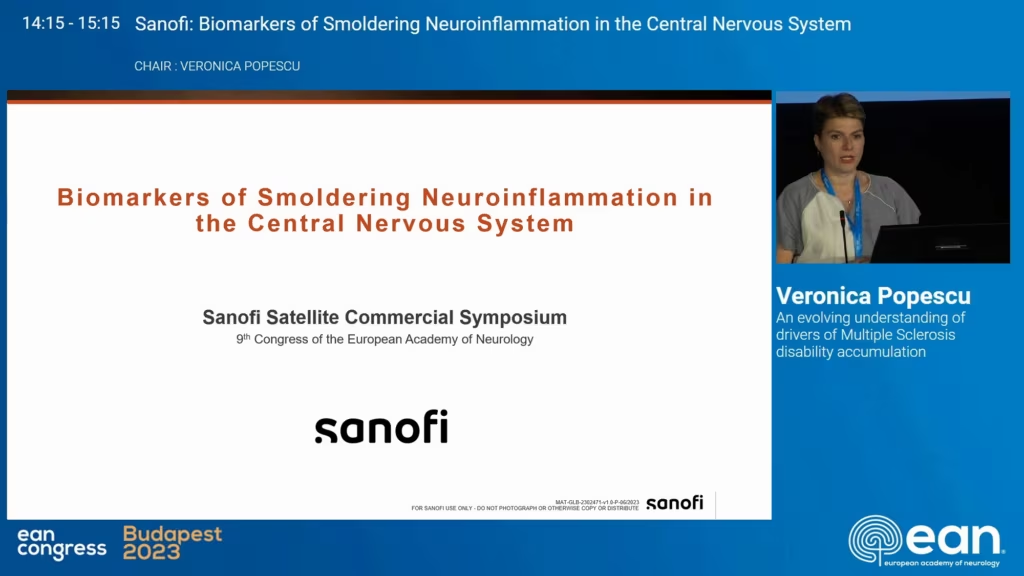
Sanofi at EAN 2023. Learn about the drivers of multiple sclerosis disability accumulation, the unique role of smoldering neuroinflammation, and the role of “big data” in central nervous system biomarkers of the future.
Introduction The term 'stroke' is used to describe an adverse clinical state involving interference of blood circulation to the brain due to obstruction or rupture of blood vessels.1 Stroke was previously categorized into a cardiovascular disorder until the release of ...
Multiple sclerosis (MS) is a complex disease that can pose significant challenges in diagnosis, monitoring and treatment. Over the years, the quest for more precise and accessible diagnostic tools has led to the exploration of different fluid biomarkers in cerebrospinal ...

The novel severe acute respiratory syndrome coronavirus 2 has caused a worldwide pandemic, and its impact on healthcare systems around the world is still being investigated. The potential effect of coronavirus disease 2019 (COVID-19) on people living with dementia and the ability ...

The coronavirus disease 2019 (COVID-19) pandemic has led to unprecedented illness and death among the global population. Severe acute respiratory syndrome coronavirus 2 (SARS-CoV-2) infection can range from mild upper respiratory symptoms that subside with no lasting effects to multiorgan system failure ...

Alzheimer’s disease (AD) is a progressive neurodegenerative disorder and the most common form of dementia.1 It is characterized by two hallmark pathologies: the deposition of amyloid-β plaques and the neurofibrillary tangles of hyperphosphorylated tau.1 The clinical presentation of AD ...

Postpartum depression (PPD) is an important mental health problem that is associated with maternal distress and poor maternal–fetal bonding. The Diagnostic and Statistical Manual of Mental Disorders (DSM-5) now classifies PPD as major depressive disorder (MDD), with peripartum onset.1 ...
Log into your Touch Account
Earn and track your CME credits on the go, save articles for later, and follow the latest congress coverage.
Sign up with an Email
Or use a .
This Functionality is for
Members Only
Explore the latest in medical education and stay current in your field. Create a free account to track your learning.