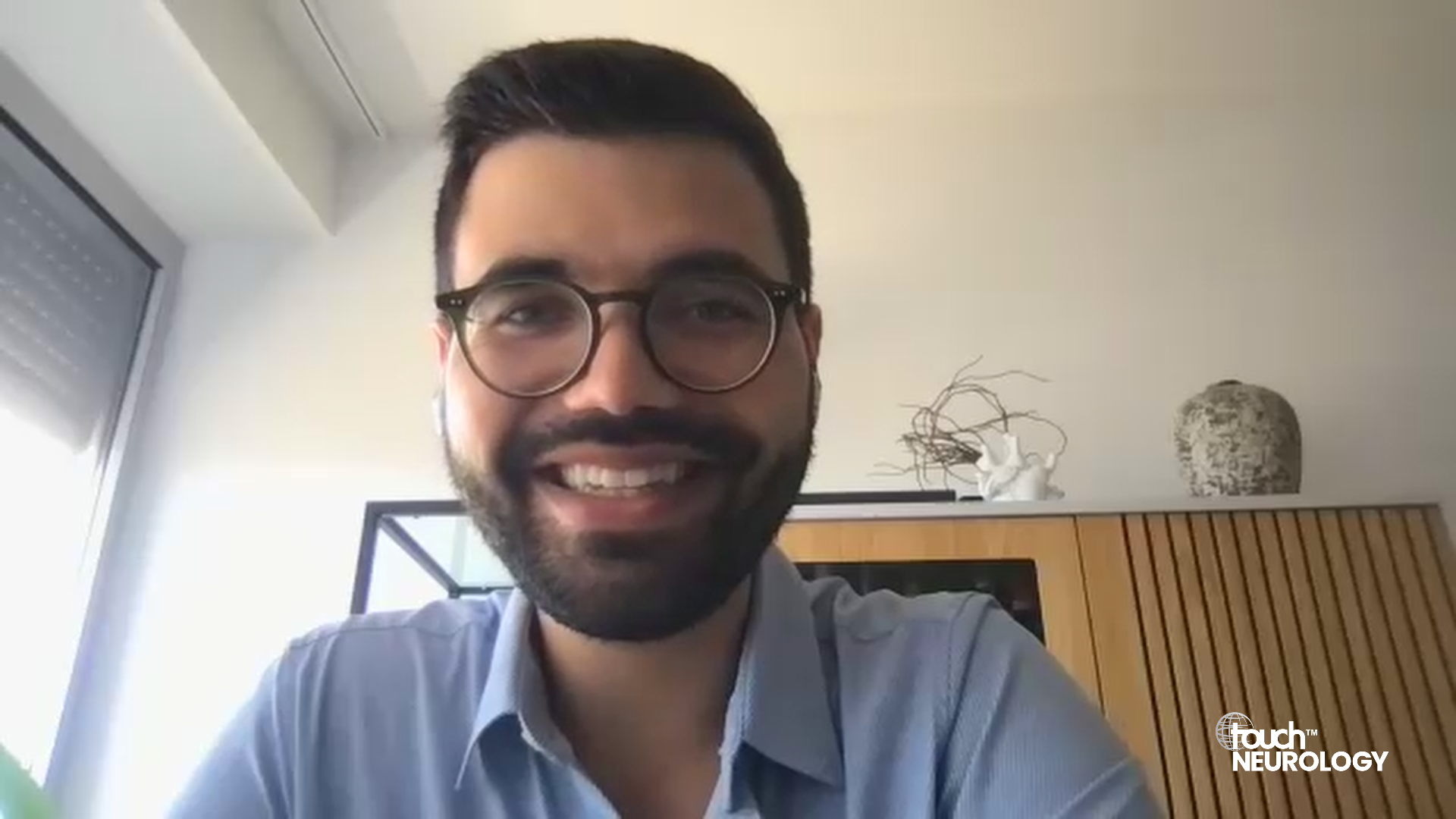
We are delighted to announce Dr Mathias Gramkow as a touchNEUROLOGY Future Leader 2026, selected by peers as one of the neurologists changing the future of Alzheimer’s disease.
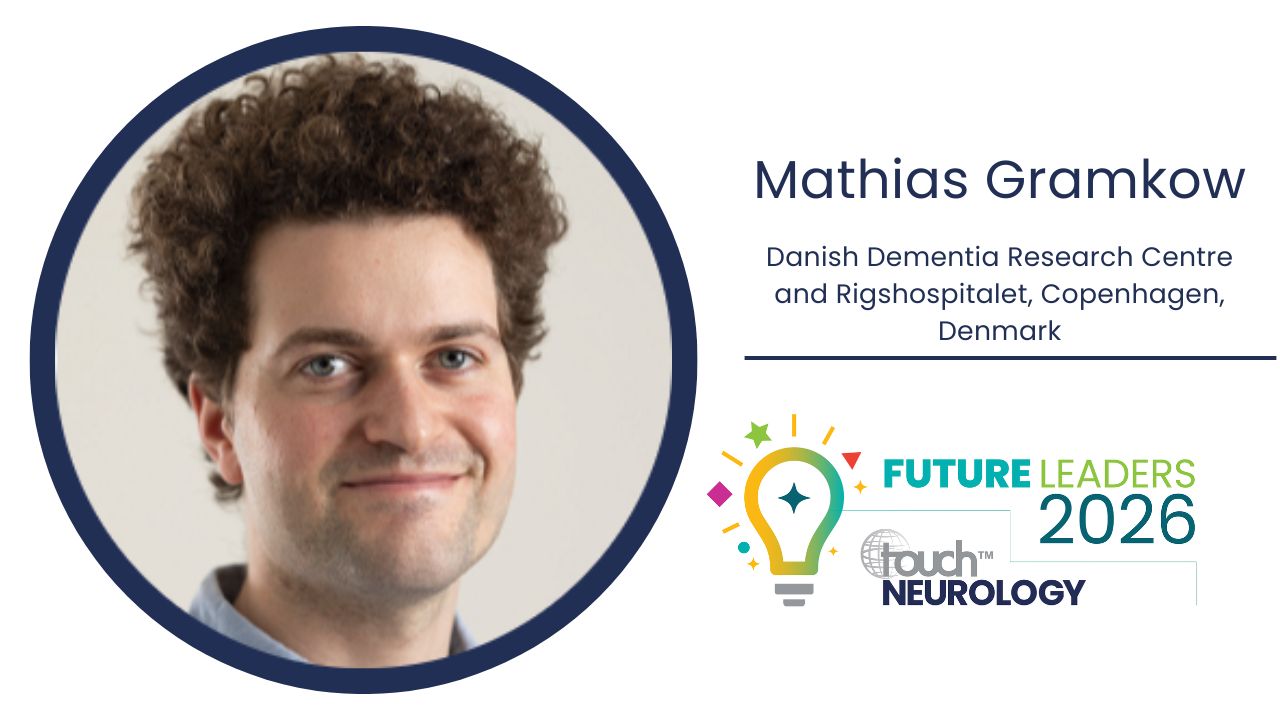 We spoke with Dr Mathias Holsey Gramkow (Danish Dementia Research Centre and Rigshospitalet, Copenhagen, Denmark), a postdoctoral fellow and resident physician whose research focuses on developing and validating low-cost digital biomarkers for Alzheimer’s disease. His work explores innovative approaches, including pupillometry and actigraphy, to improve diagnosis and prognostication, with the goal of creating accessible and scalable tools that support earlier detection, disease monitoring and personalized care for individuals living with neurodegenerative disorders.
What inspired you to pursue a career in neurology?
I was drawn to neurology, and particularly cognitive neurology, because it deals with some of the most fundamental aspects of human life, including memory, behavior and identity. During my medical training, I became especially interested in neurodegenerative diseases and the fact that many patients still experience delayed or uncertain diagnoses.
Combined with the many unanswered questions surrounding the underlying pathology of these diseases, this motivated me to pursue research focused on improving the early detection and prognostication of Alzheimer’s disease through digital biomarkers and data-driven approaches.
What has been the most rewarding moment in your journey so far?
One of the most rewarding aspects of my work has been seeing how emerging technologies, such as wearable sensors, can provide clinically meaningful insights into cognitive disorders. I believe technology has the potential to address some of the key challenges facing the field today, including bringing scalable and less invasive diagnostic tools closer to patients.
It has also been incredibly meaningful to collaborate across disciplines, bringing together clinicians, engineers and data scientists to develop more accessible diagnostic approaches. Contributing to research with a clear clinical focus and the potential to make a real-world difference for people affected by dementia has been particularly motivating.
Which current innovations or developments in neurology excite you most for the future?
I am especially excited by the rapid advances in digital biomarkers, wearable technologies and artificial intelligence (AI) in neurology. By harnessing the potential of these innovations, I believe we can transform diagnostic pathways and identify more patients at earlier stages of disease, which is particularly important given the progressive nature of neurodegenerative disorders.
“By harnessing the potential of these innovations, I believe we can transform diagnostic pathways and identify more patients at earlier stages of disease, which is particularly important given the progressive nature of neurodegenerative disorders.”
Continuous passive monitoring through wearable devices may fundamentally change how we detect and track these diseases by capturing subtle changes in sleep, activity, autonomic function and behavior before traditional clinical symptoms become fully apparent. I believe the key lies in integrating multimodal clinical data with AI-driven approaches, which could lead to improved diagnostic pathways, enhanced clinical decision support and, ultimately, more personalized care in the years ahead.
More content in Alzheimer’s disease
Cite: Dr Mathias Gramkow on the future of digital biomarkers for Alzheimer’s disease: touchNEUROLOGY Future Leader 2026. touchNEUROLOGY. 08 July 2026.
Editor: Katey Gabrysch, Editorial Director.
Disclosures: Mathias Gramkow has nothing to disclose.
The content was developed and edited by human editors. No fees or funding were associated with its publication. touchNEUROLOGY utilize AI as an editorial tool (ChatGPT (GPT-4o) [Large language model]. https://chat.openai.com/chat).
This content has been developed independently by Touch Medical Media for touchNEUROLOGY in collaboration with Dr Mathias Gramkow. Views expressed are the speaker’s own and do not necessarily reflect the views of Touch Medical Media.
SIGN UP to touchNEUROLOGY!
Register Register
Join our global community today for access to thousands of peer-reviewed articles, expert insights, and learn-on-the-go education across 150+ specialties, plus concise email updates and newsletters so you never miss out.
Register now for
FREE access
Already registered? Login below.