Phase 2 LiBBY study highlights the potential of cannabinoid therapy to improve agitation and quality of life in hospice-eligible patients with dementia.

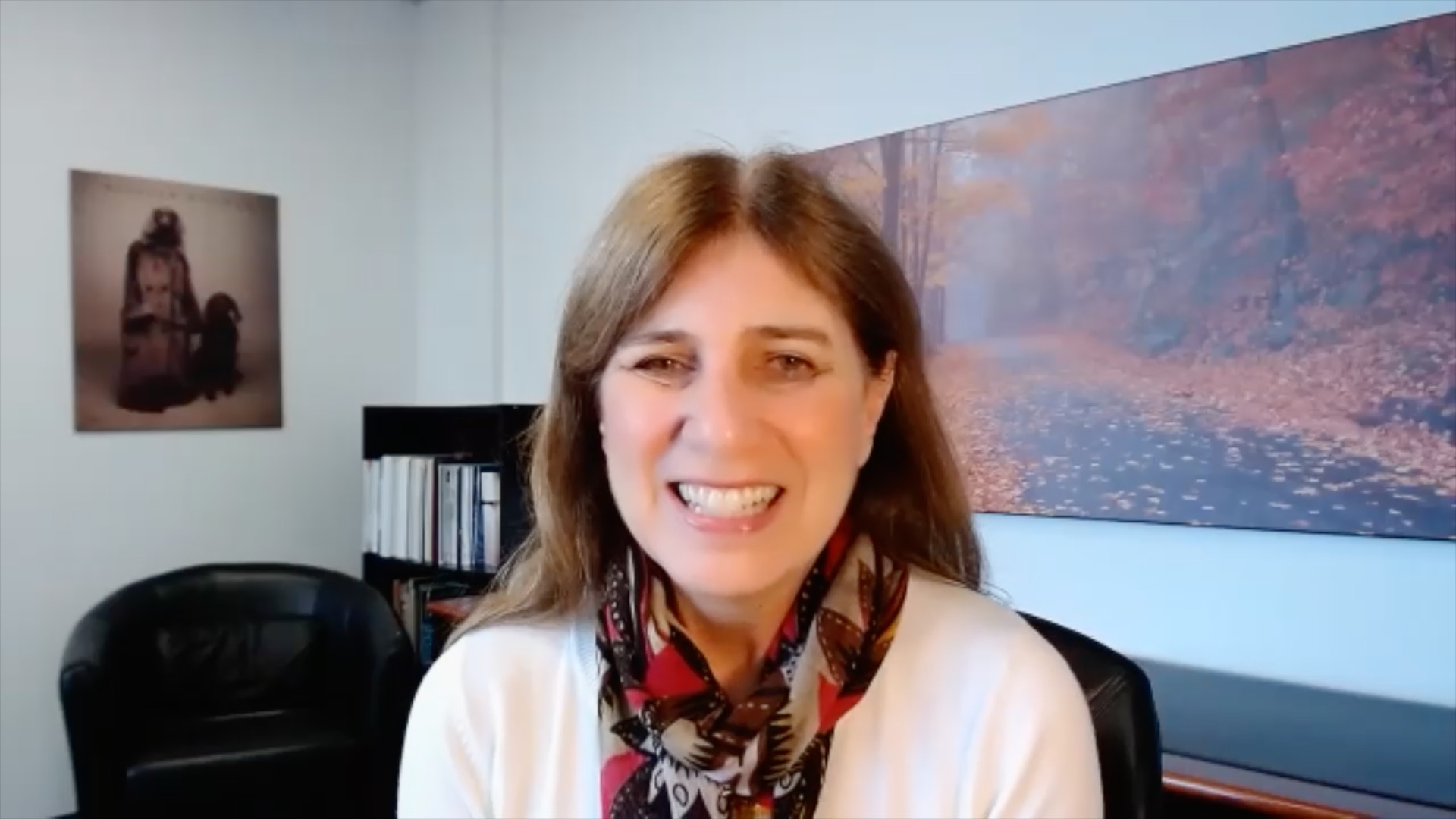
At the Alzheimer’s Association International Conference (AAIC) 2026, Dr Jacobo Mintzer (Department of Psychiatry and Behavioral Sciences, Medical University of South Carolina, Charleston, SC, USA) discussed the phase 2 LiBBY study that evaluated a combination of cannabidiol (CBD) and tetrahydrocannabinol (THC) for agitation in hospice-eligible patients with dementia. Dr Mintzer discusses the personal story that inspired the study, the key findings, and what they could mean for future palliative care.
Presentation: The Life’s End Benefits Of Cannabidiol And Tetrahydrocannabinol (LiBBY) Study. Session: Developing Topics Session – Developing Topics in Phase 2 Clinical Trials
touchNEUROLOGY coverage of AAIC 2026
Why was the LiBBY study developed?
Let me tell you the story behind the LiBBY study. Libby was a volunteer in one of our research studies who began to experience cognitive impairment. We first realized something was wrong after she accidentally damaged her garage door several times. During her cognitive assessment, she was diagnosed with acute lymphoma and died just two months later.
It was very painful to see her die. She received the medications that are routinely used to manage symptoms at the end of life, but they not only failed to improve her agitation, they appeared to make it worse. She also developed severe pruritus, constipation, increased confusion and rigidity in the arms. Libby died in misery, and never had the opportunity to share a peaceful goodbye with her family.
My wife and I witnessed this firsthand, and we felt there had to be a better way.
We began reviewing the available evidence and literature to identify therapies that might better address agitation in this population. Cannabidiol (CBD) and tetrahydrocannabinol (THC) emerged as promising candidates. THC is known to regulate emotional responses, while CBD can reduce the psychoactive effects of THC and may also help alleviate anxiety and agitation. Together, we believed they could provide an effective combination.
Our confidence increased after we reviewed a small crossover study by Dr Nathan Herrmann and Dr Krista Lanctôt evaluating nabilone, a synthetic form of THC. Although the study was small, patients experienced improvements in agitation while receiving active treatment, suggesting cannabinoids had therapeutic potential.
Building on these findings, our team developed a formulation combining THC with a proportionate amount of CBD. We chose an oil formulation because many hospice-eligible patients have difficulty swallowing or require feeding tubes. We partnered with a Canadian manufacturer to produce the formulation and ultimately launched the LiBBY study as a randomized, double-blind, placebo-controlled phase 2 trial across nine study sites.
What were the key findings from the LiBBY study?
The LiBBY study was a randomized, double-blind, placebo-controlled trial conducted across nine sites. We assessed two main outcomes. The first was the Cohen-Mansfield Agitation Inventory (CMAI), which measures the frequency of behaviors associated with agitation, such as aggression, shouting, grabbing, inappropriate movements and other signs of distress.
Secondly, we wanted to understand whether any reduction in agitation translated into a meaningful clinical benefit. To do this, we used a clinician-rated Global Impression of Change scale with behavioral anchors, allowing blinded clinicians to determine whether a patient had improved or worsened over time.
At Week 2, more than 80% of patients receiving active treatment were judged to have improved on the global assessment. We also observed a six-point difference between the treatment and placebo groups on the CMAI, representing a very substantial treatment effect.
By Week 12, the placebo group had remained largely stable, whereas patients receiving active treatment continued to improve. On the Global Impression of Change scale, 87% of patients receiving treatment were considered improved compared with 23% of those receiving placebo. Overall, the treatment was generally well tolerated.
Perhaps most importantly, we demonstrated that rigorous clinical research can be successfully conducted in hospice-eligible patients with dementia. Historically, this population has been treated largely on the basis of clinical experience rather than robust scientific evidence.
Our findings also reinforce an important point about cannabinoids. Marijuana should not be viewed as a single therapeutic entity. It contains more than 60 cannabinoids, each of which must be evaluated individually, at specific doses and in carefully selected combinations.
I hope people understand that we are not suggesting that medical marijuana, in general, will produce these same results. Rather, this specific formulation, evaluated in a phase 2 clinical trial, offers encouraging evidence that warrants further investigation before it could become available for routine clinical use.
What unmet need does the LiBBY study address?
There are currently no evidence-based treatments specifically for hospice-eligible patients with dementia who experience agitation.
To our knowledge, this is the first clinical trial conducted in this population, and one of the first studies to evaluate purified THC and CBD for this indication.
Death is a universal human experience, and the end of life is often one of the most meaningful times for patients and their families. It is the last opportunity to spend time together, share memories and say goodbye. However, when a person is severely agitated, aggressive or shouting, that opportunity can be lost.
Current management is largely based on medications commonly used in hospice care, including benzodiazepines, psychoactive medications and morphine. While these treatments may be appropriate in some situations, they are often ineffective for agitation and can contribute to adverse effects such as constipation, pruritus, confusion and rigidity.
What further evidence is needed before these therapies could become part of routine care?
The next step is to determine whether the benefits we observed in this very specific hospice population can be replicated in a broader group of patients with cognitive impairment who experience agitation.
If future studies demonstrate similar benefits, I believe there will be greater interest in advancing this formulation through the development pathway and ultimately making it available to patients.
What do you hope will be the lasting impact of the LiBBY study?
I hope this is only the beginning. Of course, I hope our findings continue to support this particular formulation, but I think the study’s greatest contribution is demonstrating that research in this population is both feasible and necessary.
Now that we have shown a rigorous clinical trial can be conducted in hospice-eligible patients with dementia, I hope it opens the door for researchers to evaluate many other potential therapies.
I also hope it encourages people to think differently about cannabinoids. Rather than viewing marijuana as something that is either recreational or a cure-all, we should see it as a source of many distinct compounds with therapeutic potential. Each cannabinoid should be studied individually, at the appropriate dose and in the right combination, to determine where it may provide meaningful clinical benefit.
Related content

AAIC 2026: Leading experts highlight advances shaping the future of Alzheimer’s disease
GRADUATE: Targeting the NLRP3 inflammasome in Alzheimer’s disease
Neflamapimod in dementia with Lewy bodies: New insights from the RewinD-LB programme
More content in Alzheimer’s disease
Cite: Jacobo Mintzer. Addressing agitation in end-of-life dementia: Insights from the LiBBY study. touchNEUROLOGY. 13 July 2026.
Presentation: The Life’s End Benefits Of Cannabidiol And Tetrahydrocannabinol (LiBBY) Study. Session: Developing Topics Session – Developing Topics in Phase 2 Clinical Trials
Editor: Katey Gabrysch, Editorial Director.
Disclosures: Dr Jacobo Mintzer is a consultant for ACADIA, the American Association of Retired Persons (AARP)-supported Global Council on Brain Health (GCBH), Axsome Therapeutics Inc., Exciva, Lundbeck, Merry Life, Otsuka/Avanir, Praxis Bioresearch, International Psychogeriatric Association (unpaid); has received grant/research support from National Institute on Aging (NIA), the National Institutes for Health (NIH), the Alzheimer’s Association, Eisai Inc., the Alzheimer’s Drug Discovery Foundation (ADDF), Cognition Therapeutics, Inc., GHR Foundation, Hoffmann-La Roche, Suven Life Sciences Ltd; is on the advisory board for Exciva, NeuroQuest, J&J, Praxis Bioresearch; has received honoraria/honorarium from Axsome; and is a Speaker’s bureau participant with Axsome; and is a major stock/shareholder in Praxis Bioresearch, NeuroQuest, Biopharma Connex.
The content was developed and edited by human editors. No fees or funding were associated with its publication. touchNEUROLOGY utilize AI as an editorial tool (ChatGPT (GPT-4o) [Large language model]. https://chat.openai.com/chat).
This content has been developed independently by Touch Medical Media for touchNEUROLOGY in collaboration with Dr Jacobo Mintzer. Views expressed are the speaker’s own and do not necessarily reflect the views of Touch Medical Media.
SIGN UP to touchNEUROLOGY!
Join our global community today for access to thousands of peer-reviewed articles, expert insights, and learn-on-the-go education across 150+ specialties, plus concise email updates and newsletters so you never miss out.