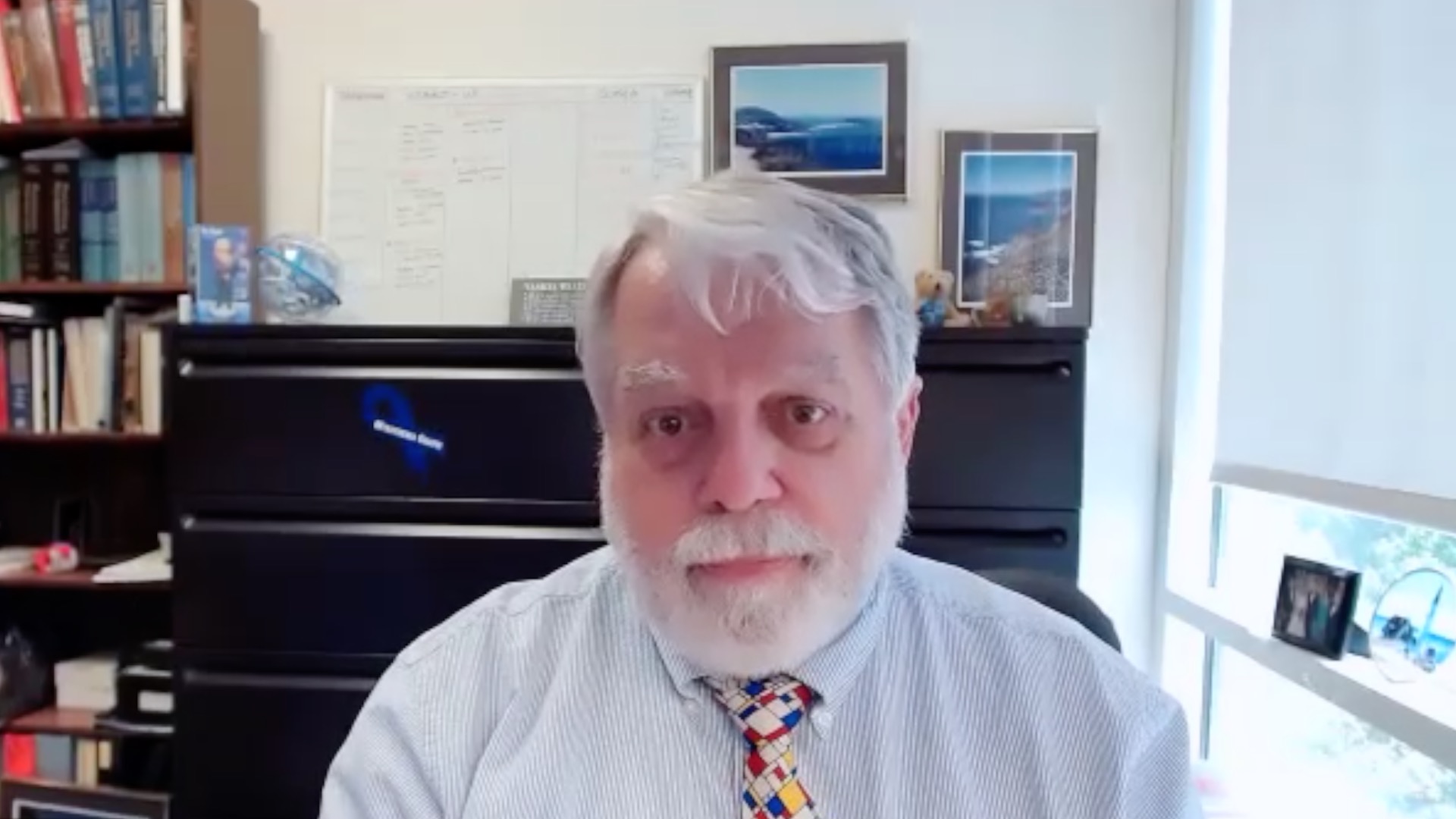
Prof. Kenneth Gorson discusses the unmet need in Guillain–Barré syndrome, the phase 3 GBS-02 trial data evaluating tanruprubart, and how complement inhibition could improve recovery while reducing the long-term healthcare burden of this disabling disease.
touchNEUROLOGY coverage of EAN 2026
We spoke with Prof. Kenneth Gorson (Professor of Neurology at Tufts University School of Medicine, Boston, MA, USA) following the presentation of new phase 3 data evaluating tanruprubart in acute Guillain-Barré syndrome (GBS).
In this interview, he discusses the significant unmet need in GBS, the rationale for targeting complement activation with C1q inhibition, and why the latest efficacy, safety and health economic findings suggest tanruprubart could represent the first major advance in GBS treatment in more than 30 years.
Questions:
- Guillain-Barré syndrome remains a neurological emergency despite the availability of IVIg and plasma exchange. What are the biggest challenges in managing patients today, and where do you see the greatest unmet need?
- What is tanruprubart’s mechanism of action and how does this mechanism differ from current standard-of-care treatments for patients with Guillain-Barré syndrome?
- Could you summarize the key efficacy and safety findings of the Phase 3 GBS-02 trial, and which outcomes do you consider most clinically meaningful for patients with Guillain-Barré syndrome?
- If tanruprubart becomes the first approved therapy specifically for Guillain-Barré syndrome, how do you see it changing the treatment paradigm, and what steps will be needed to ensure patients are diagnosed and treated as early as possible?
- Alongside the Phase 3 clinical data, several studies presented at EAN examine health-related quality of life and the wider health and economic burden of Guillain-Barré syndrome. What do these findings tell us about the impact of GBS on patients, caregivers and healthcare systems, and why are these outcomes important when evaluating new therapies?
- What is the key takeaway for practicing clinicians?
Associated abstracts
- Tanruprubart Rapidly Improves Health-related Quality of Life in Patients with Guillain–Barré Syndrome: A Randomised, Placebo-controlled Ph3 Study (poster)
- Safety Profile of tanruprubart (ANX005) in Patients with Guillain–Barré Syndrome: A Randomised, Placebo-controlled Phase 3 Study (poster)
- Tanruprubart, anti-C1q therapy, Accelerates Recovery and Reduces Ventilation in Severe Guillain-Barré Syndrome: Results from the Phase 3 GBS-02 Trial (poster)
- A Novel Guillain–Barré Syndrome Clinical Progression Scale to Characterise the Patient’s Care Journey: Utilisation in a Phase 3 Trial of Tanruprubart (poster)
- Tanruprubart Rapidly Improves Health-related Quality of Life in Patients with Guillain–Barré Syndrome: A Randomised, Placebo-controlled Ph3 Study (script)
- Safety Profile of tanruprubart (ANX005) in Patients with Guillain–Barré Syndrome: A Randomised, Placebo-controlled Phase 3 Study (script)
- Tanruprubart, anti-C1q therapy, Accelerates Recovery and Reduces Ventilation in Severe Guillain-Barré Syndrome: Results from the Phase 3 GBS-02 Trial
Presentation of the these abstracts/presentations took place at the 12th Congress of the European Academy of Neurology – Geneva 2026, Geneva, Switzerland. June 27-30, 2026.
Disclosures: Kenneth Gorson is a consultant for Argenx, Annexon Biosciences, Immunovant, Janssen, Johnson & Johnson, and Sanofi, and on the advisory board for Annexon BioSciences, and Hansa Biopharma.
This content has been developed independently by Touch Medical Media for touchNEUROLOGY. It is not affiliated with the European Association of Neurology (EAN).
Transcript
My name is Prof Kenneth Gorson, and I’m located in Boston, Massachusetts. I’m Professor of Neurology at Tufts University School of Medicine and was an attending neurologist at Saint Elizabeth’s Medical Center in Boston for about 30 years. During that time, I’ve cared for probably a couple of hundred patients with Guillain–Barré syndrome (GBS).
I was the US country coordinator for the International Guillain–Barré Syndrome Outcome Study (IGOS), and we recruited roughly 200 patients in the US to the IGOS study. I also served on the Data Safety Monitoring Board for the Phase III trial of ANX005 (taneruparet) in acute Guillain–Barré syndrome in Bangladesh and the Philippines. I’m currently chairing the Steering Committee for the new FORWARD trial, which will enrol patients with acute, predominantly demyelinating GBS in the United States and Europe.
Q. Guillain-Barré syndrome remains a neurological emergency despite the availability of IVIg and plasma exchange. What are the biggest challenges in managing patients today, and where do you see the greatest unmet need?
GBS is a rare illness, affecting around one to two people per 100,000 each year, but it has a disproportionately large impact on patients’ quality of life, functionality and healthcare costs.
The biggest issue is that many patients remain permanently disabled after they recover from GBS. Many are left with disabling gait impairment, foot drop due to axonal loss, hand weakness and balance difficulties. Many also experience what we call residual symptoms, including chronic pain, fatigue and an inability to perform activities of daily living that persist long after the acute illness.
What we need to do is shut down this illness as quickly as possible. We’ve come to recognize that time is nerve, but unfortunately our current treatments are not as effective as we would like.
We currently have no FDA-approved treatments specifically for Guillain–Barré syndrome. The standard of care is intravenous immunoglobulin (IVIg), administered over five days, or plasma exchange, typically five exchanges over 7–10 days. Both have been studied in randomized clinical trials and have demonstrated comparable efficacy.
The problem is that, by four weeks, the majority of patients remain significantly disabled, with relatively little improvement in disability scores. By that stage, the acute immune attack has essentially run its course. We understand GBS to be a disease that evolves over approximately 7–10 days, driven by pathogenic antibodies and complement activation, but unfortunately we often don’t intervene early enough.
Because of delays in diagnosis and treatment, the disease continues to progress during the acute phase. As time passes, patients can develop profound disability, often requiring intensive care management. Around one-third of patients require mechanical ventilation. So, despite current therapies, we still don’t have truly effective treatments.
That’s why we’re so excited about the potential of this new drug, ANX005 (taneruparet), which has the potential to shut down the disease process by specifically targeting complement activation, one of the key mechanisms driving GBS.
Q. What is tanruprubart’s mechanism of action and how does this mechanism differ from current standard-of-care treatments for patients with Guillain-Barré syndrome?
Current standard therapies are based on neutralizing or removing pathogenic antibodies. IVIg is thought to neutralize these antibodies and may also have some anti-complement activity. Plasma exchange removes the pathogenic antibodies from circulation, allowing the nerves to recover.
In contrast, ANX005 is a C1q inhibitor, acting at the very beginning of the classical complement cascade. By blocking C1q early, you prevent formation of the membrane attack complex and subsequent nerve injury. It works rapidly and is administered as a single infusion over less than one day.
Q. Could you summarize the key efficacy and safety findings of the Phase 3 GBS-02 trial, and which outcomes do you consider most clinically meaningful for patients with Guillain-Barré syndrome?
The efficacy data are incredibly impressive. Compared with what we’ve seen historically with IVIg or plasma exchange, the rate of recovery is dramatically faster. In this placebo-controlled trial, treated patients improved by an average of 10 points on the Medical Research Council (MRC) sum score after just one week. That’s a remarkable improvement.
Some of these patients were wheelchair-bound or bedridden, yet some were able to get up and walk after only one week of treatment. By Week 8, improvements in disability scores were also highly encouraging. Importantly, around 60% of treated patients improved by at least one point on the GBS disability scale after one week, whereas this was rarely seen in the placebo group.
We know that patients with GBS generally recover over time following treatment, so we often assess outcomes at around six months. At that point, approximately 26% of patients treated with ANX005 achieved a GBS disability score of zero, essentially returning to normal function as though they had never had the disease. Although some patients receiving standard care also achieve this outcome, these results are clearly superior to placebo.
From a safety perspective, the drug was extremely well tolerated. The most common adverse event was an infusion-related maculopapular rash, which was generally mild, self-limiting and resolved over several days without intervention.
There were initial concerns that, as a complement inhibitor, the drug might impair immune function and increase the risk of infection, particularly in ventilated patients. Fortunately, that was not the case. Rates of infection and sepsis were very similar between the treatment and placebo groups.
The same was true for mortality. There were very few deaths overall – three in the treatment group and three in the placebo group. Overall, this appears to be a very well-tolerated therapy.
Importantly, this is a one-time treatment. It is administered intravenously over approximately 16 hours, after which treatment is complete. Patients then experience a much more rapid recovery.
The goal is to get patients moving again sooner and to reduce the duration of mechanical ventilation. One particularly striking finding was that patients receiving ANX005 came off ventilator support an average of 28 days earlier than those receiving placebo.
That’s an extraordinary improvement. It means patients can leave intensive care earlier, be discharged to rehabilitation or even home sooner and begin recovering much more quickly.
Earlier recovery also substantially reduces the risk of complications. We know that critically ill patients with GBS who require prolonged ventilation are vulnerable to numerous complications, including infections, electrolyte disturbances, pulmonary embolism and autonomic dysfunction. Reassuringly, increased infection rates were not observed in this trial.
Q. If tanruprubart becomes the first approved therapy specifically for Guillain-Barré syndrome, how do you see it changing the treatment paradigm, and what steps will be needed to ensure patients are diagnosed and treated as early as possible?
Diagnosis remains one of our biggest challenges. Patients often present initially to the emergency department with relatively nonspecific symptoms such as radicular pain or paraesthesia. Early in the disease course, the diagnosis is frequently missed and patients are discharge.
They then return several days later with more obvious neurological deficits, including progressive limb weakness, at which point the diagnosis becomes much clearer. Unfortunately, valuable time has already been lost before treatment can begin.
Although this new therapy won’t solve the diagnostic delay, I believe it has the potential to fundamentally change the treatment landscape for Guillain–Barré syndrome. Assuming regulatory approval is obtained, I expect most clinicians will administer ANX005 as early as possible.
IVIg and plasma exchange may eventually become second-line therapies, although clinical practice will undoubtedly vary. Some clinicians may still administer IVIg later in the disease course or if patients deteriorate after initial improvement, but these individual practice variations are unlikely to represent the future standard of care.
Q. Alongside the Phase 3 clinical data, several studies presented at EAN examine health-related quality of life and the wider health and economic burden of Guillain-Barré syndrome. What do these findings tell us about the impact of GBS on patients, caregivers and healthcare systems, and why are these outcomes important when evaluating new therapies?
The healthcare burden associated with GBS is extraordinary. There have been relatively few systematic studies examining the impact on patients, caregivers and healthcare systems, but despite its rarity, GBS has a disproportionate socioeconomic impact.
One example is mortality. Among patients younger than 65 years, mortality is approximately 5%, which is consistent with historical data. However, in patients over 65 years of age, mortality increases to around 24%, which is remarkable.
Much of this mortality occurs after hospital discharge. Patients often have significant comorbidities and may require transfer to skilled nursing facilities or long-term care. They remain vulnerable to a range of medical complications outside the acute hospital setting.
The financial impact on patients and caregivers is also substantial. Around half of patients recovering from Guillain–Barré syndrome never return to work, representing a tremendous loss of income.
Overall, the estimated direct and indirect cost of managing GBS in the United States is approximately US$7.5 billion annually. That’s an extraordinary figure and reflects just how disabling this disease can be.
Many patients require prolonged physiotherapy, occupational therapy and speech therapy, along with home modifications such as grab rails and raised toilet seats. All of these interventions carry considerable cost.
The hope is that, by stopping the disease process early and promoting faster recovery, we can improve long-term outcomes while substantially reducing healthcare resource utilization and overall costs.
I believe this represents a major advance in the treatment of acute Guillain–Barré syndrome.
Q. What is the key takeaway for practicing clinicians?
This is going to be a huge change in the care of acute Guillain-Barre syndrome moving forward. The GBS community, clinicians and patient advocacy organizations are all extremely excited that we may finally have an effective new therapy. We haven’t seen a genuinely new treatment for Guillain-Barré syndrome in approximately 30 years, so this has the potential to represent a true paradigm shift in the management of this serious and disabling disease.
More content in Alzheimer’s disease
Cite:
Editor: Katey Gabrysch, Editorial Director.
SIGN UP to touchNEUROLOGY!
Join our global community today for access to thousands of peer-reviewed articles, expert insights, and learn-on-the-go education across 150+ specialties, plus concise email updates and newsletters so you never miss out.