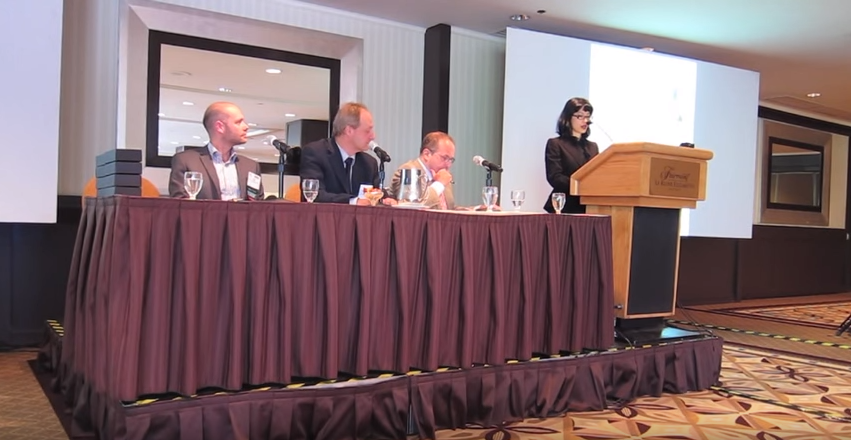
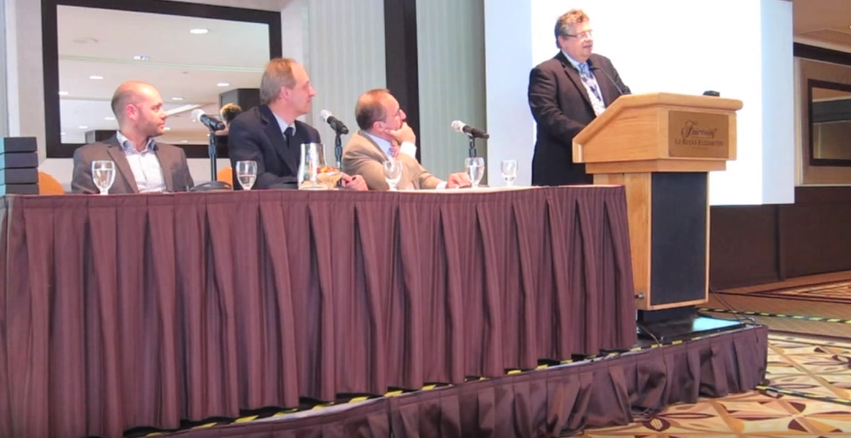
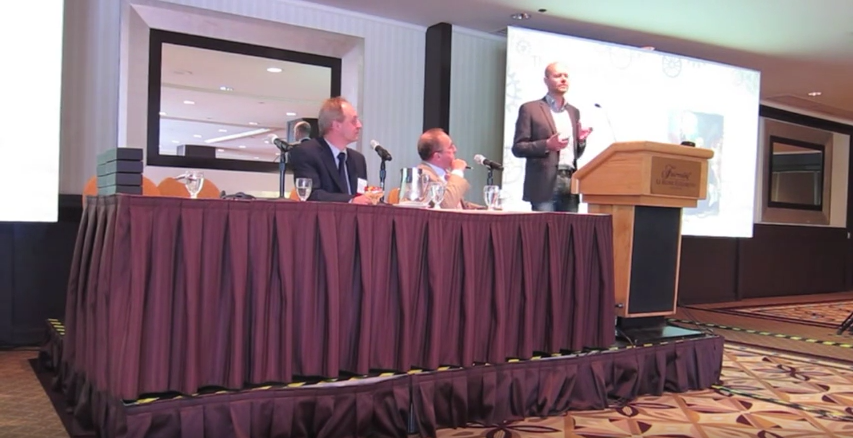
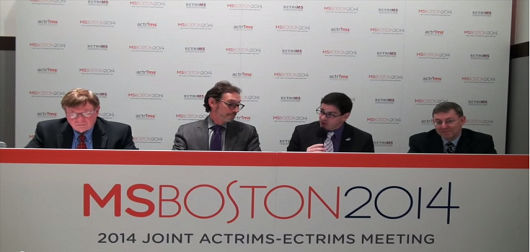
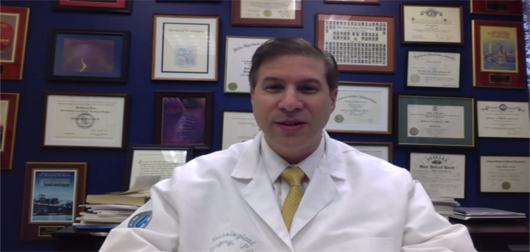
Ms. Joanna Chow of Toronto, Canada shared her story of becoming a spinal cord stimulation patient for chronic pain, speaking at an educational event by the Canadian Neuromodulation Society (CNS) and the International Neuromodulation Society (INS). In Part II she describes receiving the therapy that she continues to use. (Due to a camera malfunction, the final part of her talk was not recorded and so was reconstructed from notes. Please use the pause feature if you need more time to read the wording on any section.) Her presentation in Montreal took place prior to the INS 12th World Congress there in June 2015. CNS President Michel Prudhomme, MD, PhD, is at the middle of the panel. On the left is Kaare Meier, MD, PhD, chairman of the Nordic chapter; to the right is the moderator, journalist Bernard Derome.
Disclaimer: The International Neuromodulation Society (INS) provides videotaped talks by physicians and patients about neuromodulation therapy on its YouTube channel. INS produced videos of talks presented at a public event in 2015 that was jointly organized by the INS and the Canadian Neuromodulation Society. The information presented should not be used as a substitute for medical treatment and advice.