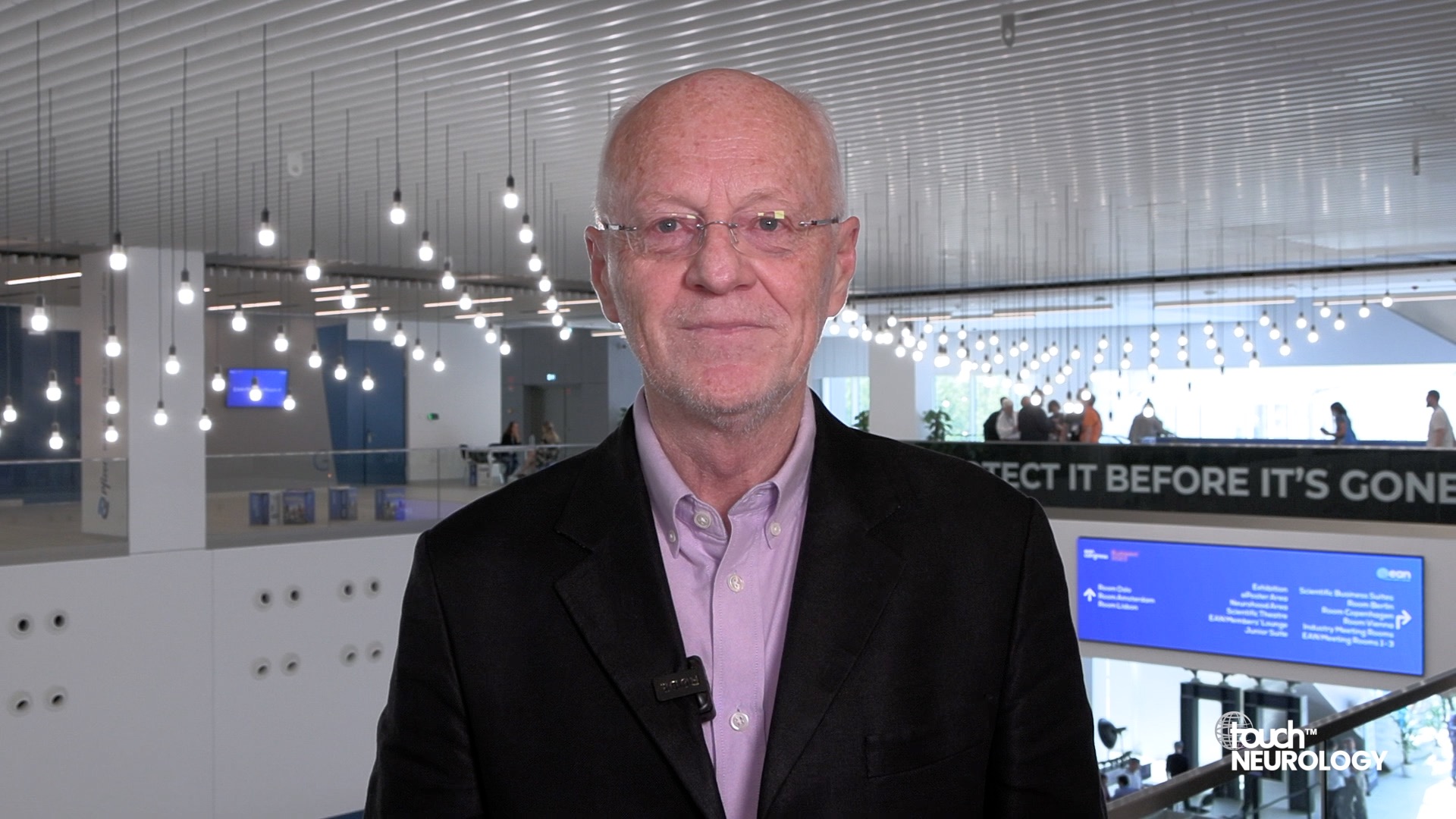
Monthly migraine days remain a central endpoint in migraine trials and clinical practice, but do they capture what matters most to people living with migraine? At the Migraine Trust International Symposium 2026, touchNEUROLOGY spoke with Prof. Stewart J. Tepper about interictal burden, treatment effectiveness, and why migraine outcomes may need to evolve.
 Prof. Stewart J. Tepper (New England Institute for Neurology and Headache, Stamford, CT, USA) is a neurologist and headache specialist whose clinical and research work focuses on migraine and other headache disorders.
At the Migraine Trust International Symposium (MTIS) 2026, Prof. Tepper participated in the session Beyond Monthly Migraine Days: What Really Matters to Patients? We spoke with him about why conventional trial endpoints may capture only part of the impact of migraine, which developments stood out at the meeting, and how migraine treatment could change in clinical practice.
touchNEUROLOGY coverage of MTIS 2026
What are the key takeaways from your presentation at MTIS 2026, and what could they mean for the future management of migraine?
My presentation focused on the limitations of relying on individual regulatory outcomes, both in clinical research and in practice. Two examples are monthly migraine days for preventive treatment and pain freedom at 2 hours for acute treatment.
Monthly migraine days measure migraine frequency, but frequency does not capture the whole experience of migraine. In the OVERCOME study, moderate to severe migraine interictal burden was the factor most strongly associated with seeking clinical care.
The broader burden of migraine extends beyond headache days. Patients can experience prodrome and postdrome symptoms, cognitive dysfunction, and an ongoing impact between headache days that interfere with daily life. We therefore need to go beyond monthly migraine days when we discuss with patients how well a treatment is working and when we assess therapies in clinical trials.
“We need to go beyond monthly migraine days when we discuss with patients how well a treatment is working and when we assess therapies in clinical trials.”
One indirect way of doing this is to look at consecutive headache-free days. When patients achieve 2 weeks, 3 weeks, or even 30 days without headache, patient-reported outcomes can improve substantially.
We need to start looking at these wider outcomes so that we address what brings patients to us in the first place and more accurately evaluate whether treatment is working.
What are the most important next steps for research in this area?
I think we need different regulatory and clinical outcome measures.
If we continue to focus primarily on monthly migraine days or pain freedom at 2 hours, we miss important aspects of treatment effectiveness. These endpoints do not necessarily capture tolerability or what happens on non-headache days.
On the acute treatment side, for example, a patient may technically be pain free at 2 hours, but if they cannot take the treatment when they need it because of adverse effects, then that treatment is suboptimal for them.
We need to look at the entire picture of effectiveness rather than relying on a single outcome.
Looking across MTIS 2026, which developments stood out to you most?
I was very interested in the bocunebart studies investigating an anti-pituitary adenylate cyclase-activating polypeptide monoclonal antibody, as well as the work looking at atogepant as an acute treatment.
I was also particularly interested in a poster, which Prof. Peter Goadsby co-authored, examining recurrence of cluster headache following oxygen treatment.
There were some very interesting posters on menstrual migraine and different approaches to treatment, so there was a strong mix of clinically relevant and research-focused work.
Finally, there was a major session on how we might incorporate artificial intelligence into clinical practice and research. I thought that was formidable.
Is there anything else you would highlight about the direction of migraine care?
The most important point for me is that times have changed. I think migraine-specific treatments should be considered earlier, rather than requiring patients to work through a series of treatments that they may not tolerate or continue taking before they can access an appropriate migraine-specific therapy.
We now have migraine-specific treatment options with important advantages in efficacy, safety, and tolerability for many patients. Treatment pathways, payers, regulatory authorities, and clinicians need to evolve alongside the evidence so that we can better match treatment to individual patient need.
More content in migraine and headache disorders
Cite: Beyond monthly migraine days: Measuring meaningful migraine outcomes. touchNEUROLOGY. 21 September 2026.
Editor: Katey Gabrysch, Editorial Director.
Disclosures:
Prof. Stewart Tepper is a consultant for and/or is on the advisory boards (receiving honoraria) for: AbbVie, Aeon, Alphasights, Amgen, Amneal, Aruene Corporation/eNeura, Inc., Aspeya, Atheneum, Axsome Therapeutics, Bausch Health, Becker Pharmaceutical Consulting, Catch Therapeutics, ClearView Healthcare Partners, Click Therapeutics, CoolTech, CRG, Decision Resources, Defined Health, DocDelta, Dr. Reddy’s, DRG, Eli Lilly, Evommune, ExpertConnect, FCB Health, Fenix, Gilmartin Capital, GLG, Guidepoint Global, Health Advances, Health Science Communications, HMP Communications, Impel, InteractiveForums, IQVIA, Keyquest, KLJ Associates, Krog and Partners, Lundbeck, M3 Global Research, Magellan Health, Magnolia Innovation, MJH Holdings, Neurofront Therapeutics, Nocira, P Value Communications, Pain Insights, Inc., Palion Medical, Paragon Therapeutics, Perfood, Pfizer, Putnam Associates, Rehaler, Relevale, SAI MedPartners, Satsuma, Scilex, Slingshot Insights, Soleil Consulting, Spherix Global Insights, Sprigings Intellectual Property Law, Strategy Inc., Synapse Medical Communication, System Analytic, Taylor & Francis, Tegus, Theranica, Third Bridge, Tonix, Trinity Partners, Vial; has received grant/research support from: AbbVie, Aeon, Amgen, Annovis, Aspeya, Axsome, Biohaven, Bristol Myers Squibb, Cassava, Cognition, Eli Lilly, Evommune, Genentech, F. Hoffmann-La Roche, Inhibikase, Ipsen, Johnson & Johnson/Intra-Cellular Therapies, Kallyope, Karuna, Kedrion, Lundbeck, Merz, Neurocrine, Novartis, Pfizer, PrecisionMed, Revance, Sanofi, Suven, UCB, Upsher-Smith; has receieved CME honoraria from: American Headache Society, Consortium for Research Education Social Awareness and Training in Neurosciences, Diamond Education Foundation, Forefront Collaborative, HMP Global, Medical Education Speakers Network, Medical Learning Institute, Inc./PVI, PeerView Institute for Medical Education, Miller Medical Education, National Association for Continuing Education, North American Center for CME, Physicians’ Education Resource, PlatformQ Education, Primed, Vindico Medical Education, WebMD/Medscape; is a speaker’s bureau participant with: AbbVie, Amneal, Axsome, Dr. Reddy’s, Eli Lilly, Impel, Lundbeck, Pfizer, Scilex, Tonix; has received royalties from Springer Health; and travel honoraria from AbbVie, American Headache Society, Amneal, Axsome, Diamond Education Foundation, Dr. Reddy’s, Eli Lilly, Impel, Kallyope, Lundbeck, Pfizer, Sanofi. Salary from: Ki Health Partners, Thomas Jefferson University.
The MTIS session discussed in this interview was organized and funded by Pfizer. This interview was conducted independently by touchNEUROLOGY.
The content was developed and edited by human editors. No fees or funding were associated with its publication. touchNEUROLOGY utilize AI as an editorial tool (ChatGPT (GPT-4o) [Large language model]. https://chat.openai.com/chat).
This content has been developed independently by Touch Medical Media for touchNEUROLOGY in collaboration with Prof. Stewart Tepper. Views expressed are the speaker’s own and do not necessarily reflect the views of Touch Medical Media.
SIGN UP to touchNEUROLOGY!
Join our global community today for access to thousands of peer-reviewed articles, expert insights, and learn-on-the-go education across 150+ specialties, plus concise email updates and newsletters so you never miss out.