One-year data from the phase 2 KYSA-8 trial showed sustained improvements in mobility, disability, stiffness, and hypersensitivity following a single infusion of the CD19-directed CAR T-cell therapy mivocabtagene autoleucel, with 92% of participants remaining free of chronic immunotherapy. The primary 16-week analysis has now also been published in JAMA Neurology.

One-year findings from the pivotal phase 2 KYSA-8 trial (NCT06588491) suggest that a single dose of mivocabtagene autoleucel (miv-cel; formerly KYV-101), an investigational autologous CD19-directed chimeric antigen receptor (CAR) T-cell therapy, may provide sustained clinical benefit for people with treatment-refractory stiff person syndrome (SPS).1,2
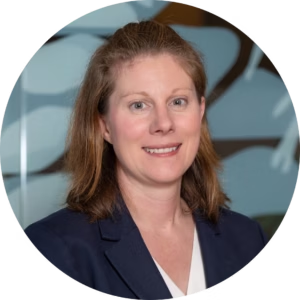 The full one-year dataset was presented by Dr Amanda Piquet (University of Colorado Anschutz School of Medicine, Aurora, CO, USA), lead investigator of KYSA-8 and Céline Dion Foundation Endowed Chair in Autoimmune Neurology, at MS Toronto 2026, the joint meeting of the Americas Committee for Treatment and Research in Multiple Sclerosis (ACTRIMS) and European Committee for Treatment and Research in Multiple Sclerosis (ECTRIMS).2
Since the meeting, the primary analysis of KYSA-8 has also been published in JAMA Neurology, providing peer-reviewed findings from the initial 16-week efficacy and safety analysis.3 In addition, completion of the rolling Biologics License Application (BLA) submission to the US Food and Drug Administration (FDA) was recently announced for miv-cel in SPS, requesting priority review based on data from the registrational KYSA-8 trial.
The phase 2 KYSA-8 study enrolled 27 adults with antibody-positive SPS who had experienced an inadequate response to immunomodulatory or immunosuppressive therapy, of whom 26 received treatment. Participants received lymphodepleting chemotherapy followed by a single infusion of miv-cel. The primary endpoints were change from Baseline in the timed 25-foot walk (T25FW) at Week 16 and safety.1,3
Primary KYSA-8 findings published in JAMA Neurology3
The JAMA Neurology publication confirms that KYSA-8 met its primary efficacy endpoint, with significant improvements in mobility at Week 16 following a single dose of miv-cel.
Mean T25FW time improved by 7.69 seconds from Baseline (95% confidence interval [CI], −11.74 to −3.64; p<0.001), corresponding to a median improvement of 45.6%. Overall, 81% of participants achieved a clinically meaningful improvement of at least 20% in T25FW at Week 16.
Significant improvements were also reported across all secondary endpoints assessing disability, stiffness, hypersensitivity, and mobility. At Week 16, mean improvements from Baseline were −0.8 on the Modified Rankin Scale, −1.5 on the Distribution of Stiffness Index, −3.2 on the Heightened Sensitivity Scale, and −1.6 on the Hauser Ambulation Index (all p<0.001).
Among the 12 participants who required a walking aid at Baseline, eight (67%) no longer required assistance when completing the walking assessment at Week 16.3 All participants remained free of immunomodulatory or immunosuppressive therapies for SPS at their latest available follow-up in the primary analysis.
The publication also provided early evidence supporting immune reconstitution following treatment. By Week 16, B-cell reconstitution had occurred in 14 of 26 participants (53.8%), with an increase in naïve B cells, a reduction in class-switched memory B cells, and an increase in regulatory T cells. Importantly, clinical improvement was maintained among participants in whom B cells had reconstituted.
These peer-reviewed primary findings provide the foundation for the longer-term results subsequently presented at MS Toronto 2026, which assessed whether clinical benefits were sustained through one year.
Sustained improvements in mobility at one year
At one year, the median improvement in T25FW from Baseline was 49%, compared with a 46% improvement at the Week 16 primary endpoint. A clinically meaningful improvement of at least 20% in T25FW was achieved by 20 of 26 participants (77%) at one year, compared with 21 of 26 (81%) at Week 16.2
Among the 12 participants who required a walking aid before treatment, eight (67%) continued to complete the walking assessment without assistance at one year. More than one-third of participants completed the T25FW in under 5 seconds.2
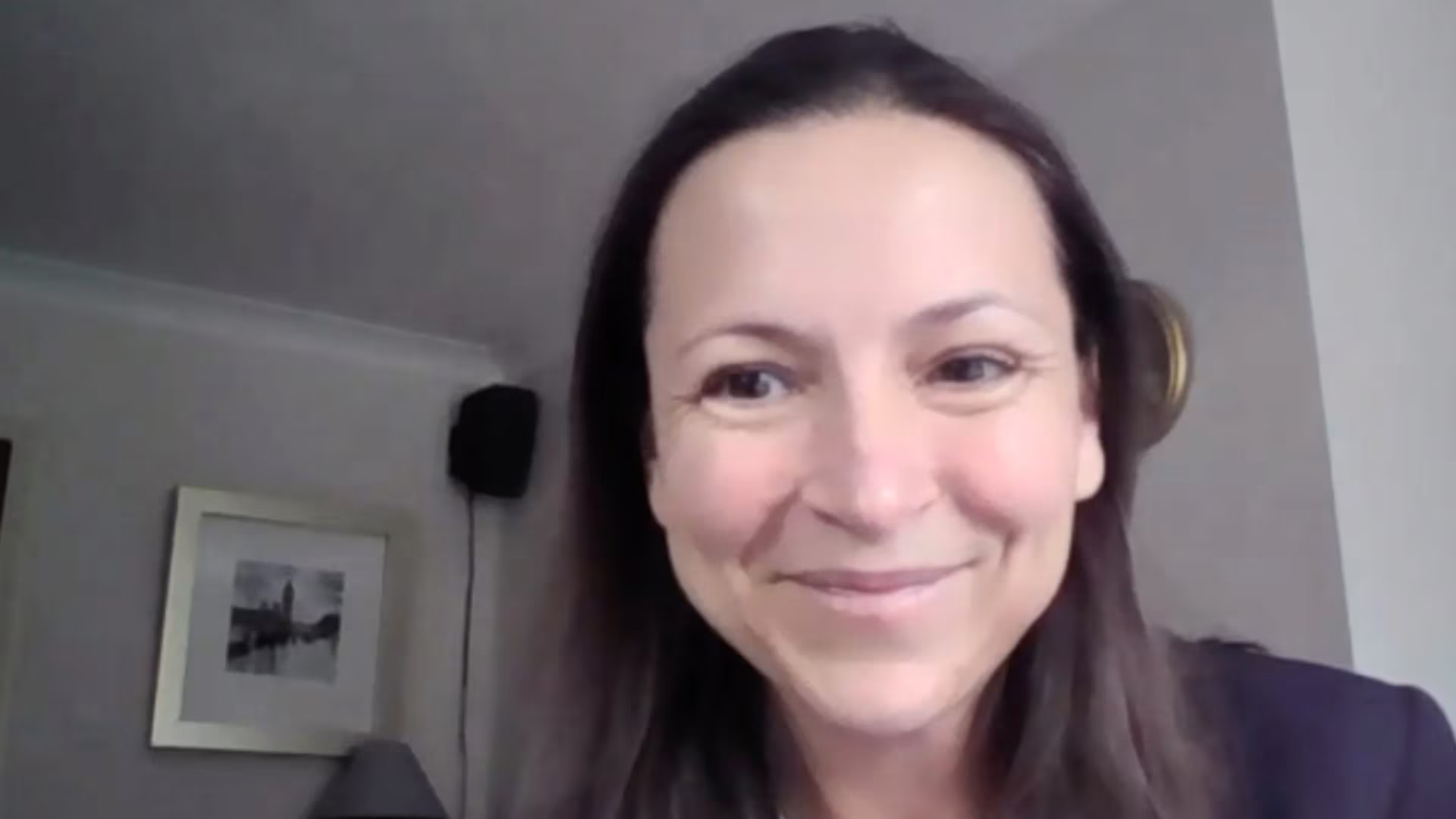
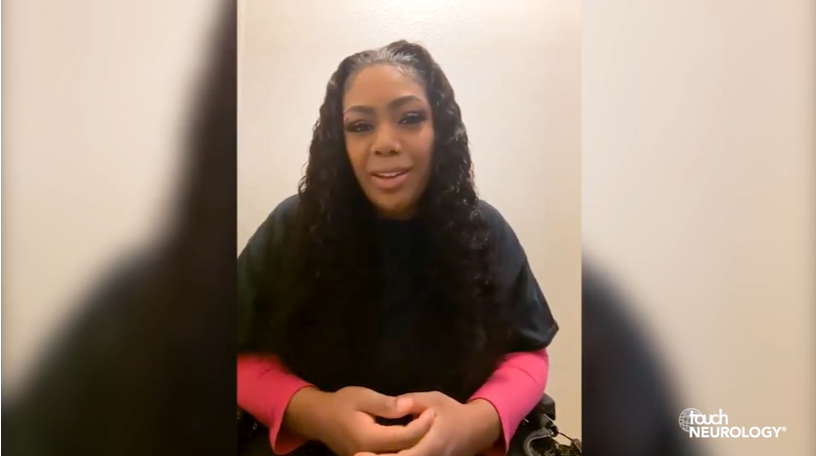
Commenting on the one-year mobility findings, Dr Amanda Piquet told touchNEUROLOGY:
Improvements were also maintained across secondary measures of disability and SPS disease burden. At one year, mean changes from Baseline were −1.0 on the Modified Rankin Scale (p=0.0003), −1.7 on the Hauser Ambulation Index (p<0.0001), −1.6 on the Distribution of Stiffness Index (p<0.0001), and −2.8 on the Heightened Sensitivity Scale (p<0.0001).2
Exploratory findings also indicated further improvement in walking endurance over time. Median distance gained during the 6-minute walk test increased from 89 m at Week 16 to 119 m at one year.2
Dr Piquet added:
Most participants remained free of chronic immunotherapy
At one year, 24 of 26 participants (92%) remained free of chronic immunotherapy for SPS. This is notable in a disease for which management currently relies on symptomatic therapies and off-label immunotherapies, with no US Food and Drug Administration (FDA)-approved treatment specifically for SPS.2
Reflecting on the burden of SPS, Dr Piquet said:
The University of Colorado Anschutz report of the findings also highlighted the functional impact of treatment. Of the 12 participants who required a walking aid before receiving miv-cel, eight (67%) were able to complete the walking assessment without assistance at one year. In addition, 35% of participants completed the T25FW in under 5 seconds.4
Importantly, B cells had begun to reconstitute in 65% of participants by one year, while clinical improvements were maintained.2,4 Together with the immune reconstitution findings reported in the primary analysis, these data support further investigation of whether deep B-cell depletion followed by immune reconstitution can produce a durable alteration in the underlying autoimmune process. Longer-term follow-up will be needed to establish the durability and mechanism of this effect.
Discussing the implications of B-cell reconstitution, Dr Piquet commented:
Safety findings remain consistent at one year
The peer-reviewed primary analysis provides important context for interpreting the one-year safety findings.
Low-grade cytokine release syndrome (CRS) occurred in 24 of 26 participants (92.3%), comprising grade 1 events in 10 participants (38.5%) and grade 2 events in 14 (53.8%). Grade 1 immune effector cell-associated neurotoxicity syndrome (ICANS) occurred in three participants (11.5%). All CRS and ICANS events resolved without sequelae.3
The most common grade 3 or 4 treatment-related adverse event was neutropenia, which occurred in five of 26 participants (19.2%).3
At the one-year follow-up, no high-grade CRS or ICANS had been reported, and there were no cases of immune effector cell-associated hemophagocytic lymphohistiocytosis-like syndrome.2 Three participants experienced serious treatment-related adverse events, all of which had resolved at the time of reporting.2
These findings clarify that the absence of high-grade CRS or ICANS reported at one year does not indicate an absence of these adverse events during the acute treatment period; rather, the events observed in the primary analysis were low grade and resolved without reported sequelae.
Commenting on the safety profile, Dr Piquet said:
CAR T-cell therapy across neurologic autoimmune disease
The KYSA-8 findings form part of a broader program investigating miv-cel across neurologic autoimmune diseases. At MS Toronto 2026, investigators also reported updated phase 1 data in progressive multiple sclerosis (MS). In the small, open-label study, six participants with non-relapsing primary or secondary progressive MS received miv-cel, with efficacy data available for five participants.5,6
All five evaluable participants had stable or improved Expanded Disability Status Scale scores at their latest follow-up, and four of five showed sustained clinical benefit through one year. Four participants followed for more than one year remained improved without resuming chronic immunotherapy, while the first participant treated had maintained clinical benefit for more than 2 years. CAR T cells were also detected in cerebrospinal fluid, alongside complete peripheral CD19-positive B-cell depletion and subsequent emergence of naïve B cells.5,6 These early findings require confirmation in larger controlled trials.
Miv-cel has received FDA Regenerative Medicine Advanced Therapy designation for SPS, generalized myasthenia gravis, and non-active secondary progressive MS. On 12 November 2026, Kyverna Therapeutics announced the completion of its rolling BLA submission to the FDA for miv-cel in SPS, requesting priority review based on data from the registrational KYSA-8 trial.2,5,7
The publication of the primary analysis alongside the one-year findings provides an increasingly detailed picture of the clinical response to miv-cel in SPS. Longer-term follow-up will be important to determine whether improvements persist following B-cell reconstitution and whether a single CAR T-cell treatment can provide sustained disease control without a return to chronic immunotherapy.
References
- ClinicalTrials.gov. A study of anti-CD19 chimeric antigen receptor T-cell (CD19 CAR T) therapy in subjects with treatment refractory stiff person syndrome. ClinicalTrials.gov Identifier: NCT06588491. Available at: https://clinicaltrials.gov/study/NCT06588491 (accessed November 11, 2026)
- Piquet AL. 1-Year Analysis of KYSA-8: the Pivotal, Multicenter, Phase 2 Study of Miv-cel (Mivocabtagene Autoleucel; Formerly KYV-101) CD19 CAR T-Cell Therapy in Stiff Person Syndrome. Presented at: MS Toronto 2026, Toronto, Canada, October 21, 2026. Poster P0364
- Piquet AL, Zekeridou A, Gergis U, et al. Mivocabtagene autoleucel CD19 chimeric antigen receptor T-cell therapy in stiff person syndrome: A nonrandomized clinical trial. JAMA Neurol. Published online November 9, 2026. doi:10.1001/jamaneurol.2026.4155
- University of Colorado Anschutz Medical Campus. CAR T-cell therapy shows lasting improvements in stiff person syndrome, study at CU Anschutz finds [Press release]. October 21, 2026. Available at: https://www.prnewswire.com/news-releases/car-t-cell-therapy-shows-lasting-improvements-in-stiff-person-syndrome-study-at-cu-anschutz-finds-302915476.html (accessed November 11, 2026)
- Kyverna Therapeutics. Kyverna Therapeutics highlights promising updated clinical data of miv-cel in progressive multiple sclerosis at MS Toronto 2026 [Press release]. October 23, 2026. Available at: https://finance.yahoo.com/healthcare/articles/kyverna-therapeutics-highlights-promising-updated-143000051.html (accessed November 11, 2026)
- Dunn J. Safety and Preliminary Efficacy of CD19-Directed CAR T-Cell Therapy in Progressive Multiple Sclerosis: A Phase 1 Study. Presented at: MS Toronto 2026, Toronto, Canada, October 23, 2026.
- Kyverna Therapeutics. Kyverna Therapeutics announces completion of BLA submission for miv-cel in stiff person syndrome and reports third quarter 2026 financial results. Press release. November 12, 2026. Available at: https://ir.kyvernatx.com/news-releases/news-release-details/kyverna-therapeutics-announces-completion-bla-submission-miv-cel (accessed November 18, 2026).
Cite: Miv-cel shows sustained one-year clinical improvements in stiff person syndrome: Phase 2 KYSA-8 trial findings. touchNEUROLOGY. 01 October 2026.
Editor: Katey Gabrysch, Editorial Director.
Disclosures: Amanda Piquet has served as a consultant for Kyverna, Roche and Alexion; received grant/research support from Kyverna, Genentech/Roche, Amgen and Alexion; served on advisory boards for Kyverna, Genentech/Roche, Amgen and Alexion; and received an honorarium from Springer Nature for a textbook.
The content was developed and edited by human editors. No fees or funding were associated with its publication. touchNEUROLOGY utilize AI as an editorial tool (ChatGPT (GPT-4o) [Large language model]. https://chat.openai.com/chat).
This content has been developed independently by Touch Medical Media for touchNEUROLOGY. It is not affiliated with MS Toronto 2026, ECTRIMS or ACTRIMS. Views expressed are the speaker’s own and do not necessarily reflect the views of Touch Medical Media.
SIGN UP to touchNEUROLOGY!
Join our global community today for access to thousands of peer-reviewed articles, expert insights, and learn-on-the-go education across 150+ specialties, plus concise email updates and newsletters so you never miss out.