
– Dr Seema Kalra
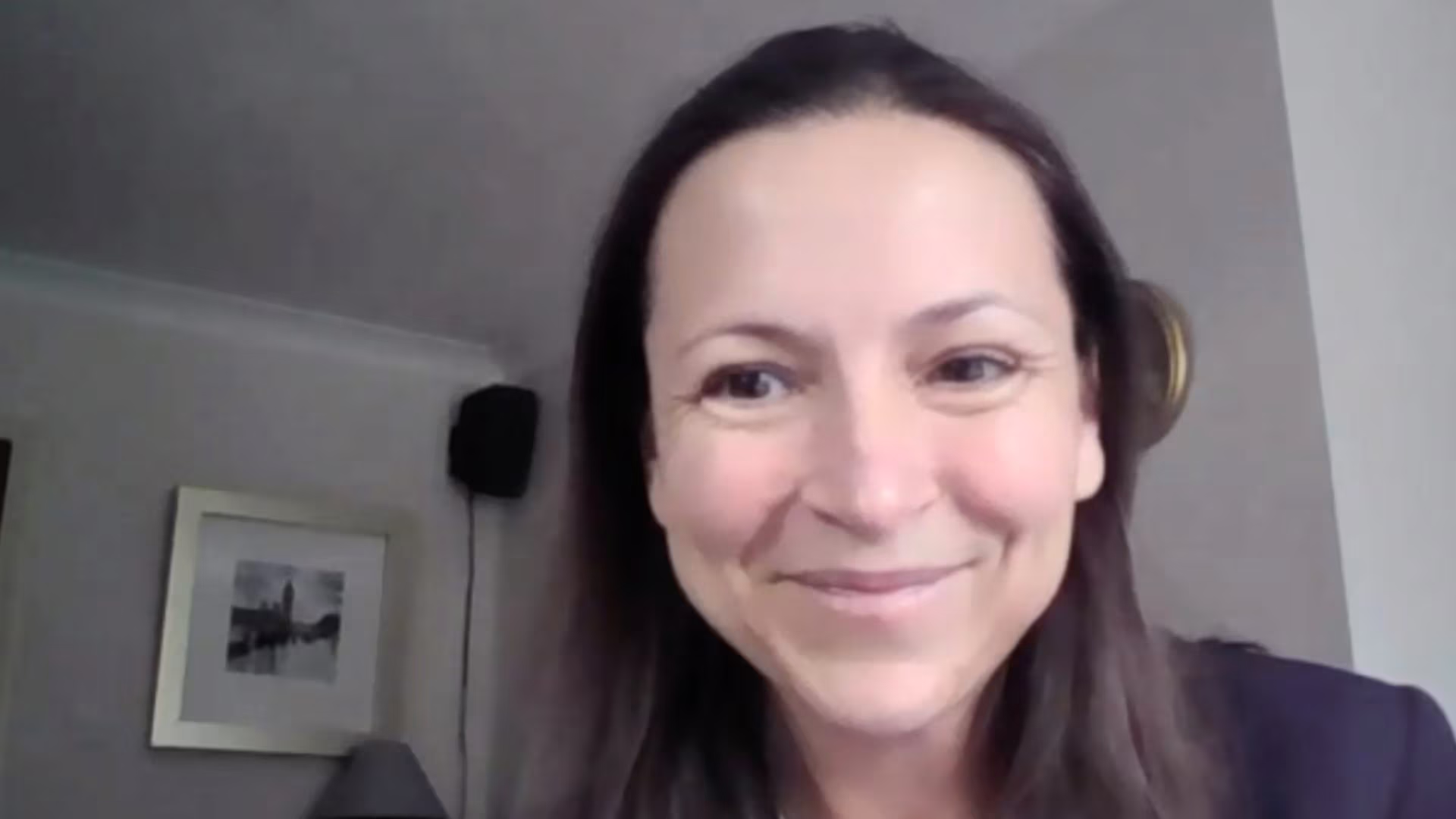
In this Q&A, Dr Seema Kalra, Consultant Neurologist at University Hospitals of North Midlands and Research Lead for the Royal Stoke MS Centre, shares her reflections on the European Committee for Treatment and Research in Multiple Sclerosis (ECTRIMS) 2025 meeting, discussing key updates in multiple sclerosis (MS) diagnostic criteria, biomarkers, imaging protocols, and therapeutic strategies.
The ECTRIMS 2025 meeting provided a major forum for new insights into the diagnosis, management, and treatment of MS. The programme covered advances in diagnostic criteria, biomarkers, imaging protocols, and therapeutic strategies, sparking lively debate among clinicians, researchers, and radiologists.
I am a consultant neurologist and clinical researcher with a specialist interest in neuroinflammatory conditions. MS is the most common neuroinflammatory condition in the Western world and in my clinical practice in the UK. I also see patients with non-MS neuroinflammatory conditions such as Neuromyelitis Optica (NMO), anti-MOG antibody disease (MOGAD), Acute demyelinating Encephalomyelitis (ADEM), sarcoidosis, and Behçet’s disease and other.
My research interests focus on the clinical and immunological aspects of MS. Locally, our centre contributes to large national and international trials, as well as our own local studies. These range from phase II to phase IV and cover MS as well as other neuroinflammatory conditions. I lead the research side of our MS service, working with colleagues in a team-based setting, which allows us to cover both trial activity and investigator-led work. My research interests focus on clinical and immunology of MS.
Locally, our centre contributes to large national and international trials, as well as our own local studies. These range from phase II to phase IV and cover MS as well as other neuroinflammatory conditions. I lead the research side of our MS service, working with colleagues in a team-based setting, which allows us to cover both trial activity and investigator-led work.
ECTRIMS is a huge meeting and an extensive discussion forum. As usual, there were many parallel talks and sessions. It covers MS but also important updates in similar demyelinating conditions such as NMO and anti-MOG antibody disease.
I attended clinical, biomarker, and therapeutic sessions in MS for updates.
One major theme was the 2024 revisions of the McDonald Criteria for MS. Although last year’s ECTRIMS introduced their work in progress, this year’s discussion covered these amendments in greater depth. Some changes are straightforward, while certain aspects are more challenging or even provocative. The core aim is clear: we want to diagnose MS earlier and be more open to conditions that have not traditionally been considered as prodromal to MS, such as radiologically isolated syndrome. As the new criteria remove the necessity for the clinical presentation to be “typical” or “recognizable,” atypical presentations, such as seizures, may in some cases represent the first sign of MS.
Emphasis on radiology has deepened further, with the need to demonstrate the central vein sign on diagnostic MRI brain scans. Centres like Nottingham, UK, have been using it for years, but many other hospitals in the UK do not routinely conduct specific sequences or report it. If these criteria are to be adopted widely, local hospital radiology departments will need to adjust and refine their MRI protocols and build skill sets to incorporate the central vein sign in routine diagnostic scans, especially in patients presenting early.
Another main message is about the expanding diagnostic toolbox and the inclusion of optic nerve involvement as a separate topography/site towards demonstrating dissemination in space. That means tests such as optical coherence tomography (OCT) and visual evoked potentials (VEPs) would be needed more frequently.
Application of the new diagnostic criteria to understand their sensitivity and specificity in various settings was presented too, UK, Swiss, and Spanish data via platform talks and posters. There were also discussions on the availability of these specialized tests in routine clinical practice, comparing academic centres versus smaller non-university/district general hospital clinics. Additional discussions covered developing country settings where specific MRI imaging sequences and OCT may not be readily available. It was interesting to see the interpretations of the tests in various clinical scenarios and how my peers, other neurologists, neuroradiologists, and neuro-ophthalmologists, would interpret and apply these criteria.
However, it is important to emphasize that these investigations should always be interpreted with caution and within the correct clinical context. For example, if an OCT comes back as abnormal but the patient’s presentation does not fit, it should not be concluded as MS. To me, the message was: yes, use these tools, but do not lose sight of the clinical picture.
Clinics, hospitals, and MS centres will need to raise their game and might require additional resources, neuroradiology, ophthalmology, etc. After a period of adaptation, a consistent practice should emerge towards the care of people with MS.
There were quite a few presentations, especially from the Swiss, Swedish, and Boston cohorts. Most of the discussion centred on neurofilament light chain (NfL) and glial fibrillary acidic protein (GFAP).
The general message was very consistent and provided further support to our previous understanding. Higher NfL values appear to be more closely associated with MS activity and MS relapse-related disability. GFAP is helpful in discriminating progression independent of relapse activity (PIRA), especially when used alongside NfL.
It is quite clear that there is no single biomarker for MS. More longitudinal data is anticipated from these research groups, which might help us understand whether these biomarkers can truly indicate disease trajectory based on fewer but sequential tests.
There was quite a lot of discussion around derisking B-cell therapies, particularly anti-CD20 monoclonal antibodies such as ocrelizumab, ofatumumab, and ublituximab. The debate was less about their efficacy, as they are well established, and more about how we dose them. During COVID-19, there was a move towards extended dosing intervals because of concerns about immunity and infection risk. This year, I sensed a shift. The focus was more on whether we should accelerate dosing in cases where there is evidence of disease activity using the above biomarkers, age-normalized NfL values, and GFAP values if these remain high.
Results from trials investigating Bruton’s tyrosine kinase (BTK) inhibitors were presented. Lake breaking news covered new data on tolebrutinib. Data on CAR-T therapy, was also presented. These are important topics, and the data and discussion need much more time to expand on. In addition, there were also very important therapeutic updates in NMO and MOGAD.
Earlier diagnosis is important for patient care but is only effective if treatments can be offered early too. Otherwise, there is a risk of leaving patients with the label of disease but no treatment. So yes, these new criteria, imaging approaches, and biomarkers are moving us in the right direction, but they must pave the way to earlier treatment availability and translate into real long-term improvements in disease trajectory.
Related content
Integrating imaging and biomarkers in the revised McDonald criteria
New McDonald criteria revisions: 6 key updates
Extending rituximab dosing intervals in MS: Pivotal data from the RIDOSE-MS trial
This content has been developed independently by Touch Medical Media for touchNEUROLOGY. Views expressed are the speaker’s own and do not necessarily reflect the views of Touch Medical Media.
Editor: Katey Gabrysch, Editorial Director.
Disclosures: This short article was prepared by touchNEUROLOGY in collaboration with Seema Kalra. The content was developed and edited by human editors. No fees or funding were associated with its publication. touchNEUROLOGY utilize AI as an editorial tool (ChatGPT (GPT-4o) [Large language model]. https://chat.openai.com/chat).
Seema Kalra has nothing to disclose in relation to this interview.
Cite: Seema Kalra. MS diagnostic criteria, biomarkers and therapeutics: Updates from ECTRIMS 2025. touchNEUROLOGY. 02 October 2025.
Register now to receive the touchNEUROLOGY newsletter!
Don’t miss out on hearing about our latest peer reviewed articles, expert opinions, conference news, podcasts and more.