Early and accurate diagnosis of Parkinson’s disease (PD), alongside timely patient education and support, can have a significant impact on long-term outcomes. In this Q&A, Rebecca Gilbert, MD, PhD, Chief Mission Officer at the American Parkinson Disease Association (APDA), shares practical insights on recognising early clinical features, the role of diagnostic tools, how clinicians can support patients during the critical early stages of the disease, and how APDA provides education, resources, support, and community to help navigate this disease.

Q. Could you tell us a little about your background and role within the APDA?
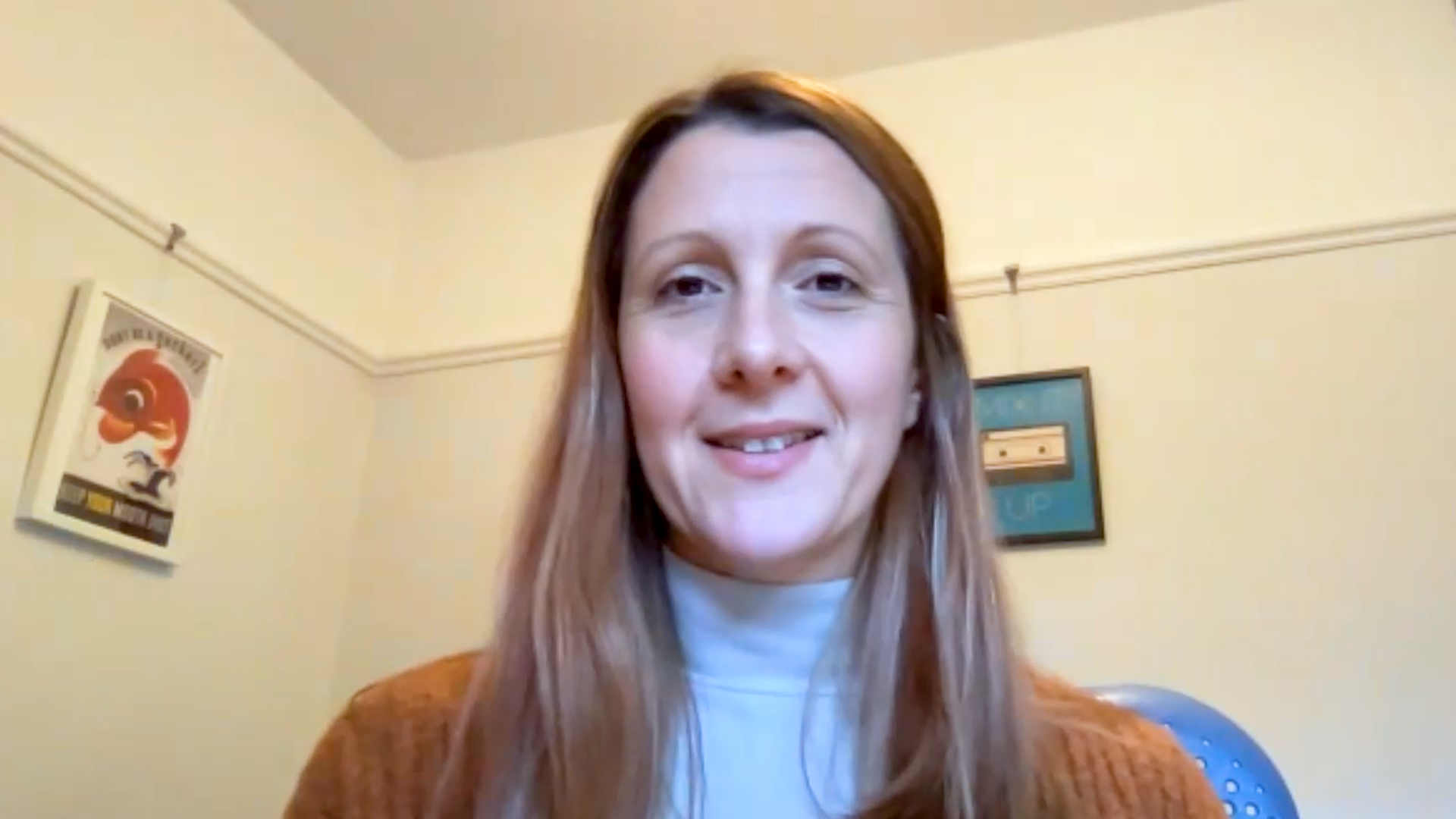
I joined APDA in 2018 as Chief Scientific Officer. My responsibilities included overseeing APDA’s research portfolio and providing medical and clinical expertise to support APDA programming and educational content. My role expanded when I became Chief Mission Officer, and I now also work to develop APDA’s long term mission strategy, guiding the decisions that shape the programs, service and research that shape our mission.
I received my MD degree at Weill Medical College of Cornell University and PhD in Cell Biology and Genetics at the Weill Graduate School of Medical Sciences. I completed Neurology Residency training and Movement Disorders Fellowship training at Columbia Presbyterian Medical Center.
Prior to joining APDA, I was an Associate Professor of Neurology at the Fresco Institute for Parkinson’s and Movement Disorders, NYU Langone Medical Center in New York City. There, I saw patients with movement disorders at both NYU and Bellevue Hospital Center, initiated and directed the NYU Movement Disorders Fellowship, and participated in clinical trials and other research initiatives for Parkinson’s disease (PD). I continue to see patients one day a week at Bellevue Hospital Center which keeps me connected to the patient experience and is very helpful in my role at APDA
Q. When evaluating a patient with subtle or early motor symptoms, what are the clinical signs you find most useful to help differentiate Parkinson’s disease from other movement disorders?
When determining whether someone has PD, especially when motor symptoms are subtle, clues from the person’s history can be very useful. It’s important to ask about subtle changes that the person may not mention or may not even notice themselves, but perhaps have been observed by a spouse, partner, child or friend.
These subtle signs can include stooped posture, slowed walking, decreased facial expression, small handwriting, and more monotonous or lower-volume of speech. These are also the subtle features to look for during the neurologic exam. The presence of a rest tremor can greatly aid diagnosis – however, about 25% of people with PD do not have a tremor!
It is also important to ask about non-motor symptoms that could be present decades before motor symptoms of PD develop. These include constipation, depression, anxiety and a decreased sense of smell, which might manifest as a decreased ability to distinguish tastes.
Another non-motor symptom to ask about is REM behaviour sleep disorder, in which a person is not paralyzed during rapid eye movement sleep, thereby allowing them to act out their dreams. They may vocalize or move in their sleep. They could thrash about and hurt themselves or their bed partner.
Q. What role do you see for diagnostic tools in early PD workup?
The motor features of PD can be very characteristic, and neurologic exam remains the gold standard for diagnosing PD. For most people, no additional testing is necessary.
However, when there are other neurologic co-morbidities or when the patient is very early in the disease course, diagnosis can be more challenging, and there is a role for diagnostic tools in these populations.
There are three commercially available tests for consideration to help with diagnosis even early on. It is best if a neurologist or movement disorders physician orders and interprets these.
These three tests include:
- Ioflupane I123 injection (DaTscan) or SPECT imaging of the dopamine transporter
- SAAmplify- alpha synuclein test – a seed amplification assay performed on cerebrospinal fluid that amplifies abnormally folded alpha-synuclein, the pathological hallmark of PD. This test requires a lumbar puncture.
- Syn-one – this test visualizes abnormally phosphorylated alpha-synuclein in the skin, and requires three small skin biopsies.
None of these tests as currently interpreted can distinguish between PD itself and every other parkinsonian syndrome and each one has its diagnostic limitations.
Q. What can clinicians do better in that critical early window, and how should they best manage this conversation with the patient?
Once you have established a diagnosis of Parkinson’s disease, there are three things to think about.
First, clinicians should consider whether the person can be referred to a clinical trial. There are trials of neuroprotective agents that are currently recruiting and they are often looking for unmedicated patients. Clinicians can connect with the movement disorders division at their nearest academic medical center to find out which trials they are recruiting for.
You can also contact APDA at apda@apdaparkinson.org for referrals to movement disorders centers in your area.
Second, clinicians should actively “prescribe” exercise. It is crucial for you to present exercise to your newly diagnosed patient as a vital part of PD treatment. Exercise can help ease motor and non-motor symptoms and may even be neuroprotective. Evidence supports the following claims:
- Cardiovascular fitness is associated with better cognitive and motor scores in PD
- Longevity in PD is associated with increased physical activity
- Non-motor features of PD such as constipation, fatigue and depression, all improve with exercise and fitness
- Exercise is associated with reduced cognitive decline
Third, consider whether medication needs to be started for the motor symptoms of PD. Currently available medications are symptomatic only, and are not neuroprotective, so it is not essential to start a medication for patients with mild symptoms that are not impacting function. However, please bear in mind that if a person’s motor symptoms are not treated adequately, he or she may not be maximizing their ability to exercise, which puts them at a disadvantage for the reasons described above.
Q. How can HCPs best leverage APDA resources when guiding patients newly diagnosed with PD, particularly in terms of education and support?
The more your patients understand about their diagnosis, the better. And it’s important for them to know they don’t have to go through this alone.
APDA has a wealth of resources for you to share with your newly diagnosed patients, which you can access at www.apdaparkinson.org and we can connect them to support groups, exercise classes, educational programs and more.
The APDA PD handbook is a very useful starting point and is available in English, Spanish and Simplified Chinese. We can also send a full set of PD information to your patients for free, if requested. We have a Be Active & Beyond exercise guide in English, Spanish and Simplified Chinese which is great for those getting started with an exercise routine.
Our New to PD? playlist offers information to those newly diagnosed. Our staff across the country is here to help and we encourage you to include APDA as part of your treatment plan.
Q. Looking at your work with APDA, how does early detection and patient education improve long-term outcomes? Is there scope for any new APDA projects to leverage this further?
Receiving a diagnosis of PD is life-altering and APDA provides education, resources, support, and community to help navigate this critical time. We encourage health care providers to share our website: apdaparkinson.org, our helpline 1-800-223-2732, and our email address apda@apdaparkinson.org with those newly diagnosed so we can connect them to resources in their community.
While there are currently no approved neuroprotective agents for PD, early detection can help put individuals on the right course to proactively tackle the challenges of PD, and APDA can help with many resources to incorporate movement and exercise into the treatment plan.
About the American Parkinson Disease Association
The American Parkinson Disease Association (APDA) is a nonprofit organization dedicated to fighting Parkinson’s disease (PD) by providing the support, education, research, and community that helps everyone impacted by PD live life to the fullest.
Through a nationwide grassroots network of Chapters and Information & Referral (I&R) Centers, APDA works tirelessly to raise public awareness of this chronic neurologic movement disorder and deliver outstanding patient services, resources, and educational and wellness programs to the one million people living with PD in the United States and their care partners and families.
Envisioning a world without PD, APDA’s national research program and Centers for Advanced Research aim to provide better treatments and unlock the mysteries of the disease. APDA is also committed to advancing public policy solutions that improve lives and move us toward a cure.
Founded in 1961, APDA has raised and invested more than $313 million in its efforts to support the PD community. Learn more at www.apdaparkinson.org.
About Dr Rebecca Gilbert
 Dr Rebecca Gilbert joined APDA in 2018, first as Chief Scientific Officer, and then as Chief Mission Officer bringing a wealth of practical experience in diagnosing and treating Parkinson’s disease, a strong background in the science behind PD, and a fundamental understanding of the challenges of living with PD. Rebecca plays a key role in developing APDA’s long term mission strategy, oversees APDA’s research portfolio and provides medical and clinical expertise to support APDA programming and educational content.
Rebecca received her MD degree at Weill Medical College of Cornell University and PhD in Cell Biology and Genetics at the Weill Graduate School of Medical Sciences. She then completed her Neurology Residency training as well as Movement Disorders Fellowship training at Columbia Presbyterian Medical Center. She continues to maintain a limited schedule of patients one day a week through Bellevue Hospital Center.
Prior to joining APDA, she was an Associate Professor of Neurology at the Fresco Institute for Parkinson’s and Movement Disorders, NYU Langone Medical Center where she saw Movement disorders patients at both NYU and Bellevue Hospital Center, initiated and directed the NYU Movement Disorders Fellowship, participated in clinical trials and other research initiatives for Parkinson’s disease and lectured widely on Parkinson’s disease.
Related content
A year in review: Expert voices on the developments that defined 2025
Future of Parkinson’s treatment: Gene therapy, DBS and symptom management
Parkinson’s breakthroughs: Levodopa infusions, sleep and lifestyle strategies
More content in Parkinson’s disease
Cite: Rebecca Gilbert. Early and accurate diagnosis of Parkinson’s disease: Practical insights for clinicians. 11 February 2026.
Editor: Katey Gabrysch, Editorial Director.
Disclosures: Rebecca Gilbert has nothing to disclose in relation to this interview. The content was developed and edited by human editors. No fees or funding were associated with its publication.
This content has been developed independently by Touch Medical Media for touchNEUROLOGY in collaboration with Dr Rebecca Gilbert and the American Parkinson Disease Association.
SIGN UP to touchNEUROLOGY!
Join our global community today for access to thousands of peer-reviewed articles, expert insights, and learn-on-the-go education across 150+ specialties, plus concise email updates and newsletters so you never miss out.