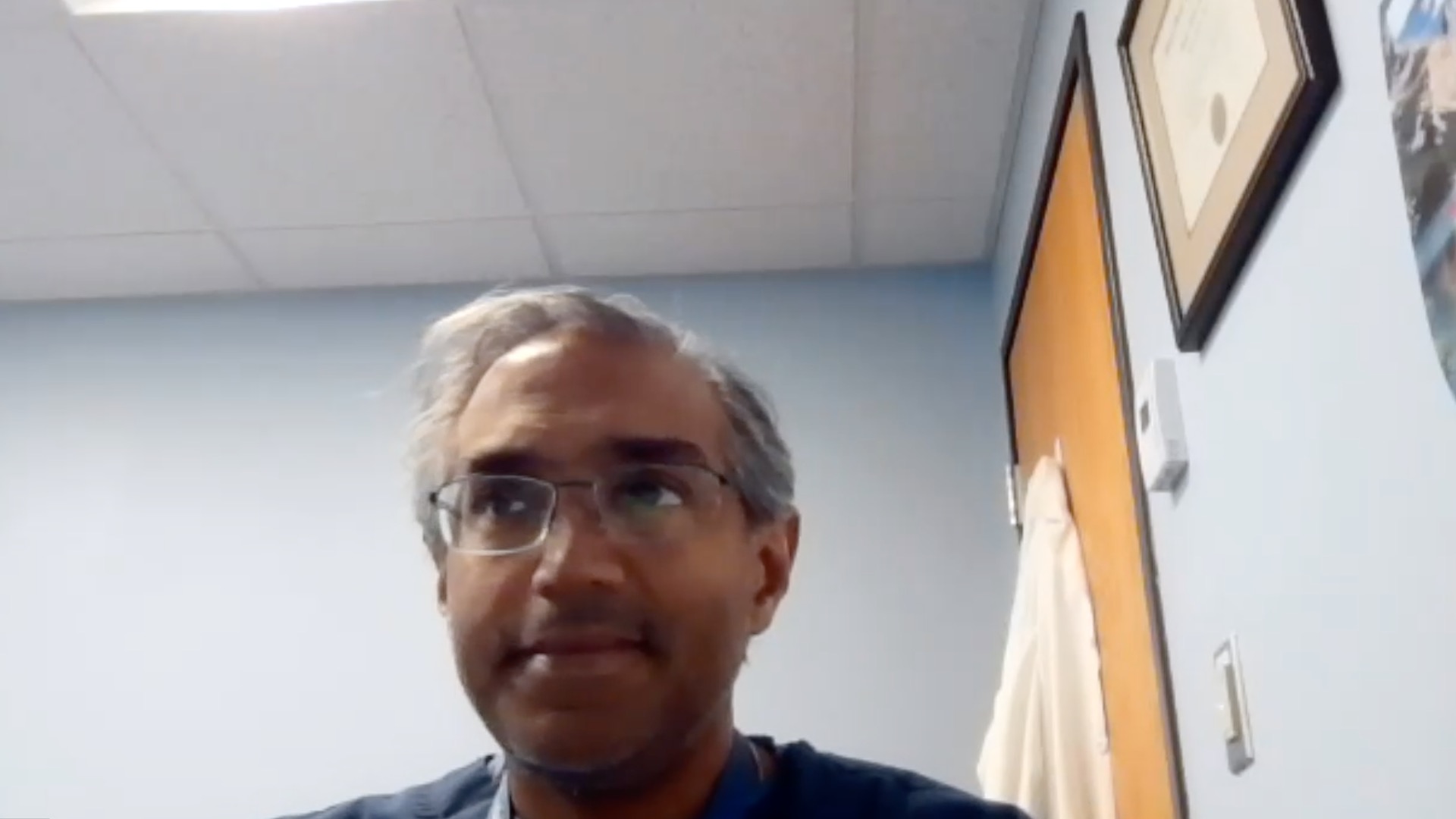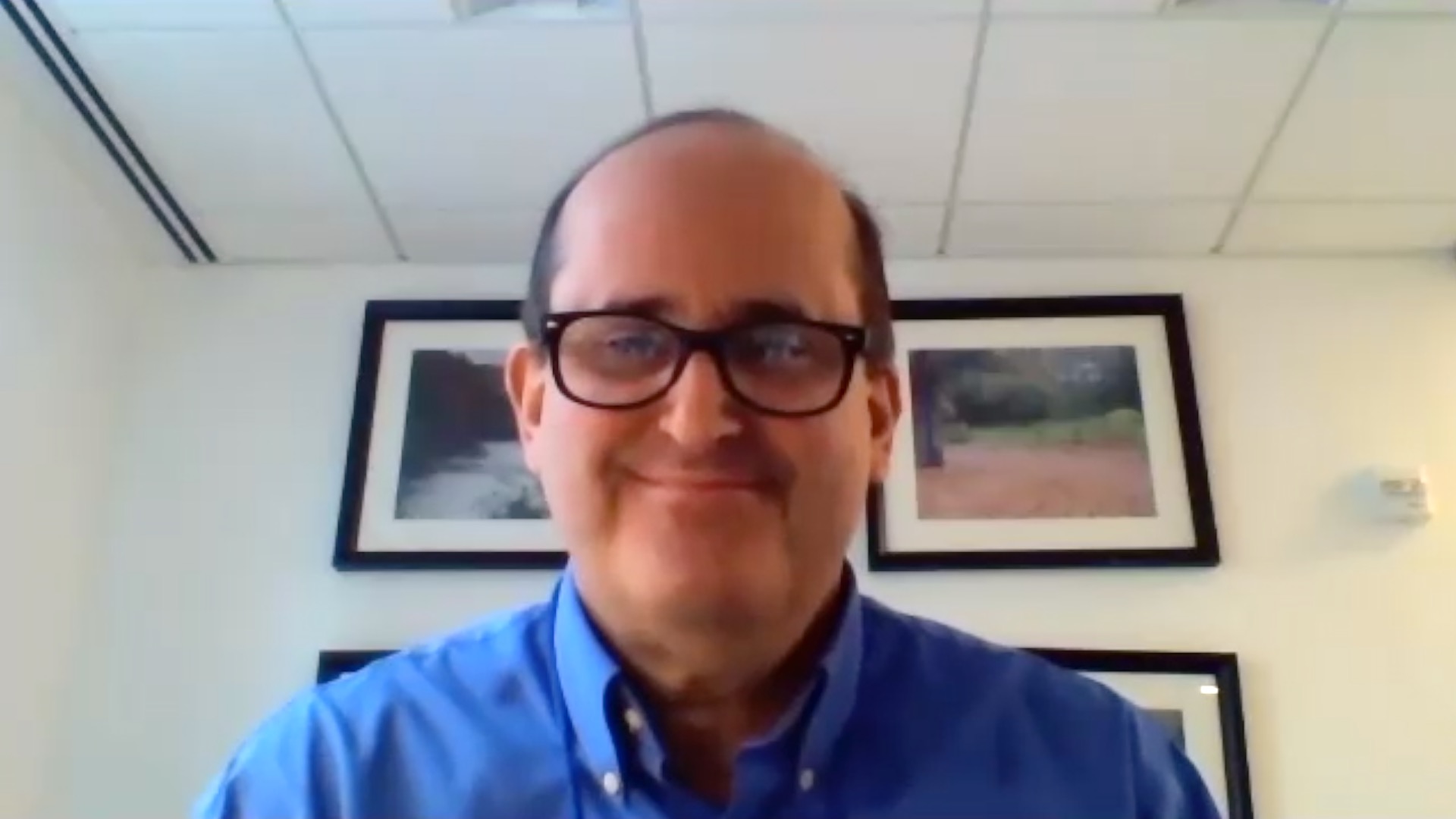
ANX005, a humanized monoclonal antibody, is designed to inhibit the classical complement pathway which has been associated with Huntington’s disease (HD). In this touchNEUROLOGY interview, we speak with Dr Rajeev Kumar (Rocky Mountain Movement Disorders Center, Englewood, CO, USA) to discuss the role of complement activation in people living with HD and why ANX005 is being used to modify HD.
The abstract entitled ‘Phase 2 study evaluating safety, PK/PD, biomarkers, and efficacy of ANX005 in patients with Huntington’s disease (HD)’ was presented at the International Congress of Parkinson’s Disease and Movement Disorders® in Madrid, Spain, 15 – 18 September 2022.
Questions:
- What is currently understood about the role of complement activation in people with Huntington’s disease? (0:24)
- What is the rationale behind using a humanized monoclonal antibody to inhibit the complement pathway in order to modify Huntington’s disease? (1:24)
Disclosures: Rajeev Kumar is a consultant for Abbvie, Acorda Therapeutics, Annexon, Cerevel Therapeutics, Genentech, Roche, Supernus Pharmaceuticals and Teva Pharmaceuticals. He is on the speaker’s bureau for Acorda Therapeutics, Kyowa Kirin, Supernus Pharmaceuticals and Teva Pharmaceuticals and has stock ownership in the following companies: CenExel Clinical Research Holdings, LLC and Research Catalyst. Rajeev Kumar has received research grant support from Abbvie, Addex Pharma, Biohaven, Annexon Biosciences, Biovie, Cerevel Therapeutics, CHDI Foundation, CND Life Sciences, Enterin, Impax Laboratories, Integrative Research Laboratories, Lundbeck, Neuraly, Neurocrine Biosciences, Neuroderm, Neuron23, Pharma Two B, Prilenia Therapeutics, PTC Therapeutics, Revance Therapeutics, Roche, Sage Therapeutics, Sanofi, Supernus Pharmaceuticals, Takeda, Transposon Therapeutics and Triplet Therapeutics.
Support: Interview and filming supported by Touch Medical Media. Interview conducted by Danielle Crosby.
Filmed as a highlight of MDS 2022
Access more content on Huntington’s Disease here