
Sleep Disorders
An Introduction to Sleep Disorders
Sleep is essential to human health, but its function, physiology, and pathophysiology have been poorly understood until relatively recently. As well as having negative consequences in social and working life, sleep disturbances and disorders have been associated with neurocognitive disorders, hypertension, dyslipidaemia, cardiovascular disease, weight-related issues, metabolic syndrome, type 2 diabetes, depression and stroke. More than 80 sleep disorders have been identified, some of which very common, including insomnia and obstructive sleep apnoea. Sleep abnormalities are also a common consequence of neurological disorders such as Alzheimer’s disease and Parkinson’s disease. Behavioural treatments have been successful in treating sleeping disorders, while pharmacotherapy is useful for acute insomnia, some parasomnias, narcolepsy and idiopathic hypersomnia.
Our supporting partners do not constitute an endorsement of the content on this page.


Highlights from the European Academy of Neurology (EAN) 2026 Congress included new phase 3 data in ocular myasthenia gravis, emerging migraine treatments, longer-term results in multiple sclerosis, and advances in deep brain stimulation for Parkinson’s disease. The 12th Congress of the ...
Meet the future leaders transforming neurology The touchNEUROLOGY Future Leaders 2026 programme recognizes outstanding early- and mid-career clinicians, researchers and scientists who are shaping the future of neurology. Nominated by peers across the global neurology community, these innovators are leading advances ...
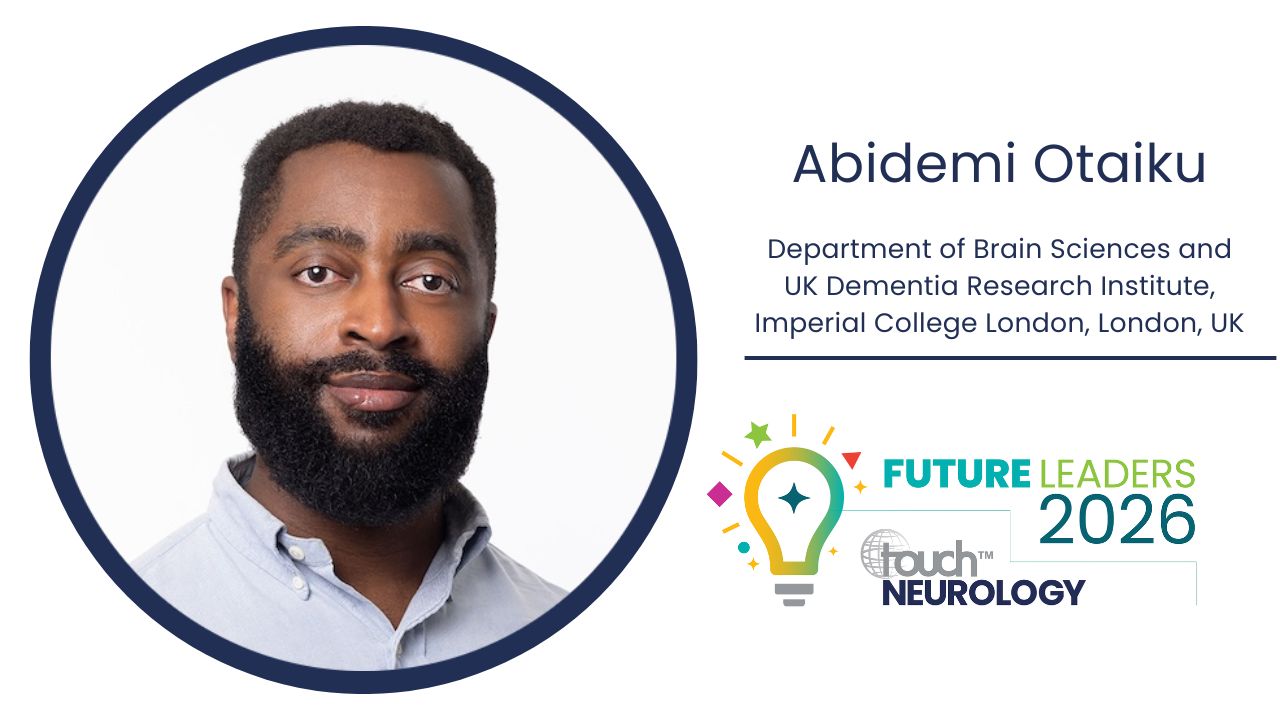
We are delighted to announce Dr Abidemi Otaiku as a touchNEUROLOGY Future Leader 2026, selected by peers as one of the neurologists changing the future of research in sleep, dreaming and brain health Dr Abidemi Otaiku (Department of Brain Sciences and ...

Leading experts share their perspectives on the most important therapeutic and treatment updates at AAN 2026 and discuss how these findings may shape the future of neurologic care At American Academy of Neurology (AAN) Annual Meeting, Chicago, IL, USA, April 18–22, 2026, major ...

Emerging data from AAN 2026 across neuroimmunology, epilepsy, neuromuscular disease, movement disorders and neuroinfectious disease highlighted the continued evolution of neurology toward more precise, personalized and mechanism-driven care. The American Academy of Neurology (AAN) Annual Meeting, Chicago, IL, USA, from April 18–22, 2026, ...

The late-breaking science sessions at AAN Annual Meeting 2026, Chicago, IL, USA brought together a wide range of pivotal and practice-shaping data spanning rare disease, neuroimmunology, headache, epilepsy, neurodegeneration and neuromuscular medicine. Several presentations reported positive phase III findings, while others ...
In our inaugural touchNEUROLOGY Future Leaders 2025 campaign, we celebrate the next generation of neurologists, rising stars shaping the future of clinical practice, research, and education across neurological specialties.

Data presented at World Sleep 2025 from two global narcolepsy phase III trials, FirstLight (TAK‑861‑3001) (NCT06470828) and RadiantLight (TAK‑861‑3002)1,2, evaluating oveporexton (TAK‑861), an investigational oral orexin receptor 2 (OX2R)‑selective agonist for narcolepsy type 1 (NT1)

Neurorehabilitation is evolving beyond traditional approaches, embracing a broader understanding of recovery that integrates behaviour, sleep and the environment. Nominated as a touchNEUROLOGY Future Leader 2025, Dr Monisha Ravikumar shares her journey from clinical physiotherapy in India to behavioural health research in the UK.

As touchNEUROLOGY approaches 20 years of providing education for busy neurologists, we are looking to the future—and it certainly looks bright!

Physician burnout is at a critical point. In this episode, Nicky speaks with Dr Alfred Atanda about why so many physicians are burning out and what can be done to change the trend. From personal experience to system-wide solutions, Dr Atanda shares valuable insights on improving physician well-being and building a more effective healthcare culture.

What if your medical degree could launch more than a clinical career? In this candid and compelling read, Dr Jon Edelson shares his lessons for early-career clinicians ready to think beyond the bedside and explore the business of medicine.

In this episode, we explore the future of continuing medical education (CME) with the team behind touchIME. Hannah Fisher and Matthew Goodwin share insights into global and US trends, the importance of patient inclusivity and how educational outcomes are evolving to better measure the direct impact of learning on clinical practice and patient care.

In this episode, we’re joined by Bradley Love, Professor of Cognitive and Decision Sciences at UCL, ELLIS fellow, and creator of BrainGPT. We discuss how this large language model is poised to assist researchers in advancing their work.

Explore ground-breaking advancements in the treatment of movement disorders in this insightful interview with Prof. K. Ray Chaudhuri, who shares his key takeaways from the 10th Congress of the European Academy of Neurology meeting in Helsinki. He discusses promising new therapies, personalized care approaches, and significant research on the staging of Parkinson's. Additionally, Prof. Chaudhuri emphasizes the importance of holistic treatment, stepped-care strategies, remote management, and the potential of wearable technology in improving patient outcomes, bringing his wealth of knowledge and insights to touchNEUROLOGY

The European Academy of Neurology (EAN) 2024 meeting, held in Helsinki, Finland, provided the many neurologists and allied health professionals in attendance with a high-quality scientific program. This year's theme, "Neuromodulation: Advances and Opportunities in Neurological Diseases," encompassed a wide range of exciting topics. Here are some of our symposium highlights:

Narcolepsy is a chronic clinical condition primarily characterized by excessive daytime sleepiness (EDS). This may be accompanied by cataplexy, which is a phenomenon of transient muscle weakness triggered by strong emotions, such as laughter, excitement, anger or grief. Narcolepsy is ...



Log into your Touch Account
Keep track of your clinical interests and newsletter subscriptions.
Sign up with an Email
Or use a .
Register now for FREE access
Already registered? Login below.