
In the originally published article there was an error in Table 1. The reduction in monthly migraine days over 12 weeks versus placebo with quarterly fremanezumab was incorrectly given as “-0.6”; this should read “-3.7”.
Erratum to: Erenumab for the Prevention of Migraine, Including the Rationale, Findings and Clinical Implications of the LIBERTY Study
Share
Mark CompleteCompleted
BookmarkBookmarked
Copy LinkLink Copied
Select a Section…
1
Article
2
Further Resources

Trending Topic
Developed by Touch
Mark CompleteCompleted
BookmarkBookmarked
In this narrative review, we aim to introduce the reader to the history of calcitonin gene-related peptide (CGRP) discovery and its involvement in migraine pathophysiology. We will then look at drug development and clinical trials in migraine. We will additionally discuss other headache disorders where CGRP may play a role and, last, we will discuss areas of further study. […]
Mark CompleteCompleted
BookmarkBookmarked
In this narrative review, we aim to introduce the reader to the history of calcitonin gene-related peptide (CGRP) discovery and its involvement in migraine pathophysiology. We will then look at drug development and clinical trials in migraine. We will additionally ...

Mark CompleteCompleted
BookmarkBookmarked
It is my pleasure to introduce the 2025 of touchREVIEWS in Neurology, which brings together an exceptional collection of reviews, original research and congress highlights that reflect the continued evolution of neurological science and clinical innovation. This issue opens with Jelle ...

Mark CompleteCompleted
BookmarkBookmarked
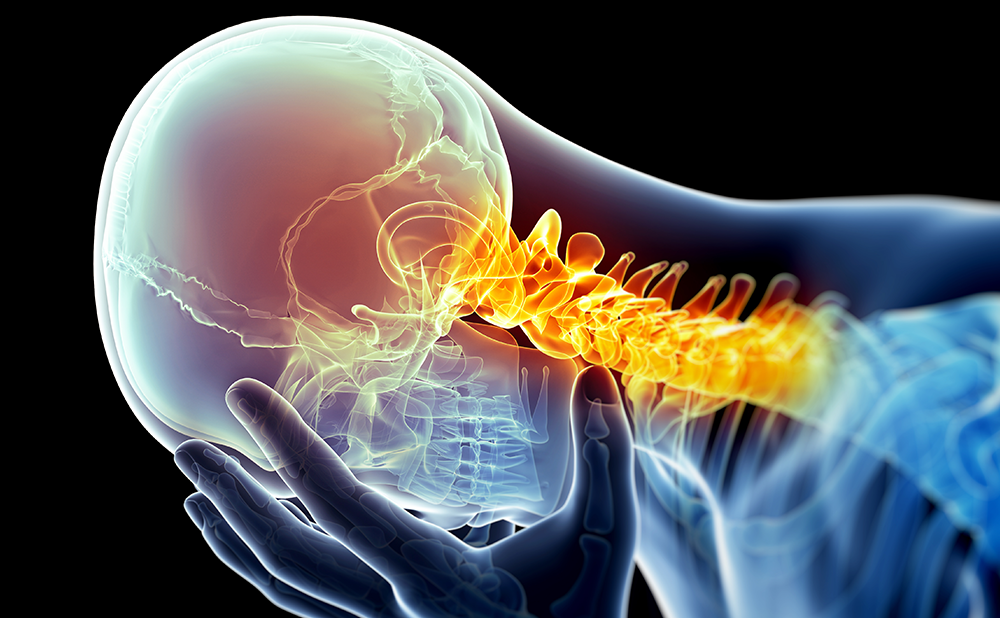
In general, headaches can be classified into primary headaches (where no underlying disease is found) and secondary headaches (where a predefined condition is the cause of the headache). According to the International Classification of Headache Disorders, third edition (ICHD-3), primary ...

Mark CompleteCompleted
BookmarkBookmarked
The surge in social media use seems to have become a sign of our times. Social media has ramified into not only our personal lives but, importantly, also our professional lives and will continue to do so in the future.1–4 ...
Mark CompleteCompleted
BookmarkBookmarked
Photophobia is a complex disorder that can involve aversion not simply to bright light but to spatial patterns, colour and flicker.1 It is common in neurological diseases that involve the visual system,2 of which migraine is the most prevalent. Tinted ...
Mark CompleteCompleted
BookmarkBookmarked
Neuromodulation is a recent technique that has increasingly been used for the abortive and preventive treatment of migraine and other primary headache disorders.1 It has previously been found to be helpful in the treatment of other neurological illnesses, such as ...
Mark CompleteCompleted
BookmarkBookmarked
For a condition as highly prevalent and debilitating as migraine, there is still too little awareness of it and the impact it has. There is little understanding of the different symptoms and stages of a migraine attack, the frequency with ...
Mark CompleteCompleted
BookmarkBookmarked
Migraine is a common and disabling condition with substantial health and socioeconomic implications. Approximately 1.04 billion people worldwide have migraine disease.1 The condition disproportionately affects women, with 19% of women versus 10% of men reporting a history of migraine.1 Migraine is the second ...

Mark CompleteCompleted
BookmarkBookmarked
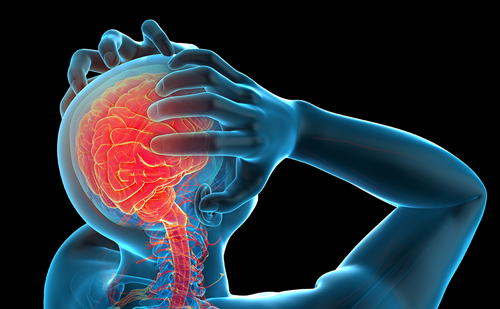
It cannot be seen, cannot be felt, cannot be heard, cannot be smelt. It lies behind stars and under hills, and empty holes it fills. It comes first and follows after, ends life, kills laughter. The Hobbit. JRR Tolkien ‘Darkness’ ...
Mark CompleteCompleted
BookmarkBookmarked
Migraine is a neurologic disease characterized by recurrent attacks of head pain and symptoms such as nausea, photophobia and phonophobia, which last hours to days.1 Attacks themselves can be disabling, and due to the often unpredictable and unavoidable nature of ...
Mark CompleteCompleted
BookmarkBookmarked
A university lecturer first experienced headaches during the summer of 1989, when he was aged 26 years. The headache periods initially lasted about 1 day and because the pain was in the trigeminal area both an optometrist and a dentist were consulted. The ...
Mark CompleteCompleted
BookmarkBookmarked
Treatment guidelines recommend preventive therapy for migraine, based primarily on the frequency of migraine attacks.1 Migraine-related burden of disease increases with the number of headache days; however, even fewer than 4 headache days per month can result in severe disability in ...
Log into your Touch Account
Keep track of your clinical interests and newsletter subscriptions.
Sign up with an Email
Or use a .
Register now for FREE access
Already registered? Login below.