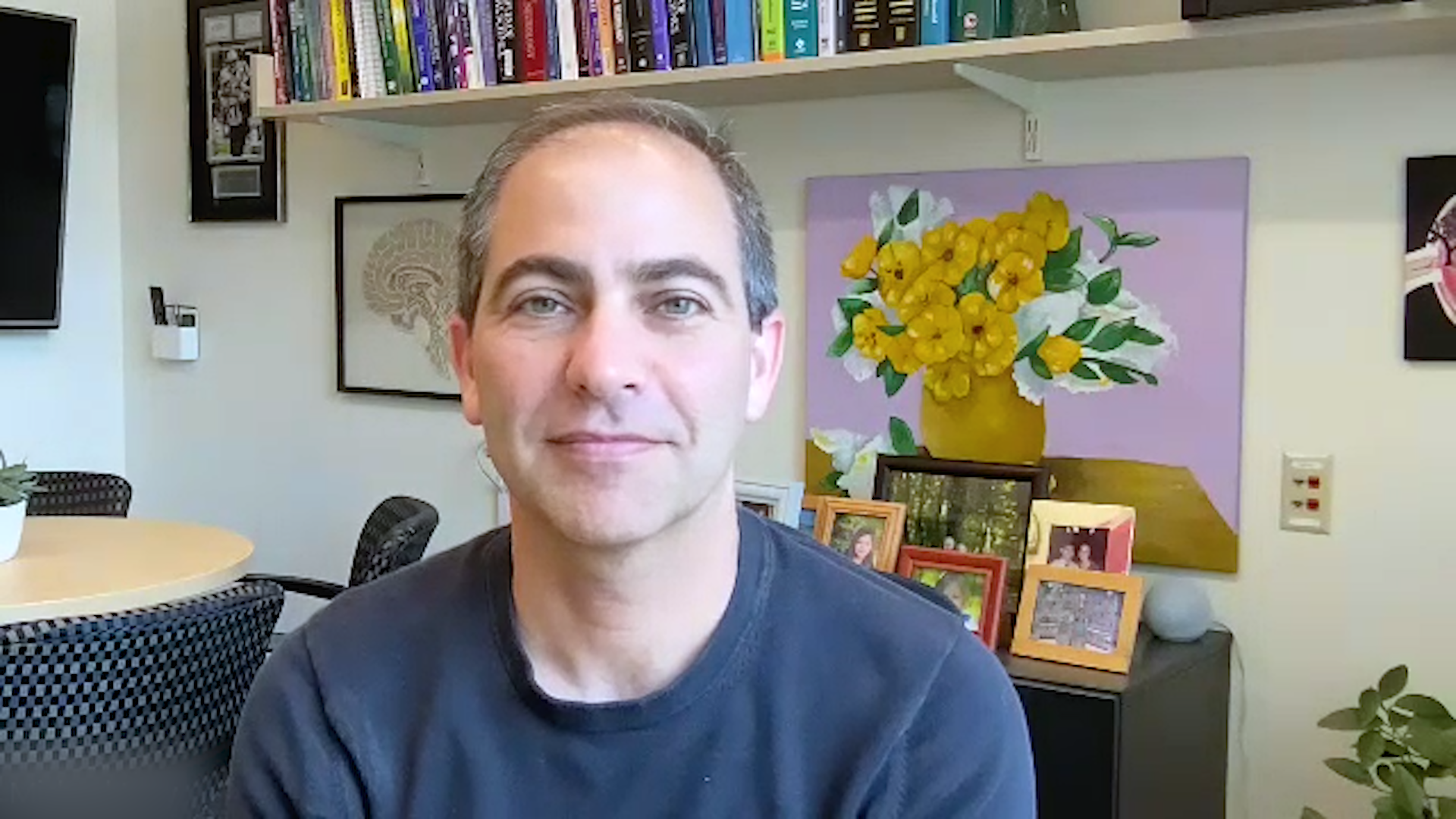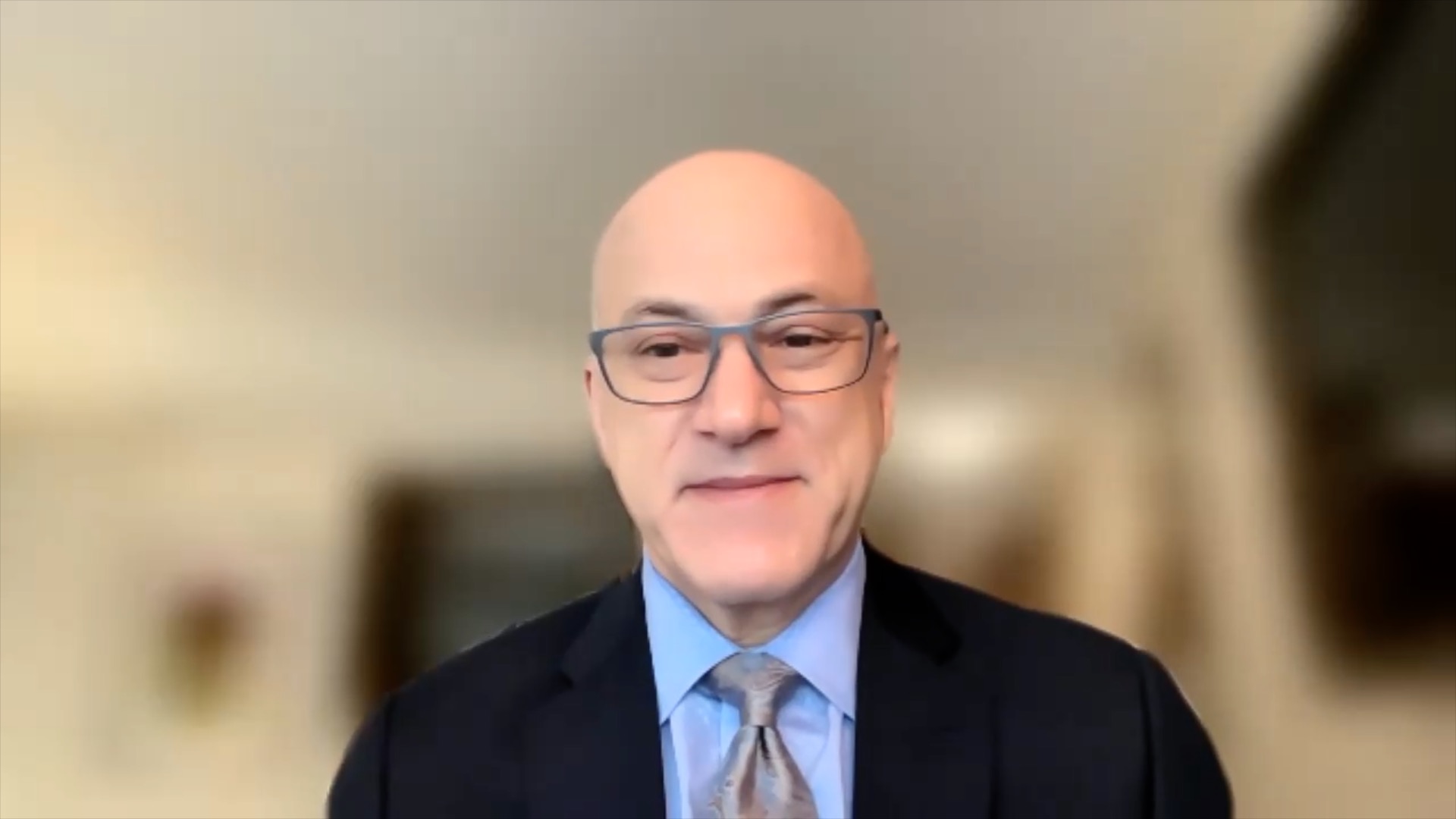
Prof. Michael Levy highlights the first positive phase 3 trial in MOGAD and what it could mean for future standards of care.
 Relapse prevention remains one of the greatest unmet needs in myelin oligodendrocyte glycoprotein antibody-associated disease (MOGAD), where recurrent inflammatory attacks can lead to visual impairment, motor disability and long-term neurologic burden.
At American Academy of Neurology 2026, Prof. Michael Levy (Harvard Medical School, Boston, MA, USA) joins us to discuss the landmark phase 3 METEOROID trial evaluating satralizumab, a humanized monoclonal antibody that targets the interleukin-6 (IL-6) receptor for the treatment of MOGAD. He discusses satralizumab’s impact on relapse risk, safety profile and what these findings may mean for the future treatment landscape in relapsing MOGAD.
Presented at AAN 2026: Safety and Efficacy of Satralizumab in Patients with Relapsing Myelin Oligodendrocyte Glycoprotein Antibody-associated Disease (MOGAD): Results from the Phase 3 METEOROID Trial.
Q. Could you briefly explain the burden of MOGAD and why there is a need for new targeted treatment options?
MOGAD is an autoimmune disease in which the immune system periodically attacks the optic nerves and spinal cord, leading to vision loss, weakness, sensory loss and bowel or bladder dysfunction. There can also be cumulative disability over time due to recurrent relapses..
At present, there are no approved therapies for MOGAD. In clinical practice, we use off-label treatments such as corticosteroids, intravenous immunoglobulin (IVIG) and other steroid-sparing immunomodulatory agents to suppress inflammation and try to prevent future relapses. There is therefore a clear need for evidence-based, targeted therapies developed specifically for this disease.
METEOROID is the first Phase 3 trial in MOGAD and was designed to assess whether treatment could prevent future relapses.
Q. What was the trial design, and what were the key efficacy findings from the METEOROID trial?
The METEOROID trial was an international, randomized, placebo-controlled study of satralizumab using weight-based dosing administered subcutaneously once monthly after a short loading-dose period. The primary efficacy endpoint was time to first attack.
The results were positive. Satralizumab reduced the risk of relapse by 68% compared with placebo (hazard ratio 0.32; p=0.0025). In addition, satralizumab reduced the annualized relapse rate and reduced the annualized number of new or enhancing MRI lesions by more than 75%.
Q. How did satralizumab perform from a safety and tolerability perspective, and were there any adverse events?
Satralizumab was previously approved for neuromyelitis optica spectrum disorder (NMOSD), so we were already aware of the known safety considerations, including neutropenia and injection-site reactions.
In the METEOROID trial, there were no new safety signals. The adverse event profile of satralizumab was not statistically different from placebo. There were slightly more injection-site reactions in the satralizumab group, which was expected, but overall the treatment appeared safe and well tolerated.
Q. How useful are the current diagnostic criteria for MOGAD in routine clinical practice, and what are their main strengths and limitations?
The current diagnostic criteria are helpful for ruling in MOGAD when the clinical presentation, imaging findings and antibody testing are supportive. This has been an important step forward in standardizing diagnosis and improving recognition of the disease.
However, they are less useful for ruling out overlapping or related conditions, particularly multiple sclerosis. In some patients, distinguishing MOGAD from MS or other inflammatory disorders can still be challenging. We are working on additional tools to help distinguish between MOGAD and MS in cases where there appears to be overlap.
Q. How are treatment strategies evolving for both acute attacks and long-term relapse prevention, particularly as new immunotherapies enter clinical development?
Acute attacks were previously treated with high doses of intravenous corticosteroids followed by prolonged oral tapers. More recently, the need for high doses of corticosteroids has been challenged, and we are increasingly using lower doses.
In some centers, where available, steroid-sparing options have also been used to avoid steroid rebound effects and reduce comorbidities associated with prolonged corticosteroid use. These include IVIG and tocilizumab.
For relapse prevention, we may soon have satralizumab available following the METEOROID trial, and we are also awaiting the results of another Phase 3 trial in MOGAD using rozanolixizumab (cosMOG study).
Q. If these results translate into practice, how could satralizumab influence the future treatment pathway and overall standard of care for relapsing MOGAD?
Satralizumab provides an effective, safe and tolerable approach to preventing relapses in MOGAD. Previous therapies have often been challenging because of tolerability, logistics, such as with IVIG, or adverse events, such as with corticosteroids.
If approved and adopted into practice, satralizumab could become an important first-line targeted option for relapsing MOGAD and help establish a more standardized treatment pathway.
Q. What do you think are or will be the most important therapeutic and treatment updates presented at American Academy of Neurology 2026?
Satralizumab in MOGAD is certainly one of the most important updates, given that it is the first positive Phase 3 trial in this disease area.
Another major development is fenebrutinib in multiple sclerosis, including both relapsing and primary progressive forms of MS.
Already registered? Login below.
More content in neuroimmunology
Cite: Michael Levy. Phase 3 METEOROID trial in MOGAD: Satralizumab cuts relapse risk by 68%. touchNEUROLOGY. 28 April 2026.
Abstract: M Levy. Safety and Efficacy of Satralizumab in Patients with Relapsing Myelin Oligodendrocyte Glycoprotein Antibody-associated Disease (MOGAD): Results from the Phase 3 METEOROID Trial. PL5: Clinical Trials Plenary Session. Presented at American Academy of Neurology 2026. April 18-22, Chicago, USA.
Editor: Katey Gabrysch, Editorial Director.
Disclosures: Michael Levy is a consultant for Genentech/Roche; has received grant/research support from Genentech/Roche; and is on the advisory board for Genentech/Roche.
The content was developed and edited by human editors. No fees or funding were associated with its publication. touchNEUROLOGY utilize AI as an editorial tool (ChatGPT (GPT-4o) [Large language model]. https://chat.openai.com/chat).
This content has been developed independently by Touch Medical Media for touchNEUROLOGY in collaboration with Prof. Michael Levy. Views expressed are the speaker’s own and do not necessarily reflect the views of Touch Medical Media.
SIGN UP to touchNEUROLOGY!
Join our global community today for access to thousands of peer-reviewed articles, expert insights, and learn-on-the-go education across 150+ specialties, plus concise email updates and newsletters so you never miss out.