The 12th European Stroke Organisation Conference (Maastricht, May 6–8, 2026) was dominated by studies testing the limits of acute stroke therapy, from thrombectomy and neuroprotection to secondary prevention. Supplementary Table 1 provides a comprehensive overview of the major studies presented during the conference.
The large-core indication for thrombectomy is recent, and the ATLAS (Endovascular thrombectomy for patients with large-core ischemic stroke presenting up to 24 h after onset) individual-patient-data meta-analysis (six trials, 1,886 patients) was the study that settled it, showing robust benefit of endovascular thrombectomy (EVT) across the whole large-core spectrum, including ASPECTS 0–2 and volumes up to 150 mL (adjusted generalized odds ratio, 1.63 [95% confidence interval [CI], 1.42–1.87], p<0.001; number needed to treat: 4).1 However, caution is warranted in patients at the extremes of infarct severity and core size, as they might have been highly selected across the contributing trials.
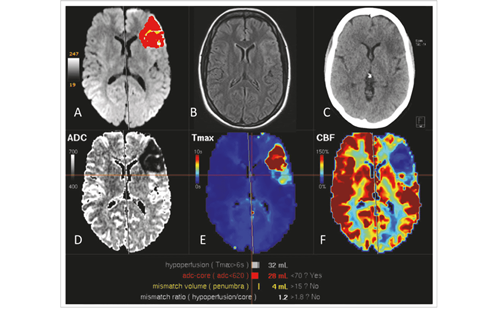
Regarding treatment windows, LATE-MT (Large Artery Occlusion Treated in Extended Time with Mechanical Thrombectomy; ClinicalTrials.gov identifier: NCT05326932) showed that thrombectomy for anterior large-vessel occlusion selected by favorable perfusion imaging between 24 and 72 h significantly improved functional outcome (adjusted OR [aOR], 0.47 [95% CI, 0.32–0.70], p=0.002), although at the cost of significantly more symptomatic intracerebral hemorrhage (sICH: 4.8% versus 0.0%), underscoring the benefits and limits of late reperfusion.2 Importantly, patients were highly selected by advanced perfusion imaging, and the included cohort had a high prevalence of intracranial atherosclerotic disease and small infarct volumes, limiting the generalizability of these findings to routine practice.
MILD-MT (Endovascular Treatment for Mild Ischemic Stroke with Acute Anterior Circulation Large Vessel Occlusion; ClinicalTrials.gov identifier: NCT06179017) supported EVT in patients with mild deficits (National Institutes of Health Stroke Scale <6) but substantial salvageable tissue, improving excellent recovery (90-day modified Rankin Scale [mRS] 0–1: 69.4% versus 50.0%, relative risk [RR], 1.39, 95% CI, 1.14–1.70) and halving early neurological deterioration.3 Notably, 58% had intracranial atherosclerotic disease, so the result must be confirmed in Western populations by the French MOSTE (Minor Stroke Therapy Evaluation; ClinicalTrials.gov identifier: NCT03796468) Trial, whose enrollment recently closed.4
For medium and distal vessel occlusions, the picture stayed unsettled: 1-year data from DISTAL (Endovascular Treatment for Medium or Distal Vessel Occlusion Stroke; ClinicalTrials.gov identifier: NCT05029414) and ESCAPE-MeVO (Endovascular Treatment to Improve Outcomes for Medium Vessel Occlusions; ClinicalTrials.gov identifier: NCT05151172) showed no benefit from routine EVT and raised mortality concerns, whereas DISTALS (Distal Ischemic Stroke Treatment with Adjustable Low-profile Stentriever; ClinicalTrials.gov identifier: NCT05152524), testing a dedicated low-profile stent retriever, achieved high reperfusion with no symptomatic hemorrhage and encouraging signals of clinical benefit, with higher rates of 90-day mRS 0–1 (41.2% versus 38.2%) than medical therapy alone; however, the trial was not powered to detect differences in clinical outcomes.5–7 Taken together with ORIENTAL-MeVO (Evaluation of Endovascular Treatment in Acute Intracranial Distal Medium Vessel Occlusion Stroke; ClinicalTrials.gov identifier: NCT06146790), these findings argue not against thrombectomy in this pattern but against its indiscriminate use: the field remains open.8
Endovascular treatment for stroke due to occlusion of medium or distal vessels and ESCAPE-MeVO showed no benefit from routine EVT and raised mortality concerns, whereas DISTALS, testing a dedicated low-profile stent retriever, achieved high reperfusion with no symptomatic hemorrhage and encouraging signals of clinical benefit, with higher rates of 90-day mRS 0–1 (41.2% versus 38.2%) than medical therapy alone; however, the trial was not powered to detect differences in clinical outcomes.5–7 Taken together with ORIENTAL-MeVO, these findings argue not against thrombectomy in this pattern but against its indiscriminate use: the field remains open.8
Among pharmacological adjuncts, the Chinese ATTRACTION (Adjunct Tirofiban Treatment After Successful Endovascular Thrombectomy Recanalisation in Acute Anterior Circulation Ischaemic Stroke; ClinicalTrials.gov identifier: NCT06265051) study found that intravenous tirofiban after successful thrombectomy improved functional independence (49.3% versus 43.3%, adjusted relative risk [aRR], 1.15, 95% CI, 1.03–1.27, p=0.0092) without increasing sICH, although external validation is needed.9
Selective intra-arterial hypothermia remained an open question: CHILL-ART (Catheter-Based Focal Intracranial Hypothermia Combined With Endovascular Reperfusion Therapy for Patients With Acute Anterior Circulation Large Artery Occlusion; ClinicalTrials.gov identifier: NCT06758609) evaluated selective intra-arterial infusion of cold saline during thrombectomy compared with room-temperature saline infusion and showed improved functional outcome (54.7% versus 39.8%, aRR, 1.36, 95% CI, 1.05–1.76, p=0.018) and offered renewed hope, whereas FOCUS (Selective Intra-Arterial Cooling Infusion With Endovascular Thrombectomy for Acute Ischemic Stroke; ClinicalTrials.gov identifier: NCT06485427) showed no functional benefit while reassuring on safety.10–12 GALLOP-2 (Glucagon-Like Peptide-1 Receptor Agonist in Acute Large Vessel Occlusion Stroke Treated by Reperfusion Therapies; ClinicalTrials.gov identifier: NCT06788626) suggested peri-procedural semaglutide may be cytoprotective, losing significance after adjustment and a near-doubling of sICH (10.9% versus 5.7%, RR, 1.92, 95% CI, 0.97–4.03) warrants careful consideration.
In the HOPE trial (Hemodynamic Optimization of Cerebral Perfusion After Endovascular Therapy; ClinicalTrials.gov identifier: NCT04892511), individualized post-thrombectomy systolic blood pressure (SBP) targets according to the degree of reperfusion (100–140 mmHg for modified thrombolysis in cerebral infarction [mTICI] 2c/3 and 140–160 mmHg for mTICI 2b) improved functional outcome (mRS 0–2: 60.0% versus 46.7%, aOR, 1.71, 95% CI, 1.11–2.63, p=0.015) and reduced hemorrhagic transformation compared with guideline-based management (SBP <180 mmHg).13 By contrast, MASTERSTROKE (MAnagement of Systolic Blood Pressure During Thrombectomy by Endovascular Route for Acute Ischaemic STROKE; ClinicalTrials.gov identifier: NCT05645861) tested uniformly higher intraprocedural blood pressure targets irrespective of reperfusion status and found no advantage, suggesting that individualized post-EVT hemodynamic management rather than universally higher blood pressure targets may be the key determinant of benefit.14
In secondary prevention, sub-analyses of OCEANIC-STROKE (Oral Factor Eleven A Inhibitor Asundexian As Novel Antithrombotic; ClinicalTrials.gov identifier: NCT05686070) reinforced the promise of the factor XIa inhibitor asundexian, reducing recurrent and disabling ischemic stroke without increasing major bleeding.15 The SAFFO (Detection of Silent Atrial Fibrillation after Ischemic Stroke; ClinicalTrials.gov identifier: NCT02684825) trial also attracted attention by evaluating implantable loop recorders for the detection of occult AF in patients with stroke attributed to other etiologies, highlighting the potential value of prolonged rhythm monitoring to improve etiological diagnosis and optimize secondary prevention.16 For stroke despite anticoagulation, the TAILSWITCH (Tailored Anticoagulation Switching in People With Stroke While on Anticoagulants) feasibility study tailored direct oral anticoagulant choice through plasma levels, suggesting numerically fewer cardiovascular events with this strategy (9.6% versus 13.7%, adjusted hazard ratio, 0.64, 95% CI, 0.34–1.23; p=0.181).17 Addressing the same problem mechanistically, suboptimal left atrial appendage opacification (SLAAO), an observational study of segmental left atrial appendage opacification on cardiac computed tomography as a marker of appendage dysfunction, found the biomarker markedly more frequent in anticoagulated patients with breakthrough stroke than in stroke-free anticoagulated atrial fibrillation (AF) controls (48.5% versus 14.9%; aOR, 3.71), following a steep gradient across AF phenotypes.18 The CRAFT (Cardiovascular Risk Reduction in Patients With Atrial Fibrillation Trial; ClinicalTrials.gov identifier: NCT04347330) trial also drew attention by evaluating intensive long-term blood pressure control in over 1,600 high-risk patients with Atrial Fibrillation (AF).19
Finally, the pooled TRIDENT (Triple Therapy Prevention of Recurrent Intracerebral Disease Events Trial; ClinicalTrials.gov identifier: NCT02699645) individual-patient-data analysis confirmed that intensive long-term blood-pressure lowering after intracerebral hemorrhage substantially reduces recurrent stroke (HR, 0.62, 95% CI, 0.48–0.80, p<0.002), recurrent hemorrhage (HR, 0.39, 95% CI, 0.26–0.59, p<0.001) and major cardiovascular events (HR, 0.67, 95% CI, 0.54–0.84, p=0.0045).20
Overall, the European Stroke Organisation Conference (ESOC) 2026 showcased a field that continues to evolve rapidly through increasingly individualized approaches. Rather than expanding indications indiscriminately, the conference emphasized precision medicine, using advanced imaging, personalized hemodynamic targets and adjunctive therapies to identify the patients most likely to benefit while avoiding unnecessary interventions. This balance between innovation and careful patient selection may represent the defining message of ESOC 2026.