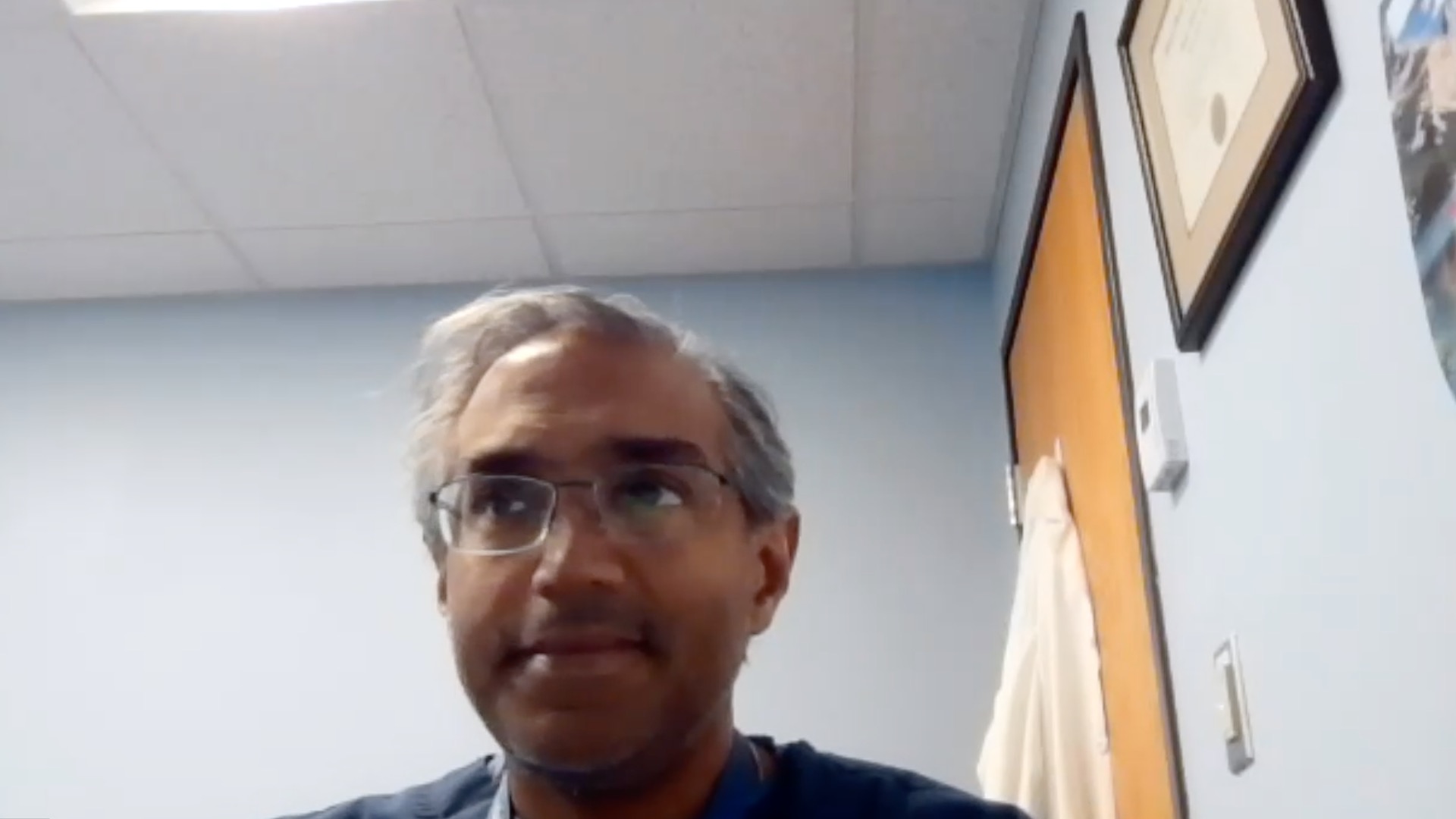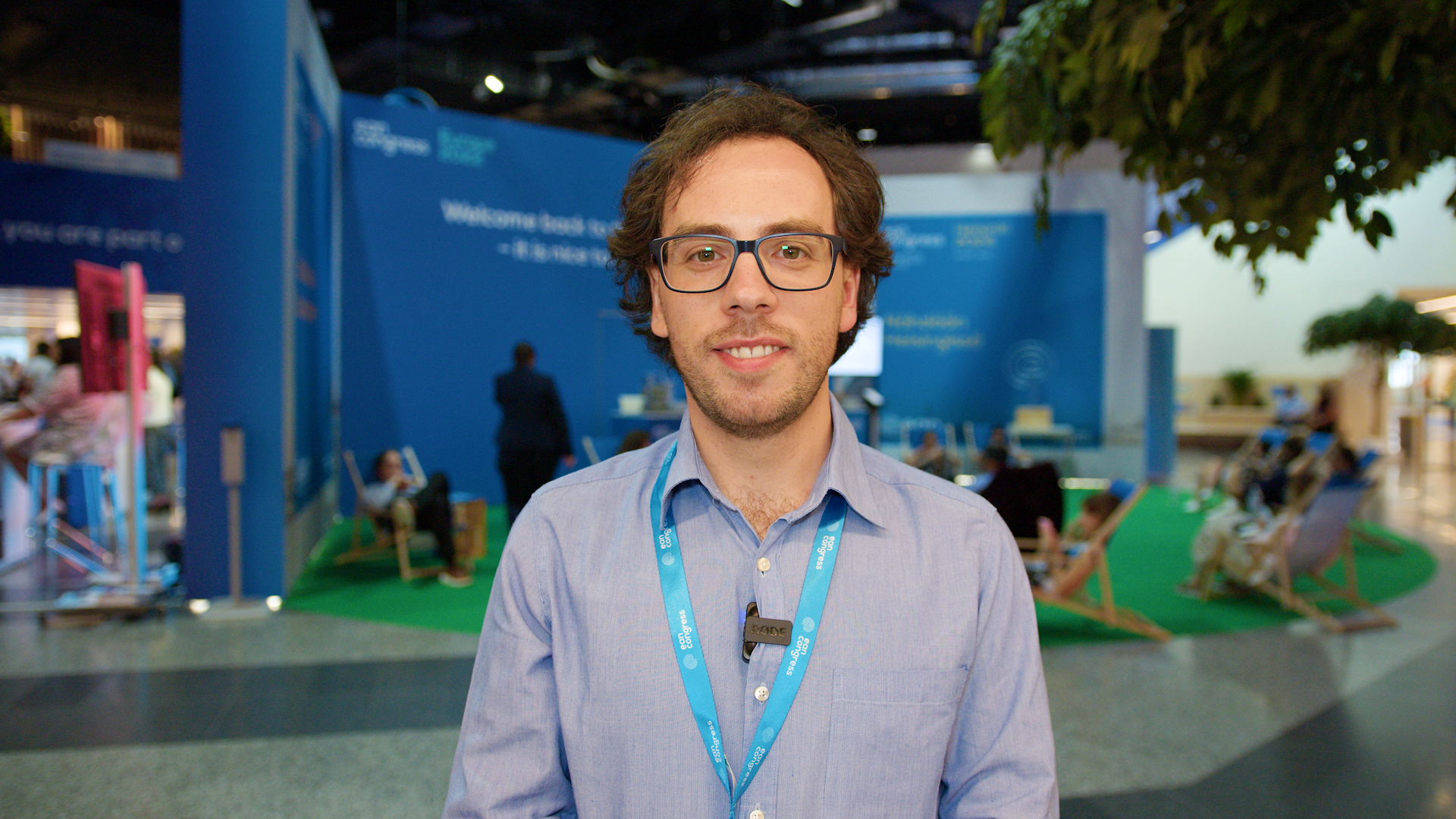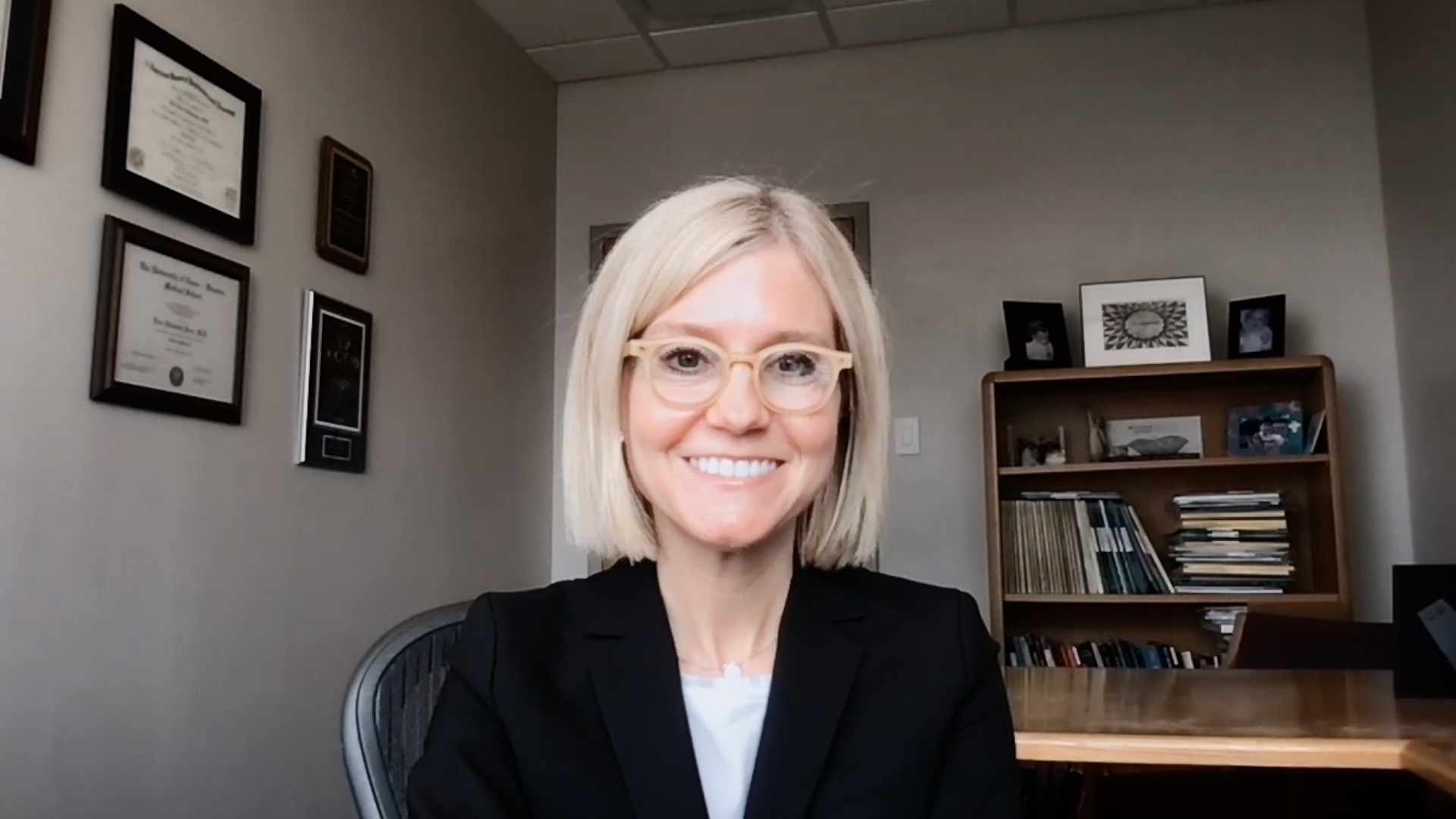
We are delighted to announce Dr Brandon Holmes as a touchNEUROLOGY Future Leader 2026, selected by peers as one of the neurologists changing the future of neurodegenerative disease.
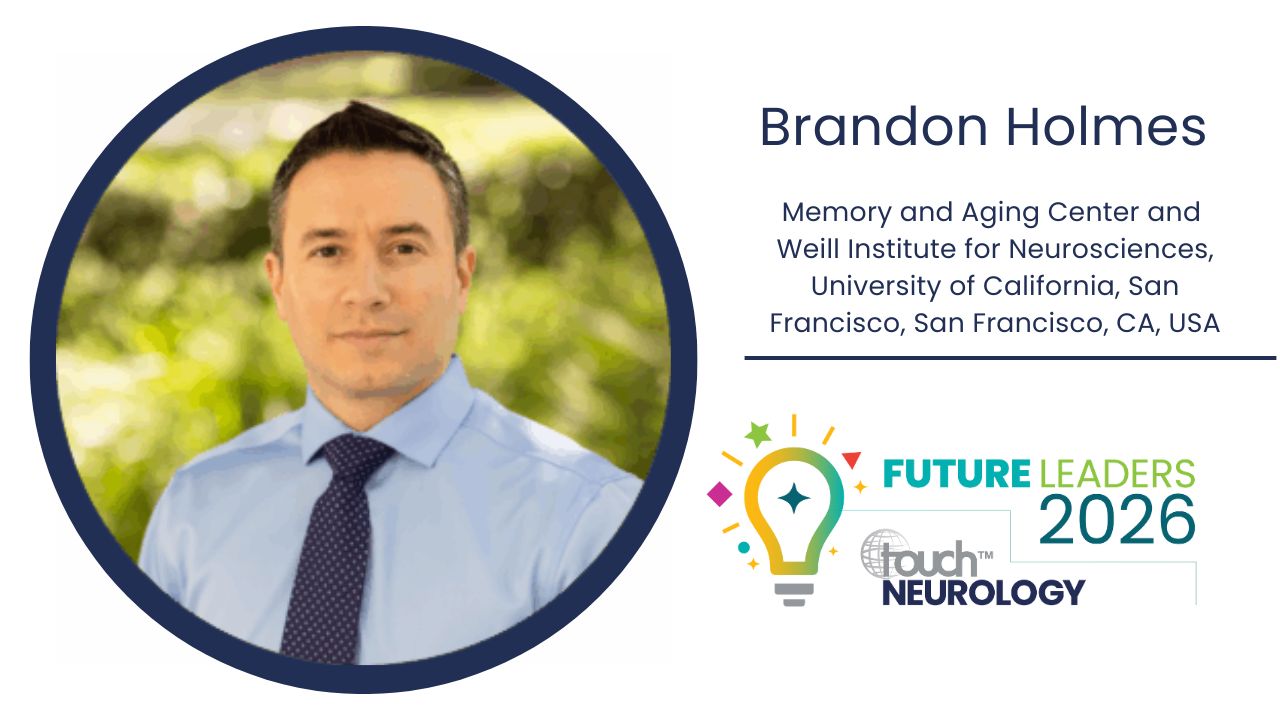 We spoke with Dr Brandon Holmes (Memory and Aging Center and Weill Institute for Neurosciences, University of California, San Francisco, CA, USA), an Assistant Professor of Neurology and physician-scientist whose research focuses on how the brain’s immune system contributes to neurodegenerative diseases, including Alzheimer’s disease and frontotemporal dementia. His laboratory combines human genetics, molecular neurobiology and translational neuroscience to investigate how microglia drive neurodegeneration and to develop novel immune-based therapeutic strategies for dementia and other neurological diseases.
In this interview, Dr Holmes reflects on the personal experiences that inspired his career in neurology, discusses the remarkable advances transforming Alzheimer’s disease research, and explains why understanding the brain’s immune system could unlock the next generation of disease-modifying therapies.
What first sparked your interest in neurology and neuroscience, and what inspired you to pursue a career in this field?
I think the first point of inspiration for me was witnessing Alzheimer’s disease within my own family. That’s a fairly common story among behavioral neurologists, but I had both a great-grandmother and a grandfather with diagnosed Alzheimer’s disease. It had a significant impact on my family and on me personally.
From an early age, I was thinking about the brain from a medical perspective and was interested in pursuing medicine. Later, I came across images of neurons and glia in the brain, and I thought they were incredibly beautiful, almost artistic.
When I was applying to colleges, I chose Oberlin College because it had a strong neuroscience program. As soon as I arrived, I focused almost entirely on neuroscience and chemistry. Looking back, those two points of inspiration, seeing the impact of Alzheimer’s disease in my family and being drawn to the beauty of the brain itself, were what first set me on this path.
What has been the most rewarding moment in your journey so far?
I have two answers to that question. The first is witnessing the transformation that behavioral neurology has undergone over the past five years. As a behavioral neurologist, I study neurodegeneration and dementia syndromes. When I first entered the field, we did not have sophisticated tools to diagnose these diseases. Diagnosis relied largely on clinical evaluation, and we certainly did not have therapies that targeted the underlying disease process.
Within the past three to four years, however, that has changed dramatically. We now have imaging tools that allow us to diagnose Alzheimer’s disease with much greater confidence, and we even have blood-based diagnostic tests. When I was entering the field, the idea of a blood-based test was essentially the holy grail. It was something everyone wanted to achieve, and now we are there. Just last year, we saw the approval of a powerful new FDA-approved blood test.
We also now have disease-modifying therapies. For most of the history of Alzheimer’s disease, our treatments have only impacted symptoms without affecting the underlying pathology. Today, we have two disease-modifying therapies that we are regularly prescribing in clinic, and they are making a meaningful difference for patients. Personally, I see these as the first of many more effective therapies to come.
The second rewarding aspect has been mentorship. I am fortunate to work with a group of talented junior scientists who are in the early stages of their careers. Helping them develop their scientific interests, skills and confidence has been tremendously rewarding.
“When I was entering the field, the idea of a blood-based diagnostic test was essentially the holy grail. We all wanted to work toward that, and now we’re there.”
One thing I would add is that my laboratory tries to operate at the intersection of basic and translational neuroscience.
We always aim to design projects that provide insights at the fundamental cellular level while also informing human disease. Our goal is to generate discoveries that improve our understanding of disease mechanisms while simultaneously contributing to future diagnostics and therapeutics.
That balance between fundamental discovery and clinical translation is something we find incredibly rewarding, and it continues to guide much of the work we do.
Has there been a mentor who has had a particularly important influence on your career?
Absolutely. The mentor who has had by far the greatest impact on my career has been my PhD mentor, Dr Marc Diamond.
He was incredibly inspirational when I was starting out because many of his scientific ideas were unconventional at the time. They challenged traditional thinking and required a certain leap of faith. In science, that can sometimes be viewed skeptically, but many of those ideas ultimately proved to be correct, and I was fortunate to be involved in exploring them during their early stages.
Beyond the science itself, he taught me the importance of scientific rigor and humility. He emphasized that our job is not to prove ourselves right, but first to do our best to prove ourselves wrong. That philosophy has stayed with me ever since and continues to influence how I design experiments and interpret results.
Which developments in neurology excite you most for the future?
The advances I mentioned earlier are already transforming clinical practice today. Looking further ahead, though, I am particularly excited by our growing understanding of glial cells, especially microglia and astrocytes, and their role in neurodegeneration.
Historically, neurodegenerative disease research has been very neuron-centric. We have focused heavily on neurons and synapses, and understandably so. However, only recently have we begun to appreciate how profoundly glial cells shape disease processes.
I anticipate that in the near future we will have biomarkers that allow us to assess glial signaling pathways, glial remodeling and glial activation states. These could provide important insights into disease progression and disease activity.
I also believe that therapies targeting glial biology are not far away. We may soon have treatments designed to modify glial reactivity and cellular states in ways that reduce harmful inflammation within the brain.
For me, that represents the next major frontier in Alzheimer’s disease and neurodegeneration research.
“I think the next frontier for Alzheimer’s disease and neurodegeneration is understanding how glial cells shape the disease process.”
More content in Alzheimer’s disease
Cite: Dr Brandon Holmes on the role of the brain’s immune system in neurodegenerative disease: touchNEUROLOGY Future Leader 2026. touchNEUROLOGY. 08 July 2026.
Editor: Katey Gabrysch, Editorial Director.
Disclosures: Brandon Holmes has received grant/research support from National Institutes of Health: K08NS133290; RM1NS138808; and is on the advisory board for the Channeling Hope Foundation.
The content was developed and edited by human editors. No fees or funding were associated with its publication. touchNEUROLOGY utilize AI as an editorial tool (ChatGPT (GPT-4o) [Large language model]. https://chat.openai.com/chat).
This content has been developed independently by Touch Medical Media for touchNEUROLOGY in collaboration with Dr Brandon Holmes. Views expressed are the speaker’s own and do not necessarily reflect the views of Touch Medical Media.
SIGN UP to touchNEUROLOGY!
Join our global community today for access to thousands of peer-reviewed articles, expert insights, and learn-on-the-go education across 150+ specialties, plus concise email updates and newsletters so you never miss out.