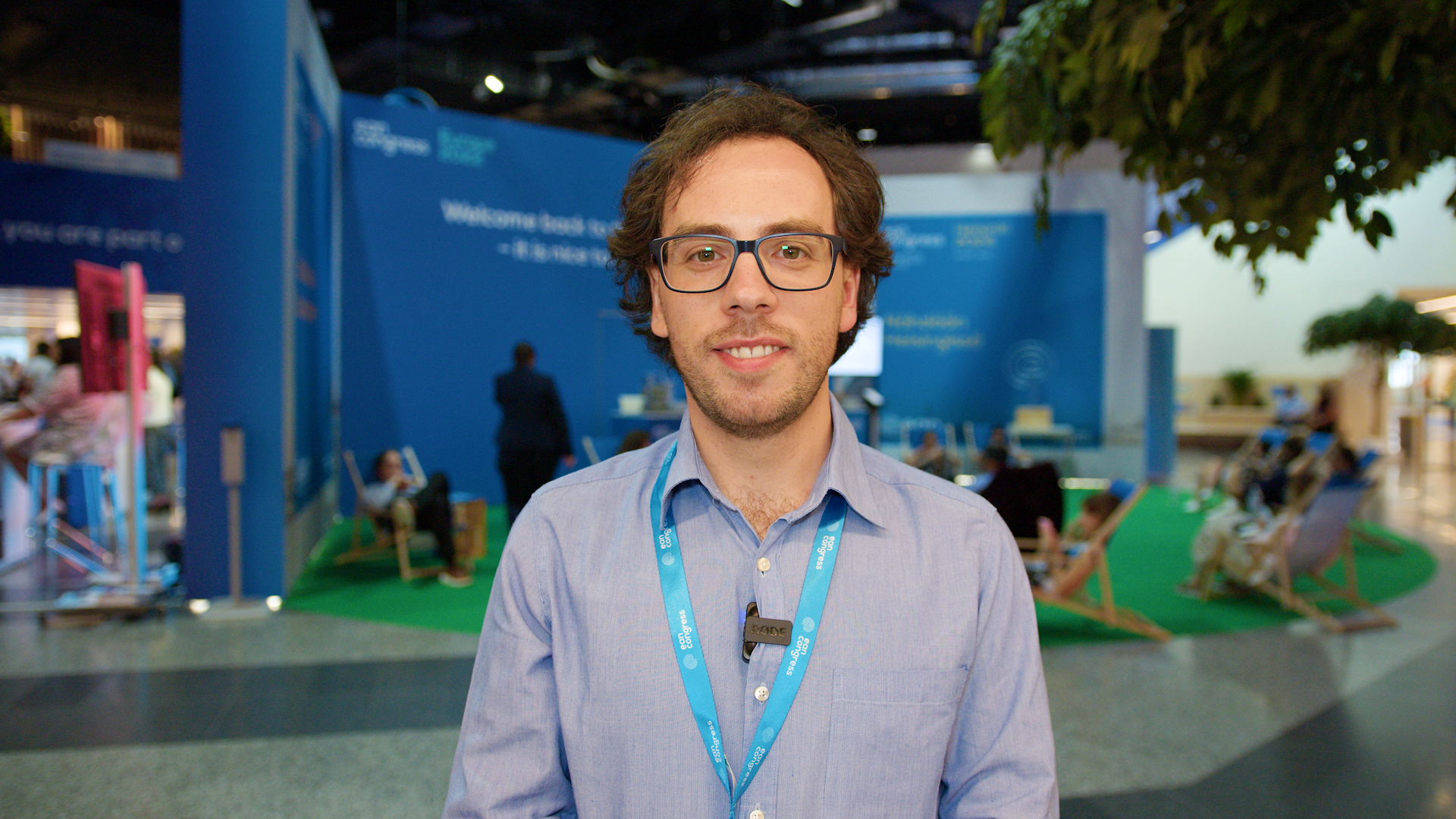
Prof. Lutz Frölich discusses the 48-month Clarity AD open-label extension, including long-term efficacy, clinical meaningfulness, safety and what these findings could mean for patients eligible for lecanemab in Europe.
 At the European Academy of Neurology (EAN) Congress 2026, Prof. Lutz Frölich (Central Institute of Mental Health, University of Heidelberg, Germany) presented new 48-month data from the Clarity AD open-label extension evaluating lecanemab in the European indicated population of patients with early Alzheimer’s disease who are ApoE ε4 non-carriers or heterozygotes.
In this interview, he discusses the rationale for the analysis, the challenges of interpreting long-term open-label data, what the findings suggest about disease modification and clinical meaningfulness, and how these results may support implementation of anti-amyloid therapies in routine practice.
What was the rationale for conducting this 48-month open-label extension analysis, and why did you focus specifically on the ApoE ε4 non-carrier and heterozygote population?
One of the major questions surrounding anti-amyloid therapies, including lecanemab, is their long-term clinical meaningfulness. The data presented in this poster help address part of that question.
The reason for analysing this particular subgroup was driven by the European Medicines Agency (EMA) and the UK Medicines and Healthcare products Regulatory Agency (MHRA). In the original Clarity AD study, it became clear that the risk of amyloid-related imaging abnormalities (ARIA) was highest in patients who are ApoE ε4 homozygotes, meaning they carry two copies of the ApoE ε4 allele.
These individuals appear to have greater vulnerability to brain injury and metabolic stress. ApoE ε4 is not only a risk factor for Alzheimer’s disease but also for several other neurological conditions, including recovery following traumatic brain injury.
As part of their risk management strategy, both the EMA and MHRA limited the European indication for lecanemab, and similarly for donanemab, to patients who are ApoE ε4 non-carriers or heterozygotes. Additional exclusions also apply to patients with an increased risk of intracerebral bleeding, such as those receiving anticoagulation therapy or with certain vascular conditions.
This analysis therefore focuses specifically on the patient population currently eligible to receive lecanemab in Europe and the UK, making the findings directly relevant to clinicians implementing treatment in routine practice.
Could you briefly explain the study design and how the matched historical control cohorts helped interpret the long-term efficacy data?
The methods and overall study design have previously been published. This analysis included participants from the Clarity AD trial who continued into the open-label extension, where all participants received active treatment. This type of extension is common in Phase III development programmes because it allows patients who completed the randomized trial to continue therapy.
However, once patients enter the open-label extension, there is no longer a randomized placebo group. That creates a challenge when trying to estimate what disease progression might have looked like without treatment.
To address this, we used two well-established natural history cohorts: the Alzheimer’s Disease Neuroimaging Initiative (ADNI) in the United States and the Swedish BioFINDER study. Considerable effort was made to identify patients from these cohorts whose disease trajectories closely matched the placebo group during the first 18 months of Clarity AD.
While these historical cohorts cannot replace a true placebo group, they provide a reasonable comparator for estimating long-term disease progression in untreated patients and allow us to examine treatment effects over four years.
What were the key efficacy findings after 48 months, and what do they suggest about the long-term effects of lecanemab?
One of the most important findings was that the treatment difference between lecanemab-treated participants and the matched historical control cohorts continued to increase over time.
Increasing treatment separation
The separation between treated participants and the matched control cohorts became progressively larger through 48 months. This pattern is consistent with what we would expect from a disease-modifying therapy rather than one providing only temporary symptomatic benefit.
Time saved
Another important concept is time saved. Patients receiving lecanemab reached levels of impairment approximately 12 months later than the matched untreated cohorts over the four-year observation period. This means patients maintained better function and independence for roughly an additional year, which is highly meaningful for both patients and healthcare systems.
Patients treated with lecanemab maintained better function for approximately 12 additional months over four years compared with matched untreated cohorts.
Preservation of function
We also looked at the proportion of patients who experienced no clinical decline over time.
Around 70% of treated participants showed no decline on the Clinical Dementia Rating–Sum of Boxes (CDR-SB) over the observation period, while a substantial proportion even demonstrated improvement compared with baseline. I found these results particularly striking because Alzheimer’s disease is generally characterized by relentless progression.
Reduced risk of progression
Finally, when looking at progression between clinical disease stages, treatment reduced the hazard of progression by approximately one-third compared with the matched control cohorts.
Taken together, these findings consistently suggest that continued treatment with lecanemab is associated with clinically meaningful slowing of disease progression.
Why do you believe these findings are clinically meaningful for patients?
Clinical meaningfulness has always been central to discussions surrounding anti-amyloid therapy.
Patients often tell me: “Doctor, if only it wouldn’t get worse.”
The results presented here suggest that many patients can maintain their level of function for considerably longer than we would otherwise expect. Maintaining independence, even for an additional year, can make an enormous difference to patients and their families. When you consider that Alzheimer’s disease typically progresses over seven to ten years, demonstrating meaningful benefit across approximately half of that disease course is highly important.
What did these long-term data demonstrate about the safety and tolerability of continued lecanemab treatment, particularly with respect to ARIA and other adverse events, and how might this help inform long-term treatment decisions?
The long-term safety findings were equally reassuring. No new safety signals emerged during the four-year follow-up.
Importantly, the incidence of adverse events, including serious adverse events, ARIA-E, ARIA-H and infusion-related reactions, declined over time.
Most treatment-related adverse events occurred early, particularly during the first year of therapy. After patients passed that initial treatment period, the overall safety profile improved considerably. These findings provide additional confidence regarding the long-term safety of lecanemab in the European indicated population.
Based on these findings, how do you see long-term lecanemab treatment influencing clinical practice in Europe?
From my own experience, the implementation of anti-amyloid therapies remains one of the biggest challenges. Among Alzheimer’s specialists, there is broad agreement that lecanemab represents an important advance. While it is not a cure, it is clearly a major step forward compared with where we were previously.
The challenge is ensuring that this message reaches the wider clinical community. There are still many misconceptions about Alzheimer’s disease. Many people continue to regard it as an inevitable part of ageing rather than a disease that can now be treated. Educational initiatives from organisations such as the European Academy of Neurology are therefore extremely important in helping neurologists, psychiatrists and general practitioners understand how these therapies can be implemented safely and appropriately.
From my own clinical experience, I currently have patients who have now received lecanemab for more than five years as part of the extension programme. I have honestly never seen this before. These are patients with biomarker-confirmed Alzheimer’s disease who continue to attend clinic independently and remain remarkably functional in their daily lives after more than five years of treatment. That has been very encouraging to observe.
What developments or discussions at EAN 2026 do you think will have the greatest impact on Alzheimer’s disease care?
For me, one of the most important developments was not necessarily another clinical trial, but the growing emphasis on implementation.
Throughout the congress there was increasing recognition that Alzheimer’s disease should now be viewed as a treatable condition rather than an untreatable consequence of ageing.
Educational sessions aimed at neurologists, psychiatrists and general practitioners highlighted the practical aspects of identifying appropriate patients, delivering treatment safely and communicating realistic expectations.
Breaking down longstanding misconceptions about Alzheimer’s disease remains one of our biggest challenges. Helping clinicians understand that we now have therapies capable of modifying disease progression is an important next step in improving patient care.
More content in neuroimmunology
Cite: Lecanemab in early Alzheimer’s disease: 48-month Clarity AD extension supports long-term efficacy and safety. touchNEUROLOGY. 02 July 2026.
Editor: Katey Gabrysch, Editorial Director.
Disclosures: Lutz Froelich is a consultant for, on the Advisory board for, and has received honoraria/honorarium from: Araclon/Grifols, Biogen, BioVie, Eisai, Eli Lilly, FOMF, GE Healthcare, Janssen Cilag, Medical Tribune, Medfora, Medscape, Neurimmune, Noselab, NovoNordisk, Hoffmann-LaRoche, TauRX, Schwabe, StreamUp; and has received grant/research support from: EU-H2020-2017 (Grant no. 779237); EU-IMI-2019 (grant no. 806999); EU-H2022 (Grant No. 101120706), EU-H2024 (Grant no. 101156500), Hector II Foundation, Dietmar Hopp Foundation, Hoffmann LaRoche.
The content was developed and edited by human editors. No fees or funding were associated with its publication. touchNEUROLOGY utilize AI as an editorial tool (ChatGPT (GPT-4o) [Large language model]. https://chat.openai.com/chat).
This content has been developed independently by Touch Medical Media for touchNEUROLOGY in collaboration with Lutz Froelich. Views expressed are the speaker’s own and do not necessarily reflect the views of Touch Medical Media.
SIGN UP to touchNEUROLOGY!
Join our global community today for access to thousands of peer-reviewed articles, expert insights, and learn-on-the-go education across 150+ specialties, plus concise email updates and newsletters so you never miss out.