Prof. Arcadi Navarro discusses BBRC’s largest-ever presence at AAIC, the growing role of biomarkers and personalized risk prediction, and why prevention is becoming the future of Alzheimer’s disease research.
Introduction
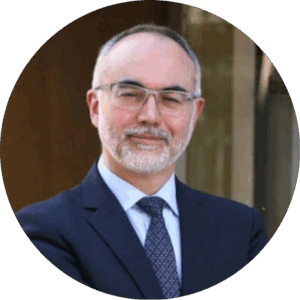 We spoke with Prof. Arcadi Navarro, Professor of Genetics and Director of the Pasqual Maragall Foundation and the Barcelonaβeta Brain Research Center (BBRC), at the Alzheimer’s Association International Conference (AAIC) 2026.
In this interview, Prof. Navarro discusses BBRC’s latest research, the progress being made towards earlier detection and prevention of Alzheimer’s disease, the contribution of the ALFA cohort to precision medicine, and why he believes the field is entering one of its most exciting periods of scientific discovery.
touchNEUROLOGY coverage of AAIC 2026
BBRC has its largest-ever presence at AAIC this year. Which advances presented by your team do you believe have the greatest potential to change Alzheimer’s disease research or clinical practice?
From discovery science to clinical impact
You’re right, it is our largest presence ever. There are 64 of us and 33 posters! We cover a very broad range of subjects, from genetics to menopause and dementia, biomarkers, diet and many other areas.
The advances with the greatest potential for short-term impact are those that move us closer to early detection and better prediction of outcomes. At the end of the day, what we need is to bring the field to a point where a physician can have an informed conversation with their patient about that individual’s own risk.
We are not there yet, but we are getting closer.
Of course, there are many other advances that I hope will have a major impact over the longer term. Understanding the causes of Alzheimer’s disease is fundamental, and conducting clinical trials is fundamental. But today, I think early detection and individualized prediction represent the next big step.
Much of BBRC’s research focuses on the preclinical stages of Alzheimer’s disease. How close are we to being able to identify and intervene before cognitive symptoms develop?
The goal of prevention
This is really our dream. We dream about a world without Alzheimer’s disease, but it’s not only the overall goal that matters, it’s also the way we hope to achieve it. We want to detect the disease early enough that we can intervene before symptoms appear.
Perhaps we won’t even need a cure if we can stop the disease before dementia develops.
Moving from detection to intervention
Over the last few years, it has become very clear that the biology of Alzheimer’s disease appears many years before symptoms develop. We can now detect people who are at increased risk using biomarkers long before cognitive impairment appears.
What we still cannot do is offer pharmacological treatments that reliably prevent those individuals from developing dementia.
There are many clinical trials underway, including several that we are involved in, and I hope we will soon reach the point where people with no cognitive impairment, but with abnormal biomarkers, can be offered not only lifestyle advice, which is already extremely valuable, but also effective preventive treatments.
Blood-based biomarkers are transforming Alzheimer’s disease diagnosis. What do you see as the next major challenge in translating these advances into clinical practice?
Looking beyond a positive or negative test
There was an excellent session earlier this week that really highlighted this issue. One important message was that the predictive value of biomarkers changes considerably depending on an individual’s co-morbidities. That is absolutely fundamental because it tells us that interpretation is about much more than simply having a positive or negative biomarker result.
We need to know who that person is. Are they male or female? How old are they? What other medical conditions do they have? What is their lifestyle like? We are not quite there yet.
Towards personalized risk prediction
Ultimately, biomarkers should allow us to go beyond a simple classification of “at risk” or “not at risk.” What we really need are individualized estimates of a person’s risk over the next five, ten or fifteen years.
This is nothing new in medicine. It is exactly what happens in cardiovascular disease. Your doctor combines different pieces of information and can estimate your personal risk of a stroke or heart attack over a defined period. We have not yet reached that stage in Alzheimer’s disease, but we will.
The ALFA study has become one of the world’s leading preclinical Alzheimer’s disease cohorts. What have been its most important contributions, and what questions is it now helping to answer?
A long-term investment in prevention
The ALFA study began around 15 years ago. I was not there at the beginning, but I have enormous admiration for the people who designed it. They had the courage to recruit a very young cohort, starting at around 45 years of age. They knew it would take many years before important findings emerged, but they were making a genuine long-term investment rather than looking for quick results. That long-term thinking is fundamental in science.
Building the future of risk prediction
ALFA has already contributed enormously. It has helped us understand brain ageing using MRI, refine biomarker cut-offs such as plasma p-tau217, study multimodal interventions and investigate how diet influences Alzheimer’s disease risk and biology.
At this meeting, we also announced that ALFA will contribute to a major project funded by Alzheimer’s Research UK and Gates Ventures that focuses on personalized risk prediction. Hopefully, within the next couple of years, ALFA will do for Alzheimer’s disease what the Framingham study did for cardiovascular disease.
Looking ahead, which areas of Alzheimer’s disease research do you believe will have the greatest impact over the next five to ten years?
More treatment options on the horizon
In the short term, over the next two years, I think we are going to see a wave of successful phase 3 trials. Hopefully that will include anti-tau therapies, inflammation-targeting strategies and several other approaches. That will be a real game changer because it will give us a much broader range of treatments than we have today.
Making Alzheimer’s disease preventable
At the moment, the therapies already approved only apply to perhaps 1–2% of people with Alzheimer’s disease. Ten or fifteen years from now, I hope we will have moved much further towards prevention.
Just as controlling my blood pressure today reduces my risk of stroke, I hope we will be able to identify people at risk of Alzheimer’s disease early enough to offer treatment that allows them to continue living a full, productive and cognitively healthy life.
Looking beyond BBRC’s own research, what have been the most important therapeutic advances presented at AAIC 2026?
Promising therapies and global collaboration
I would say that some of the phase 2a and phase 2b results presented this week are genuinely exciting. Several have the potential to be real game changers. At the same time, I am equally excited by the growing collaboration between research groups across different countries and populations.
Having genomic, multiomic and biomarker data from diverse populations around the world will be fundamental if we are going to fully understand Alzheimer’s disease and plan the future of treatment.
How do you envisage Alzheimer’s disease research evolving in the next few years?
I am old enough to have lived through two, perhaps even three, scientific revolutions over the last 30 years.
I can honestly say that the revolution we are seeing now in Alzheimer’s disease research is the fastest, the most exciting and, I believe, the one that will ultimately prove the most fruitful. I feel incredibly privileged to be alive and working in the field at this moment.
More content in Alzheimer’s disease
Cite: Arcadi Navarro. Early detection and prevention in Alzheimer’s disease: Insights from the Barcelonaβeta Brain Research Center. touchNEUROLOGY. 18 July 2026.
Editor: Katey Gabrysch, Editorial Director.
Disclosures: Prof. Arcadi Navarro has nothing to disclose.
The content was developed and edited by human editors. No fees or funding were associated with its publication. touchNEUROLOGY utilize AI as an editorial tool (ChatGPT (GPT-4o) [Large language model]. https://chat.openai.com/chat).
This content has been developed independently by Touch Medical Media for touchNEUROLOGY in collaboration with Prof. Arcadi Navarro. Views expressed are the speaker’s own and do not necessarily reflect the views of Touch Medical Media.
SIGN UP to touchNEUROLOGY!
Join our global community today for access to thousands of peer-reviewed articles, expert insights, and learn-on-the-go education across 150+ specialties, plus concise email updates and newsletters so you never miss out.