New international data support rapid aquaporin-4 antibody testing to improve earlier diagnosis and access to care in NMSOD

Accurate and timely antibody testing remains central to improving outcomes in neuromyelitis optica spectrum disorder (NMOSD), where early diagnosis can help prevent irreversible disability and guide the use of highly specific therapies.
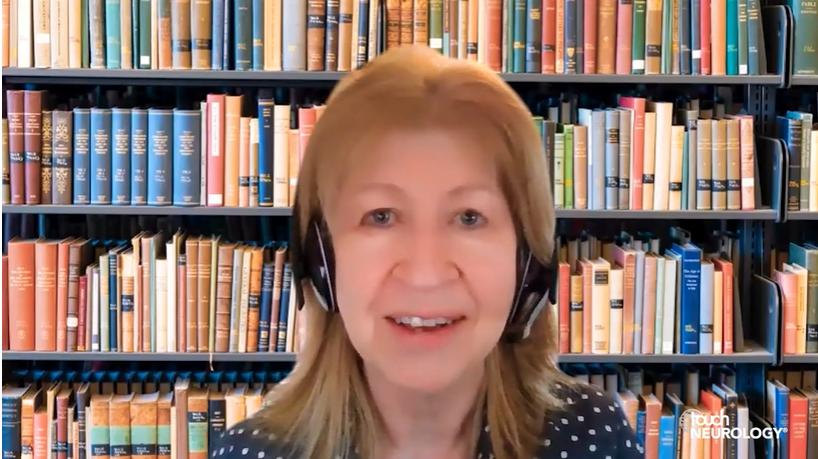
At American Academy of Neurology 2026, Assistant Professor Matteo Gastaldi, Head of the Neuroimmunology Research Unit in Pavia, Co-Head of the Neuroimmunology Diagnostic Laboratory and Assistant Professor at the University of Pavia, Italy, discussed new international data evaluating the rapid iDOT assay as a potentially accessible and reliable alternative to conventional cell-based testing, with important implications for earlier diagnosis and wider global access to care.
Presented at AAN 2026: International Evaluation of the Aquaporin-4 Antibody Rapid Idot Test. LS1: Late-breaking Science 1. April 18-22, Chicago, USA.
Q. Could you give us a brief overview of NMOSD and why accurate aquaporin-4 antibody testing is so important for diagnosis and management?
AQP4 antibodies are crucial biomarkers for confirming a diagnosis of NMOSD and distinguishing it from other common demyelinating disorders such as multiple sclerosis and myelin oligodendrocyte glycoprotein antibody-associated disease (MOGAD). This distinction is essential because the treatment strategies for these conditions are very different.
Q. What was the rationale for evaluating the rapid iDOT assay internationally, and how was this study designed to assess its performance across multiple centers?
The current gold standard for AQP4 antibody detection is the cell-based assay (CBA). However, CBAs require expertise and laboratory facilities that are not always available, particularly in low-income countries. iDOT could represent a lower-cost alternative that can be used in a wider range of laboratories, while already having shown promising accuracy.
To determine whether these findings could be replicated more broadly, we established a multicenter validation study. Samples from AQP4-positive NMOSD patients, MOGAD patients, and controls were centralized at the coordinating centers along with iDOT kits. The samples were then aliquoted and sent in a blinded fashion to all participating centers together with the iDOT kits.
Q. What were the key findings in terms of sensitivity, specificity, and consistency of the iDOT test compared with established cell-based assays?
iDOT showed sensitivity ranging from 81% to 100% across most centers, while specificity was close to 100% in all participating centers. Notably, in centers with high expertise, iDOT demonstrated sensitivity comparable to a live CBA and superior to a fixed CBA. Discrepancies were likely related to interpretation challenges and variable performance of some kits, possibly due to reduced sensitivity over time.
Q. What is the potential clinical significance of these findings, particularly for improving access to rapid and reliable NMOSD testing in routine practice or lower-resource settings?
Our results confirm that iDOT is a robust test and a reliable alternative to CBAs. This could lead to broader access to AQP4 testing, including in settings where CBAs are not available.
Q. What are the next steps for this technology, and how might rapid antibody testing evolve in the future to support earlier diagnosis and treatment decisions in NMOSD?
Our short-term plan is to investigate in greater detail the reasons for discrepancies between assays. Future studies could support the development of even simpler tests, such as lateral flow assays, which may facilitate AQP4 detection even outside specialized neuroimmunology laboratories.
Q. What did you find were the most important therapeutic and treatment updates presented at American Academy of Neurology 2026?
The data from the METEOROID study in the treatment of MOGAD were among the most important updates presented this year.
Related content
AAN 2026 Late-breaking science: Key neurology trial data and clinical insights
Phase 3 METEOROID trial in MOGAD: Satralizumab cuts relapse risk by 68%
Rethinking multiple sclerosis across the lifespan: Lessons from adult disease
More content in neuroimmunology
Cite: Matteo Gastaldi. Improving access to NMOSD diagnosis: Multicenter evaluation of the iDOT AQP4 assay touchNEUROLOGY. 24 March 2026.
Abstract: M. Gastaldi. International Evaluation of the Aquaporin-4 Antibody Rapid Idot Test. LS1: Late-breaking Science 1. Presented at American Academy of Neurology 2026. April 18-22, Chicago, USA.
Acknowledgements:
This international study was coordinated by:
- Patrick Waters (University of Oxford)
- Rui Li (Samsung AI Center, Cambridge)
The iDOT kits were developed and provided by:
- Yanping Yan
- Ying Fu
We also acknowledge the contributions of all collaborators involved in this international effort:
Yaping Yan, Margherita Vacca, Uvini Amarasekara, Georgina Arrambide, Jeffrey Bennett, Jin Bi, Ana Bornes, Ruta Cakla, Thashi Chang, Jieun Chung, Álvaro Cobo Calvo, Gabriel DeLuca, Ying Fu, Ruth Geraldes, Ho Jin Kim, Maria Isabel Leite, Rui Li, Ke Li, Gathsaurie Malavige, Romain Marignier, Sara Mariotto, Jacqueline Palace, Lekha Pandit, Sean Pittock, Markus Reindl, Simon Rinaldi, Anne Ruiz, Douglas Kazutoshi Sato, Xiaobo Sun, Eléonore Vieillard, Qiu Wei, Mark Woodhall, Sathsara Yatiwelle, 한상민, Matteo Gastaldi*, Patrick Waters*
Editor: Katey Gabrysch, Editorial Director.
Disclosures: Matteo Gastaldi is on the advisory board for UCB, Alexion, Roche, J&J, and Argenx.
The content was developed and edited by human editors. No fees or funding were associated with its publication. touchNEUROLOGY utilize AI as an editorial tool (ChatGPT (GPT-4o) [Large language model]. https://chat.openai.com/chat).
This content has been developed independently by Touch Medical Media for touchNEUROLOGY in collaboration with Matteo Gastaldi. Views expressed are the speaker’s own and do not necessarily reflect the views of Touch Medical Media.
SIGN UP to touchNEUROLOGY!
Join our global community today for access to thousands of peer-reviewed articles, expert insights, and learn-on-the-go education across 150+ specialties, plus concise email updates and newsletters so you never miss out.