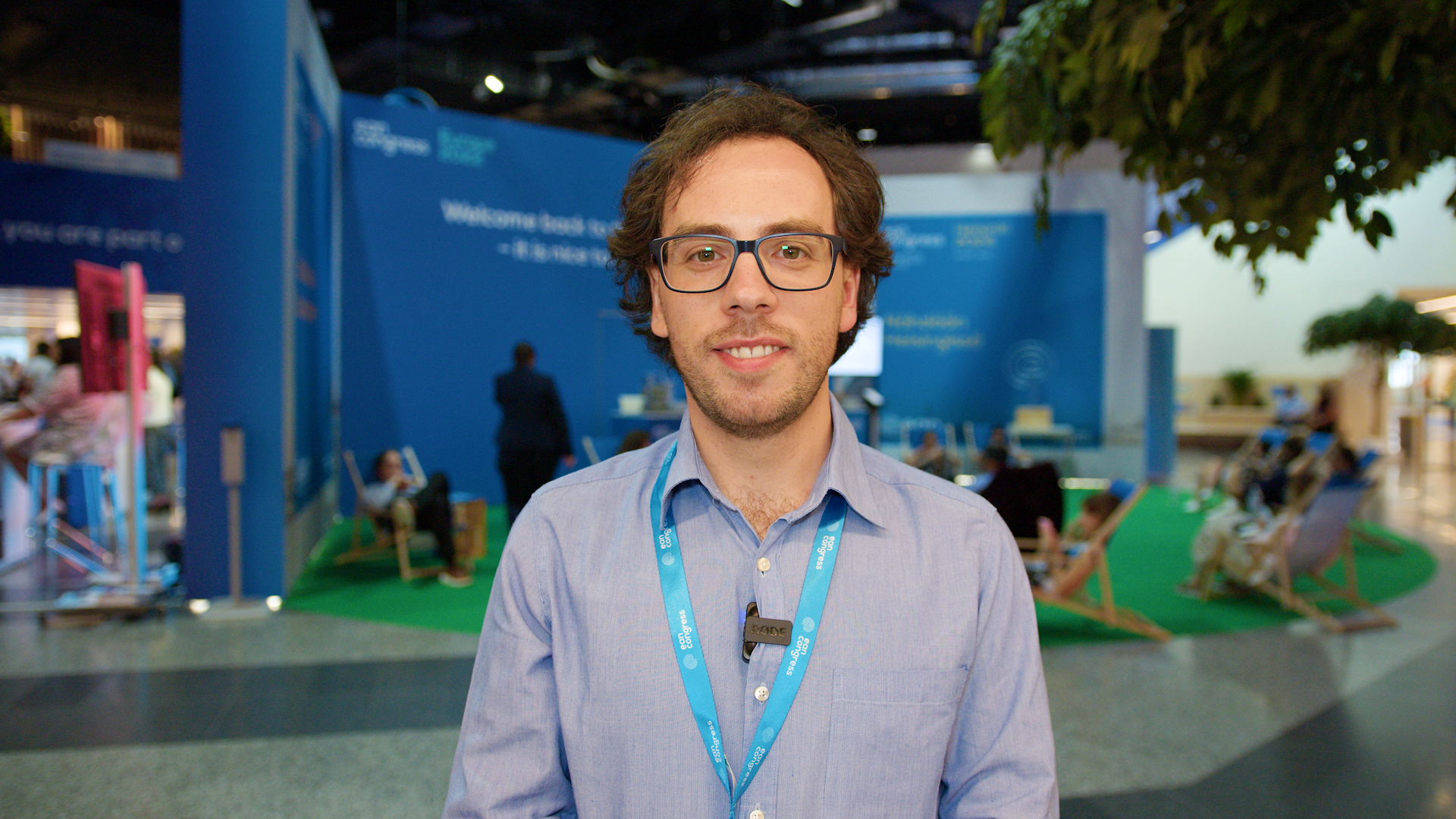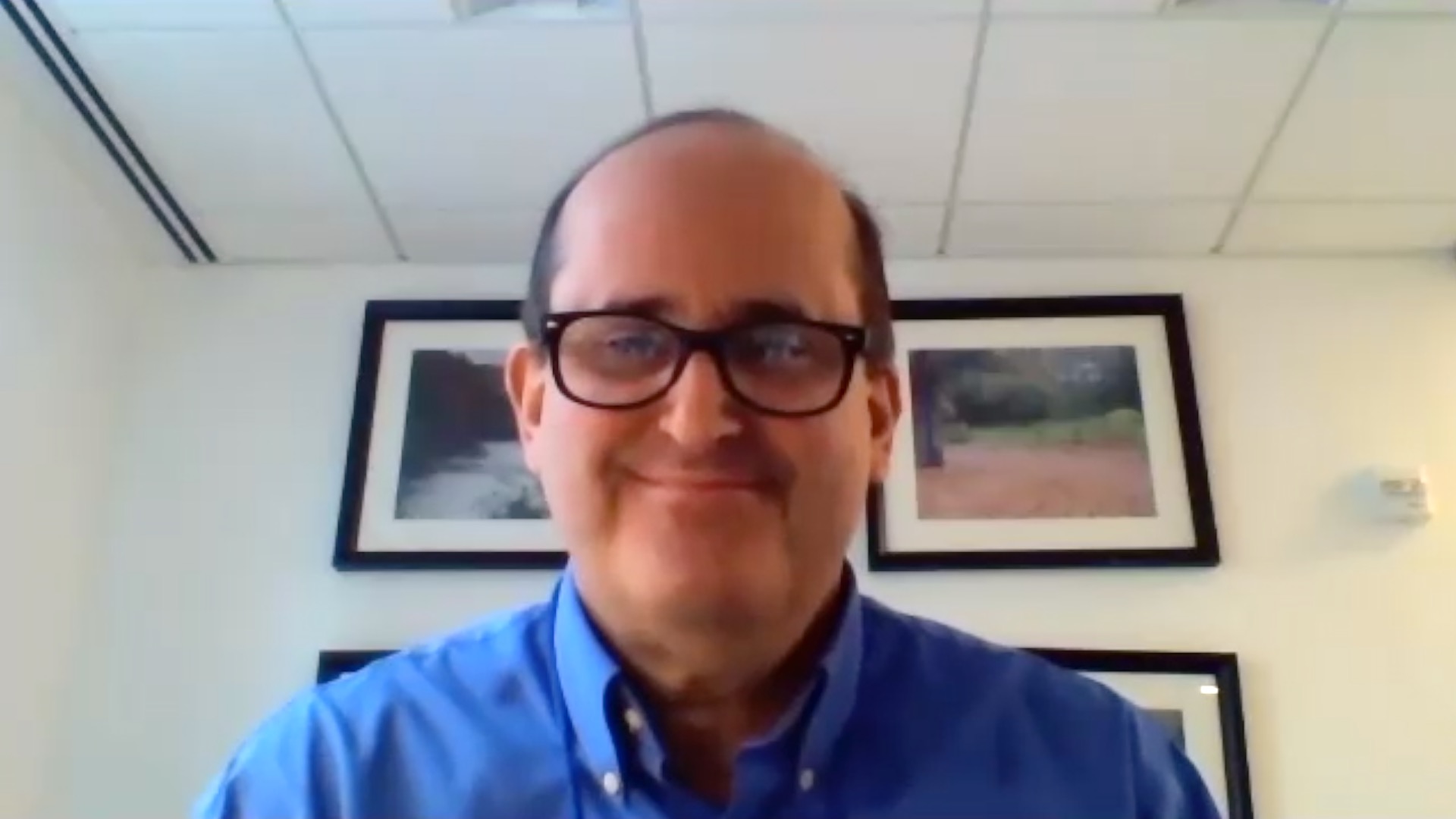
Dr Reisa Sperling discusses the rationale for targeting preclinical Alzheimer’s disease, the latest long-term data from the Brainshuttle AD programme evaluating trontinemab, and how the PrevenTRON study could help shift Alzheimer’s disease treatment towards prevention.
 We spoke with Dr Reisa Sperling, (Massachusetts General Hospital, Brigham and Women’s Hospital and Harvard Medical School, Boston, MA, USA) at the Alzheimer’s Association International Conference (AAIC) 2026 about the growing focus on treating Alzheimer’s disease before cognitive symptoms develop.
In this interview, Dr Sperling discusses the biological rationale for early intervention, the emerging long-term evidence supporting Brainshuttle trontinemab, the promise of the PrevenTRON secondary prevention programme, and the broader therapeutic advances that are shaping the future of Alzheimer’s disease research.
touchNEUROLOGY coverage of AAIC 2026
Presentation: Evidence Supporting Preclinical AD As An Optimal Stage For Intervention With Trontinemab. Featured Research Sessions: Shuttling past the barrier: From Brainshuttle (TM) AD long-term trontinemab data to secondary prevention of AD in PrevenTRON
There is growing interest in shifting Alzheimer’s disease treatment towards earlier intervention. What is the rationale for targeting preclinical Alzheimer’s disease, and what evidence suggests this may offer the greatest opportunity to modify disease progression?
We know that Alzheimer’s disease begins in the brain probably 10–15 years before we can detect symptoms. Just like every other chronic disease, I think our best chance is to intervene at an earlier stage.
In particular, when you’re using an anti-amyloid approach, you want to treat early because once there is a sufficient amount of amyloid, we see tau spreading throughout the brain. We sometimes call this the catastrophe—the movement from the medial temporal lobe out into the neocortex. We need to prevent that if we really want to slow decline and prevent impairment.
So, for me, the biggest argument is using an anti-amyloid therapy before there is extensive tau pathology in the brain.
Your presentation discusses the evidence supporting preclinical Alzheimer’s disease as the optimal stage for intervention. What are the key findings from the long-term Brainshuttle AD extension study that strengthen this case?
I’ve been very excited about trontinemab. Ever since the earliest data were presented, it appears to provide rapid and deep clearance of amyloid, but importantly with less of the side effect we all worry about, such as amyloid-related imaging abnormalities (ARIA).
For a preclinical Alzheimer’s disease population, that risk–benefit ratio is particularly important. Even at this early stage, I think you want to be aggressive about reducing amyloid so you can prevent tau from spreading, but you also need to minimize the risk of serious adverse events in a population where there is less certainty about when individuals will progress to mild cognitive impairment (MCI) or dementia.
For me, the data from the trontinemab programme, particularly the open-label extension that will be presented, continue to support what appears to be a very favourable risk–benefit profile that could be especially well suited to a preclinical Alzheimer’s disease population.
Could you summarize the key findings, and which do you believe are most important in supporting the use of trontinemab in a prevention setting?
I would not say one finding is more important than another, but I do think the rapid and particularly deep clearance of amyloid is very encouraging.
The open-label extension data suggest that patients can achieve what we call negative Centiloids, not only below the threshold for amyloid positivity, which is often around 24 Centiloids, but frequently below 11 Centiloids and even into negative ranges with continued treatment.
I also find the fluid biomarker data encouraging, particularly the plasma p-tau217 results. We do not see levels returning completely to normal, but there is a substantial reduction, suggesting that we may be affecting more than just amyloid. We may also be influencing the relationship between amyloid and tau.
The safety data are equally important. In a preclinical Alzheimer’s disease population, you want to minimize the risk of serious adverse events as much as possible. Fortunately, although there were a small number of ARIA cases reported in the open-label extension, they were asymptomatic and the ARIA-E cases resolved.
Taken together, having strong biological activity with a lower risk of serious ARIA is a very important part of the overall risk-benefit profile.
As trontinemab uses Brainshuttle technology to enhance delivery to the brain, how could this approach help overcome some of the limitations of existing anti-amyloid therapies?
The Brainshuttle technology has been particularly valuable because it appears to provide broader distribution of the antibody throughout the brain. It crosses at the capillaries rather than the arterioles.
Whether that is the reason we are seeing less ARIA is still unknown, but it certainly appears to allow broader distribution of the antibody, and I think that is likely responsible for the rapid and very deep clearance of amyloid plaques.
It may also allow less frequent dosing over time. If you achieve deep clearance early, maintenance therapy could potentially be given less often.
Overall, I think the Brainshuttle technology is exciting because it has the potential to improve both efficacy and safety.
What are the key clinical questions the PrevenTRON programme is designed to answer, and how could positive findings reshape future approaches?
PrevenTRON is designed to determine whether treating individuals who are still cognitively unimpaired, but at very high risk of developing cognitive impairment, can delay disease progression.
These are people who have very high levels of blood-based biomarker abnormalities, particularly plasma p-tau217, placing them at increased risk of progressing to cognitive impairment.
The study will evaluate whether treatment with trontinemab at this very early stage can delay progression to cognitive impairment and slow cognitive decline on formal testing.
Ultimately, this is what we all want, to prevent people from ever reaching an impaired stage. PrevenTRON gives us the opportunity to test that hypothesis in a high-risk population while individuals are still cognitively unimpaired.
Could you tell us a little about the TRAVELLER programme, and what role it plays in prevention trials?
One additional point about PrevenTRON is that it includes an important screening initiative called the TRAVELLER programme. The purpose of the programme is to identify eligible individuals for Phase III Alzheimer’s studies evaluating the Brainshuttle technology.
When we talk about preclinical Alzheimer’s disease, these individuals are generally not presenting to their doctor with memory concerns or cognitive impairment. That means we need a different approach to identifying people who may benefit from prevention studies.
A centralized screening programme that uses blood-based testing to identify individuals at high risk and refer appropriate participants into studies like PrevenTRON will be incredibly important. I think the TRAVELLER programme will play a key role in helping us find the right individuals for these prevention trials.
Looking beyond your research, what do you think have been the most important therapeutic advances presented at AAIC 2026?
One of the exciting things about AAIC is that we are seeing progress across multiple therapeutic approaches.
There have been important advances in anti-amyloid therapies, including the Brainshuttle programme, but we are also seeing exciting data on tau-targeted therapies, including antisense oligonucleotide (ASO) approaches.
It is encouraging to see the field moving beyond amyloid alone. Ultimately, particularly for people who already have symptoms, I think we will want combination therapies that target both amyloid and tau, and I really look forward to seeing that happen.
More content in Alzheimer’s disease
Cite: Reisa Sperling. Insights into the Brainshuttle AD and PrevenTRON programs: Preventing Alzheimer’s disease before symptoms emerge. touchNEUROLOGY. 14 July 2026.
Presentation: Evidence Supporting Preclinical AD As An Optimal Stage For Intervention With Trontinemab. Featured Research Sessions: Shuttling past the barrier: From Brainshuttle (TM) AD long-term trontinemab data to secondary prevention of AD in PrevenTRON
Editor: Katey Gabrysch, Editorial Director.
Disclosures: Reisa Sperling is a consultant for AbbVie, AC Immune, Acumen, Alector, Apellis, Biogen, Biohaven, Bristol Myers Squibb, Genentech, Immunobrain, Janssen, Novo Nordisk, Oligomerix, Prothena, Roche,Therini and Vaxxinity; and has received grant/research support from Eisai and Eli Lilly. National Institute on Aging/National Institutes of Health, GHR Foundation, and the Alzheimer’s Association.
The content was developed and edited by human editors. No fees or funding were associated with its publication. touchNEUROLOGY utilize AI as an editorial tool (ChatGPT (GPT-4o) [Large language model]. https://chat.openai.com/chat).
This content has been developed independently by Touch Medical Media for touchNEUROLOGY in collaboration with Prof. Reisa Sperling. Views expressed are the speaker’s own and do not necessarily reflect the views of Touch Medical Media.
SIGN UP to touchNEUROLOGY!
Join our global community today for access to thousands of peer-reviewed articles, expert insights, and learn-on-the-go education across 150+ specialties, plus concise email updates and newsletters so you never miss out.