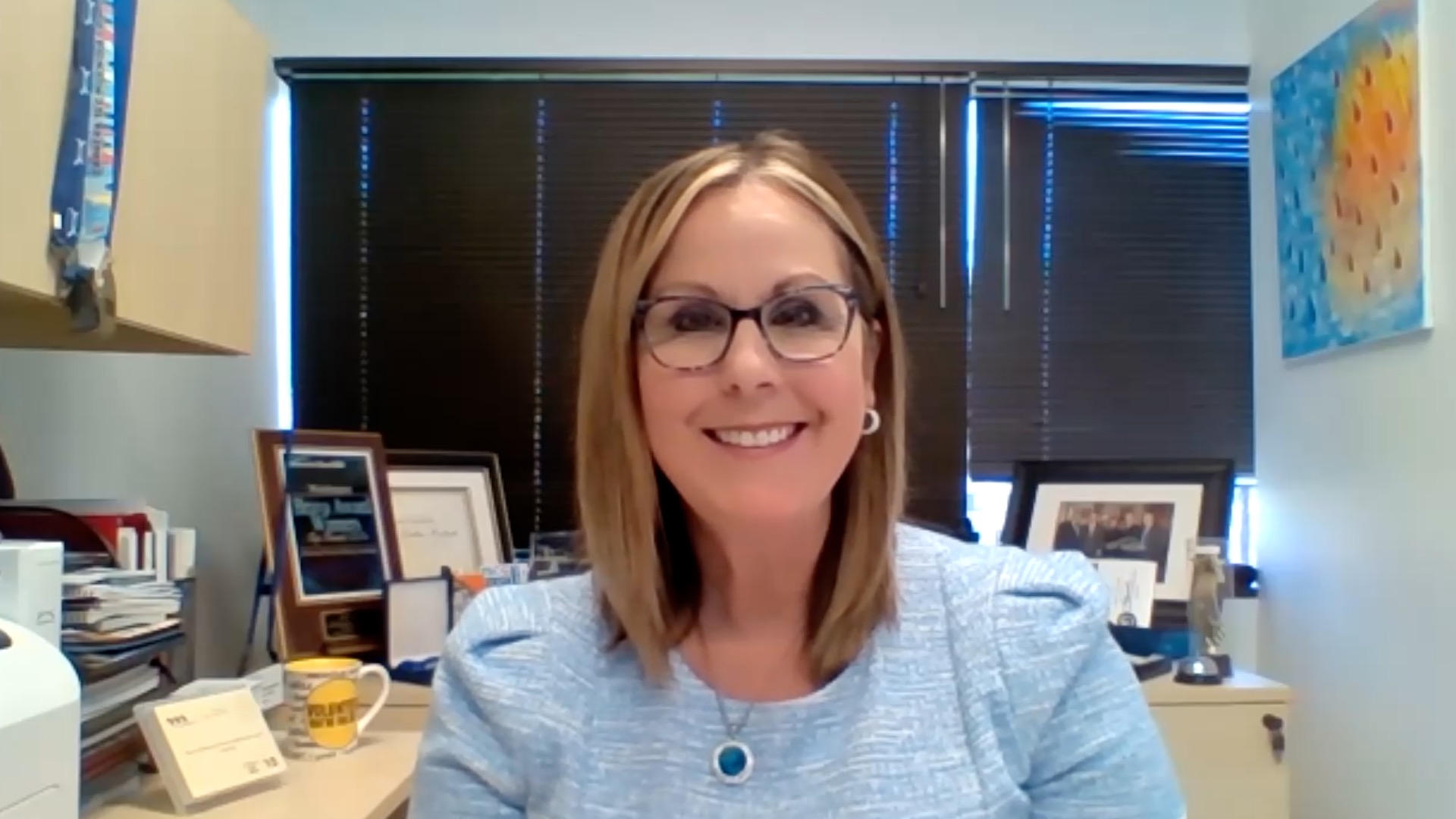
Prof. Amanda Piquet discusses the KYSA-8 miv-cel trial in refractory stiff-person syndrome, including efficacy findings, safety outcomes and the future role of CD19 CAR T-cell therapy in autoimmune neurologic disease.
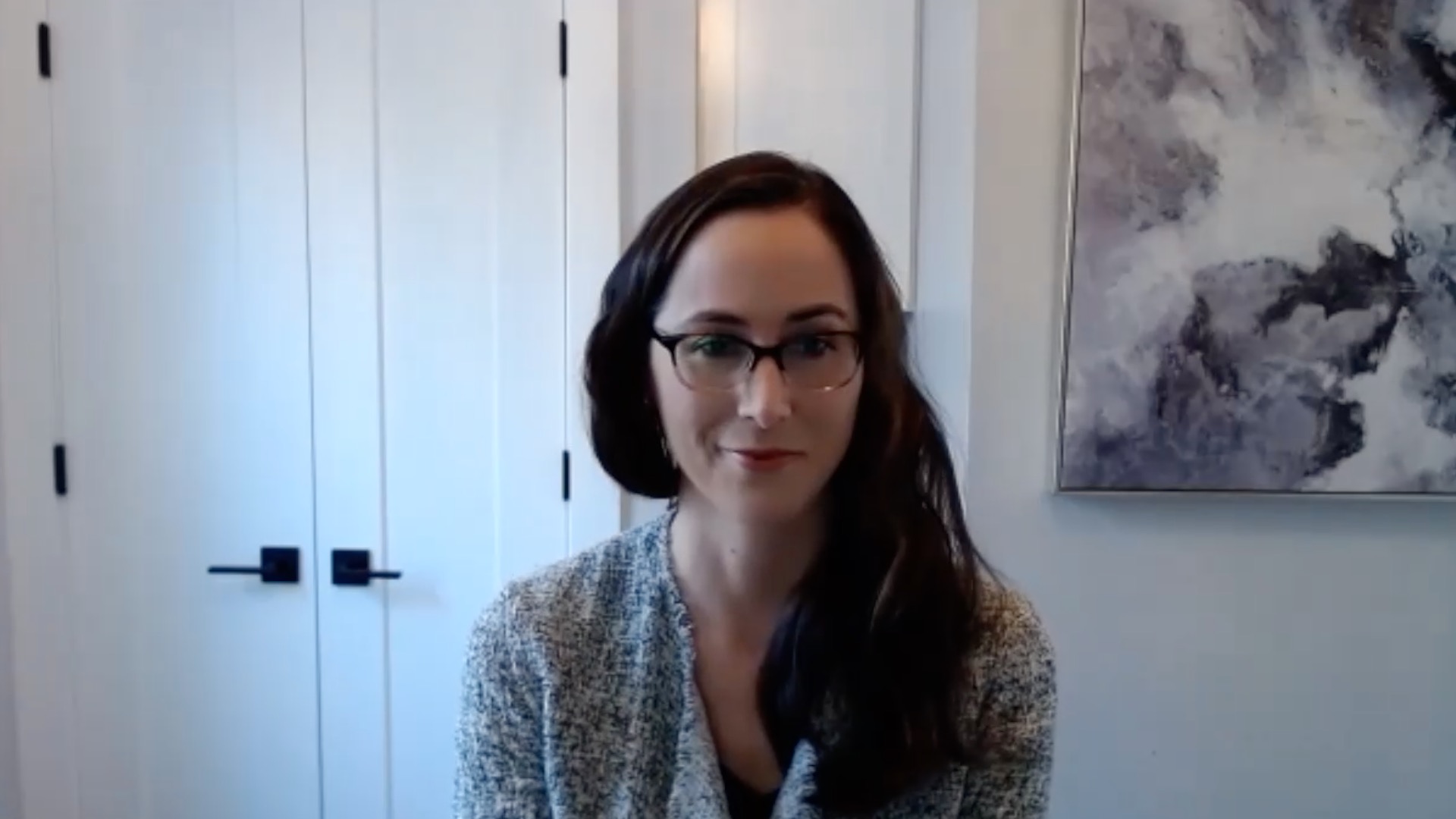
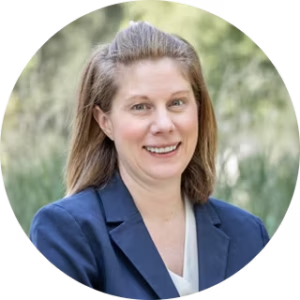 At the American Academy of Neurology Annual Meeting 2026, Prof. Amanda L. Piquet (Director, Autoimmune Neurology Program, University of Colorado Anschutz, Aurora, CL, USA) presented insights into the evolving role of CAR T-cell therapy in refractory stiff-person syndrome (SPS).
In this interview, Prof. Piquet discusses the current diagnostic and therapeutic challenges in SPS, key findings from the Phase 2 KYSA-8 trial evaluating miv-cel (KYV-101), and the potential for CD19 CAR T-cell therapy to reshape future treatment approaches across autoimmune neurology.
Presented at AAN 2026: Miv-cel CD19 CAR T-Cell Therapy Shows Efficacy and Safety in Stiff Person Syndrome in a Pivotal, Multicenter, Phase 2 Study (KYSA-8). LS2: Late-breaking Science 2. April 18-22, Chicago, USA.
What are the current diagnostic and therapeutic challenges in stiff-person syndrome, particularly for patients with refractory disease?
SPS remains frequently underrecognized, and many patients experience years of delayed diagnosis before reaching specialty care. Symptoms can overlap with psychiatric, orthopedic or functional disorders, making diagnosis challenging.
From a treatment standpoint, while therapies such as IVIG, benzodiazepines, rituximab and plasma exchange can help, a subset of patients remain severely disabled despite aggressive immunotherapy. In my practice, refractory SPS patients often face progressive loss of mobility and independence, underscoring the urgent need for more effective and durable treatment approaches.
What was the study design, patient population and key efficacy findings from the Phase 2 KYSA-8 trial of miv-cel (KYV-101) in refractory Stiff Person Syndrome?
The Phase 2 KYSA-8 trial evaluated KYV-101, also known as miv-cel, in patients with refractory SPS who had failed prior immunotherapies. Patients underwent lymphodepletion followed by autologous CD19 CAR T-cell infusion.
What was most encouraging was the meaningful improvement seen in stiffness, spasms, mobility and overall function in several patients. Importantly, many participants had longstanding disease with substantial disability before enrollment.
These early findings suggest CAR T-cell therapy may provide a more durable immune reset strategy compared with conventional chronic immunosuppression.
How should clinicians interpret the reported absence of high-grade cytokine release syndrome and ICANS, and what does this suggest about outpatient administration?
One of the most encouraging aspects of the KYSA-8 experience was the favorable safety profile, particularly the absence of high-grade cytokine release syndrome (CRS) or immune effector cell-associated neurotoxicity syndrome (ICANS). Historically, these toxicities have been major concerns with CAR T-cell therapies in oncology.
In autoimmune neurology, however, we are beginning to see evidence that toxicity profiles may be more manageable. Clinically, this raises the possibility that selected patients could eventually receive therapy in outpatient or hybrid monitoring settings at experienced centers, which could significantly improve access and reduce treatment burden for patients.
What could the longer-term clinical significance of these findings be?
I think the long-term implications could be transformative for autoimmune neurology. Historically, we have relied on chronic immunosuppression to control disease activity, but CAR T-cell therapy introduces the possibility of a durable immune reset rather than temporary suppression alone.
Ongoing extension studies are needed to better understand the durability of this treatment; however, this approach could fundamentally change how we treat severe autoimmune neurologic disease. Beyond SPS, these findings may also have implications for disorders such as autoimmune encephalitis, Myasthenia gravis, Multiple sclerosis and Neuromyelitis optica spectrum disorder.
Where might CD19 CAR T-cell therapy fit within future treatment pathways for severe or treatment-resistant autoimmune movement disorders?
Initially, I see CD19 CAR T-cell therapy being used primarily for patients with refractory SPS. However, if ongoing studies continue to demonstrate favorable safety and durable efficacy, these therapies may eventually move earlier in the treatment algorithm for other autoimmune movement disorders.
The ability to potentially reduce long-term dependence on steroids, IVIG and repeated immunotherapy exposure would represent a major advance for patients living with chronic autoimmune neurologic disease.
What did you find were the most important therapeutic and treatment updates presented at AAN 2026?
At AAN 2026, one of the most exciting developments was the growing momentum behind CAR T-cell therapy in autoimmune neurologic disease, particularly the KYSA-8 miv-cel data in SPS. It was exciting to see meaningful clinical improvement in such a refractory patient population alongside a favorable safety profile.
More content in neuromuscular disorders
Cite: Amanda L Piquet. Phase 2 KYSA-8 trial in stiff person syndrome: Could CAR T-cell therapy transform autoimmune neurology? touchNEUROLOGY. 18 May 2026.
Abstract: Amanda L Piquet. Miv-cel CD19 CAR T-Cell Therapy Shows Efficacy and Safety in Stiff Person Syndrome in a Pivotal, Multicenter, Phase 2 Study (KYSA-8). LS2: Late-breaking Science 2. Presented at AAN 2026. April 18-22, Chicago, USA.
Editor: Katey Gabrysch, Editorial Director.
Disclosures: Amanda L Piquet is a consultant for Kyverna, Roche, and Alexion; has received grant/research support from Kyverna, Genetech/Roche, Amgen, and Alexion; is on the advisory board for Kyverna, Genetech/Roche, Amgen, and Alexion; and has received honoraria/honorarium from Springer Nature for a textbook.
The content was developed and edited by human editors. No fees or funding were associated with its publication. touchNEUROLOGY utilize AI as an editorial tool (ChatGPT (GPT-4o) [Large language model]. https://chat.openai.com/chat).
This content has been developed independently by Touch Medical Media for touchNEUROLOGY in collaboration with Prof. Amanda L Piquet. Views expressed are the speaker’s own and do not necessarily reflect the views of Touch Medical Media.
SIGN UP to touchNEUROLOGY!
Join our global community today for access to thousands of peer-reviewed articles, expert insights, and learn-on-the-go education across 150+ specialties, plus concise email updates and newsletters so you never miss out.