
Multiple Sclerosis
An Introduction to Multiple Sclerosis
Multiple sclerosis (MS) is an immune-mediated inflammatory demyelinating disease of the CNS and one of the most common causes of neurological disability in adults. It is characterized by a relapsing-remitting clinical course, which progresses to a more chronic progressive phase, although a minority have a progressive course from onset. Numerous disease-modifying therapies (DMTs) have emerged, including oral (fingolimod, dimethyl fumarate, teriflunomide, cladribine, siponimod, ozanimod), injectable (glatiramer acetate, pegylated interferon beta-1a) and intravenous (alemtuzumab, ocrelizumab) options. Challenges include switching therapies in patients who become refractory to initial treatment. MS is also the fastest growing indication for autologous haematopoietic stem cell transplantation in Europe, with a growing body of evidence supporting its use in highly active relapsing-remitting MS that does not respond to DMTs.
Browse video highlights and short articles from the conference hub, providing insights into the latest updates from major conferences and peer-reviewed articles from the journal portfolio. This is complimented by a range of educational activities from our expert faculty, with patient outcomes at the forefront.
Our supporting partners do not constitute an endorsement of the content on this page.


Explore the National Multiple Sclerosis Society’s new interactive eLearning program, designed to help clinicians understand and apply the 2024 McDonald Criteria in clinical practice The 2024 revisions to the McDonald Criteria represent a substantial evolution in the diagnosis of multiple sclerosis (...


Highlights from the European Academy of Neurology (EAN) 2026 Congress included new phase 3 data in ocular myasthenia gravis, emerging migraine treatments, longer-term results in multiple sclerosis, and advances in deep brain stimulation for Parkinson’s disease. The 12th Congress of the ...
Meet the future leaders transforming neurology The touchNEUROLOGY Future Leaders 2026 programme recognizes outstanding early- and mid-career clinicians, researchers and scientists who are shaping the future of neurology. Nominated by peers across the global neurology community, these innovators are leading advances ...
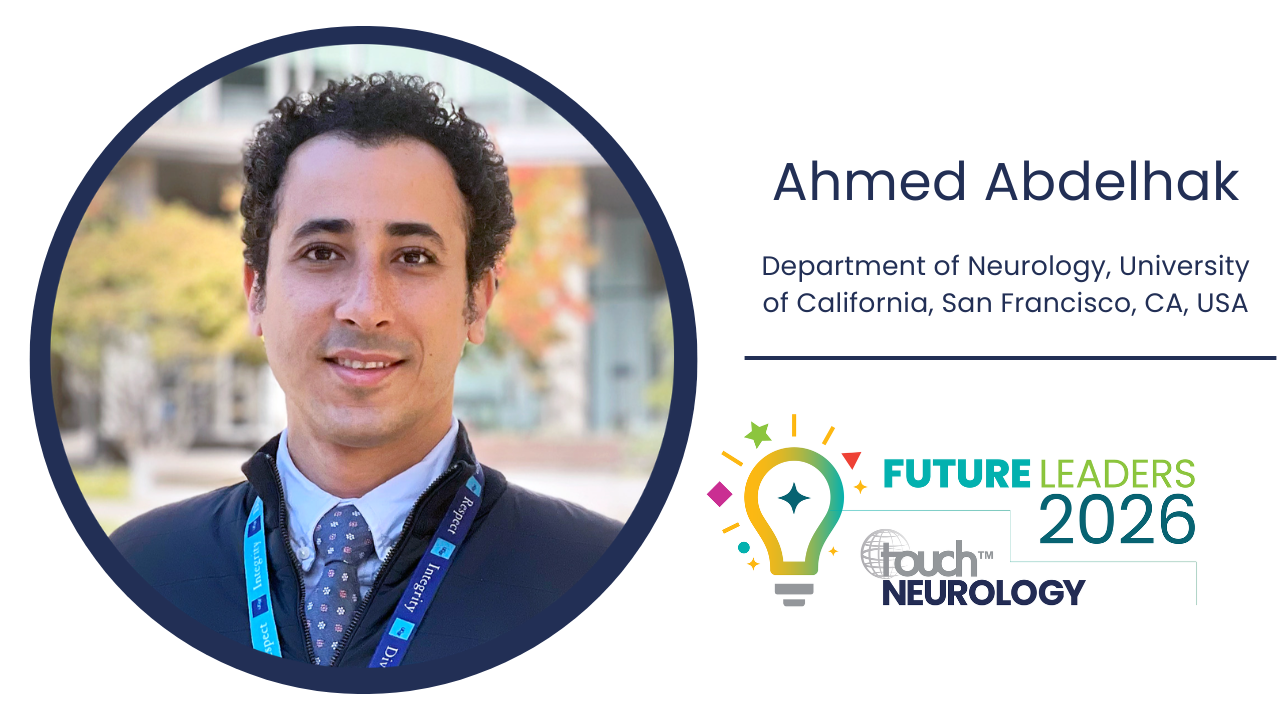
We are delighted to announce Dr Ahmed Abdelhak as a touchNEUROLOGY Future Leader 2026, selected by peers as one of the neurologists changing the future of research in blood biomarkers in multiple sclerosis. We spoke with Dr Ahmed Abdelhak (Department of ...
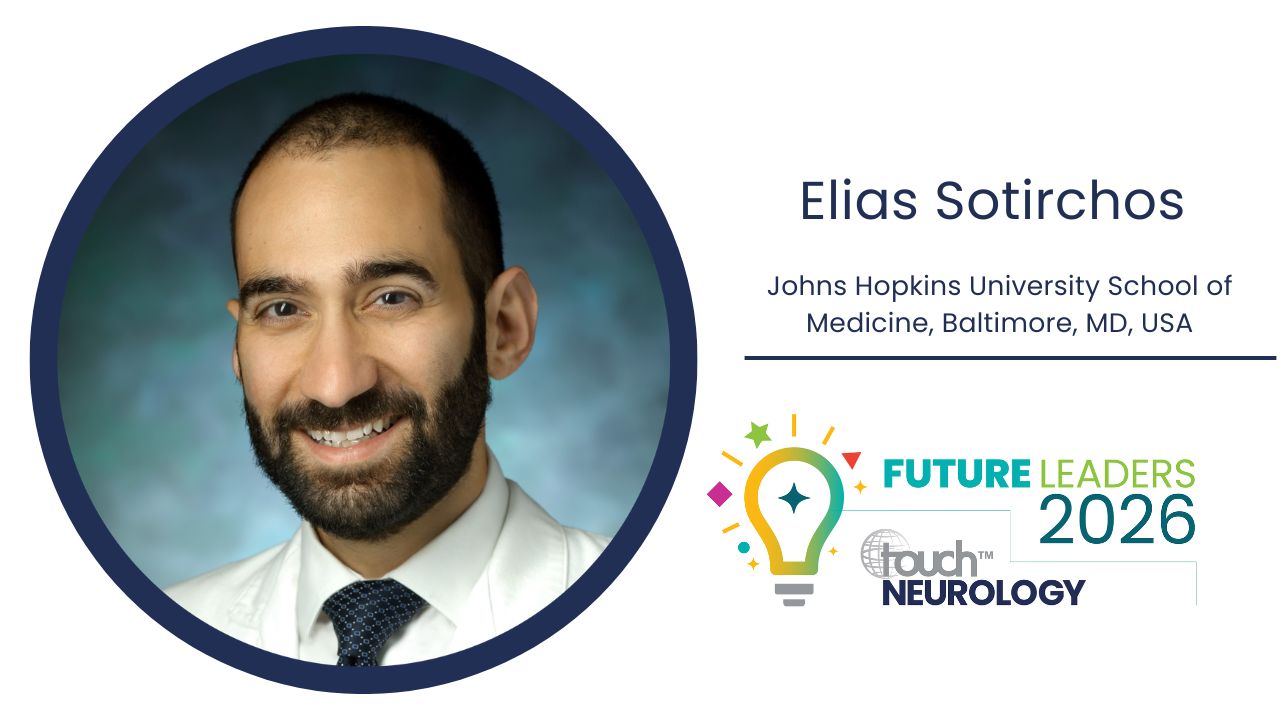
We are delighted to announce Dr Elias Sotirchos as a touchNEUROLOGY Future Leader 2026, selected by peers as one of the neurologists changing the future of neuroimmunological disorders research We spoke with Dr Elias Sotirchos (Johns Hopkins University School of Medicine, ...

Dr Joost Smolders discusses the biology of broad rim lesions, their association with faster disability accumulation and how they could help inform future prognostication and treatment strategies in multiple sclerosis. Emerging biomarkers capable of identifying patients at risk of rapid ...


Leading experts share their perspectives on the most important therapeutic and treatment updates at AAN 2026 and discuss how these findings may shape the future of neurologic care At American Academy of Neurology (AAN) Annual Meeting, Chicago, IL, USA, April 18–22, 2026, major ...

Emerging data from AAN 2026 across neuroimmunology, epilepsy, neuromuscular disease, movement disorders and neuroinfectious disease highlighted the continued evolution of neurology toward more precise, personalized and mechanism-driven care. The American Academy of Neurology (AAN) Annual Meeting, Chicago, IL, USA, from April 18–22, 2026, ...

The late-breaking science sessions at AAN Annual Meeting 2026, Chicago, IL, USA brought together a wide range of pivotal and practice-shaping data spanning rare disease, neuroimmunology, headache, epilepsy, neurodegeneration and neuromuscular medicine. Several presentations reported positive phase III findings, while others ...

Understanding multiple sclerosis (MS) across the lifespan has become increasingly important as insights from adult disease cohorts reshape concepts of susceptibility, progression and long-term treatment strategy. In this Q&A, Dr Bardia Nourbakhsh (Johns Hopkins School of Medicine, Baltimore, ...
Late-breaking data presented during the LB1: Late-Breaking Research and Clinical Trials session at ACTRIMS Forum 2026, February 5-7, 2026, San Diego, CA, USA, highlighted both progress and persistent challenges across multiple sclerosis (MS) and related neuroimmunological disorders. The session featured studies spanning ...

In this year-end review, we are pleased to share personal highlights from members of the touchNEUROLOGY Editorial Board, whose perspectives offer a window into the innovations that have most influenced clinical practice and research over the past 12 months. Their reflections capture not only the momentum of 2025, but also the promise of what lies ahead as the field continues to evolve.

“The Pathways to Cures roadmap was built through global consensus so we can focus on the most impactful research to end MS.” - Bruce Bebo, National MS Society The Pathways to Cures roadmap represents one of the most coordinated global ...
The European Committee for Treatment and Research in Multiple Sclerosis (ECTRIMS) 2025 Congress, held in Barcelona, brought together over 9,600 global experts under the theme “A New Era of Precision.” This report, developed in collaboration with the National Multiple Sclerosis Society, highlights key breakthroughs in diagnosis, treatment, and lifestyle interventions—including advances in ocrelizumab, BTK inhibitors, myelin repair strategies, and early biomarkers. With new insights into cognition, menopause, and precision medicine, ECTRIMS 2025 underscored the shift toward truly personalised, data-driven MS care.
At ECTRIMS 2025, leading experts in multiple sclerosis (MS) research and care reflected on the latest advances shaping the field. From novel immunotherapies and evolving B-cell treatment strategies to emerging insights into chronic inflammation, neuroprotection, and repair. Prof. Anders Svenningsson, Dr Marcello Moccia, and Dr Seema Kalra share their perspectives on some of the most promising developments and ongoing research challenges.
In this Q&A, Dr Seema Kalra, Royal Stoke MS Centre, UK, discusses key updates from ECTRIMS 2025, including updates in MS diagnostic criteria, biomarkers, imaging protocols, and advances in therapeutic strategies.
Log into your Touch Account
Keep track of your clinical interests and newsletter subscriptions.
Sign up with an Email
Or use a .
Register now for FREE access
Already registered? Login below.